

Sustainability · 2025
In this section54 topics
- Sustainability Policy3 items
- Sustainability Goals & UN SDGs3 items
- Policy Review3 items
- Business Value Chain1 item
- Stakeholder Analysis1 item
- Environmental Sustainability — Overview2 items
- Environmental Policy & Guidelines4 items
- Environmental Policy Review3 items
- Energy — Plan & Guidelines3 items
- Energy — Electricity Consumption1 item
- Energy — Fuel Consumption1 item
- Energy — Targets2 items
- Energy — Performance & Outcomes2 items
- Water Management — Overview1 item
- Water — Plan & Guidelines2 items
- Water — Withdrawal, Discharge & Consumption1 item
- Water — Targets3 items
- Water — Performance & Outcomes2 items
- Waste Management — Overview1 item
- Waste — Plan & Guidelines2 items
- Waste — Generation, Disposal & Recycling1 item
- Waste — Targets2 items
- Waste — Performance & Outcomes2 items
- GHG — Plan & Guidelines3 items
- GHG — Emissions1 item
- GHG — Emissions Verification3 items
- GHG — Principles & Standards1 item
- GHG — Targets1 item
- GHG Targets — Net Zero2 items
- GHG — Performance & Outcomes2 items
- Environmental Legal Incidents2 items
- Other Environmental Management1 item
- Social Sustainability — Overview1 item
- Social Policy & Guidelines5 items
- Social Policy Review3 items
- Human Rights Due Diligence2 items
- Employee Management — Overview1 item
- Employees — Plan & Guidelines4 items
- Employees — Workforce2 items
- Employees — Remuneration & Provident Fund1 item
- Employees — Training & Development1 item
- Employees — Occupational Health & Safety1 item
- Employees — Labour Relations1 item
- Employees — Employee Representation1 item
- Employees — Targets2 items
- Employees — Performance & Outcomes2 items
- Customers — Plan & Guidelines3 items
- Customers — Satisfaction Results1 item
- Customers — Targets2 items
- Customers — Performance & Outcomes2 items
- Community & Social — Plan & Guidelines5 items
- Community & Social — Targets2 items
- Community & Social — Performance & Outcomes2 items
- Law Violation Incidents1 item
Sustainability Policy
Has a Sustainability Policy
Yes
Policy Description
Sustainable Management Policies

The Company, Ratchaphruek Hospital Public Company Limited ("the Company"), is committed to conducting its business in line with sustainable development principles under good governance. The Company operates responsibly towards society and the environment, considering the impact on all stakeholders and creating a balance across the value chain in governance, economy, society, and the environment. This approach aims to generate long-term value and guide the Company toward sustainability in alignment with its vision and mission. Therefore, the Company has established a sustainable development policy as a framework for managing sustainability in accordance with international standards.
Policy Document Link
https://investor.rph.co.th/en/sustainability/home
Sustainability Goals & UN SDGs
Has Sustainability Goals
Yes
Goals Description
Sustainability-Driven Business Operations
The Company conducts its business in accordance with good corporate governance principles while integrating environmental, social, and governance (ESG) considerations into its corporate strategy, risk management framework, and Board oversight. The objective is to create long-term value for shareholders, stakeholders, and society.
1. Governance & Economic Dimension
1.1 Good Corporate Governance and Business Ethics
The Company has established clear corporate governance policies, a code of conduct, and anti-corruption measures. Key actions include:
Annual ethics and anti-corruption training for executives and employees (100% coverage)
Enterprise risk management aligned with COSO-ERM 2017 framework
Established whistleblowing channels
No regulatory penalties related to corruption or insider trading during the reporting year
Impact:
Strengthens investor confidence and mitigates legal and reputational risks.
SDGs: Goal 16 – Peace, Justice and Strong Institutions
GRI: 205 (Anti-corruption), 2-26, 2-27, 2-15
1.2 Responsible Supply Chain Governance
The Company implements a Supplier Code of Conduct and formal vendor registration procedures prior to engagement.
Business partners acknowledge anti-corruption policies
Formal Vendor List system in place
Risk-based supplier screening procedures implemented
Impact:
Reduces ESG-related risks within the supply chain and promotes responsible business partnerships.
SDGs: Goal 16
GRI: 2-6, 308, 414
1.3 Enhancement of Medical Service Quality
The Company continuously strengthens its medical capabilities by:
Expanding specialty clinics
Operating Stroke Center, Emergency & Trauma Center, and MRI services
Investing in advanced medical technologies
Monitoring patient and family satisfaction (≥ 90%)
Impact:
Improves access to specialized healthcare within Khon Kaen Province, reduces patient referrals, and strengthens the local healthcare system.
SDGs: Goal 3 – Good Health and Well-being
Goal 8 – Decent Work and Economic Growth
GRI: 416 (Customer Health & Safety)
1.4 Personal Data Protection and Cybersecurity
100% acknowledgment of PDPA policies by employees and relevant personnel
Communication of data protection practices via Intranet and RPH Staff platform
No complaints regarding misuse of personal data during the reporting year
Impact:
Mitigates cyber and legal risks while enhancing patient trust.
SDGs: Goal 16
GRI: 418 (Customer Privacy)
2. Social Dimension
2.1 Human Rights and Diversity
No complaints related to human rights violations
Employment opportunities for persons with disabilities
Non-discrimination in hiring practices
SDGs: Goal 5, Goal 8, Goal 10
GRI: 406 (Non-discrimination), 413
2.2 Employee Welfare and Engagement
No significant labor disputes
Comprehensive welfare programs including medical benefits, annual health check-ups, and provident fund
Employee engagement activities and direct communication channels with management
SDGs: Goal 8
GRI: 401, 403
2.3 Skills Development and Education Support
Continuous professional training programs
Scholarships for youth and employees’ children
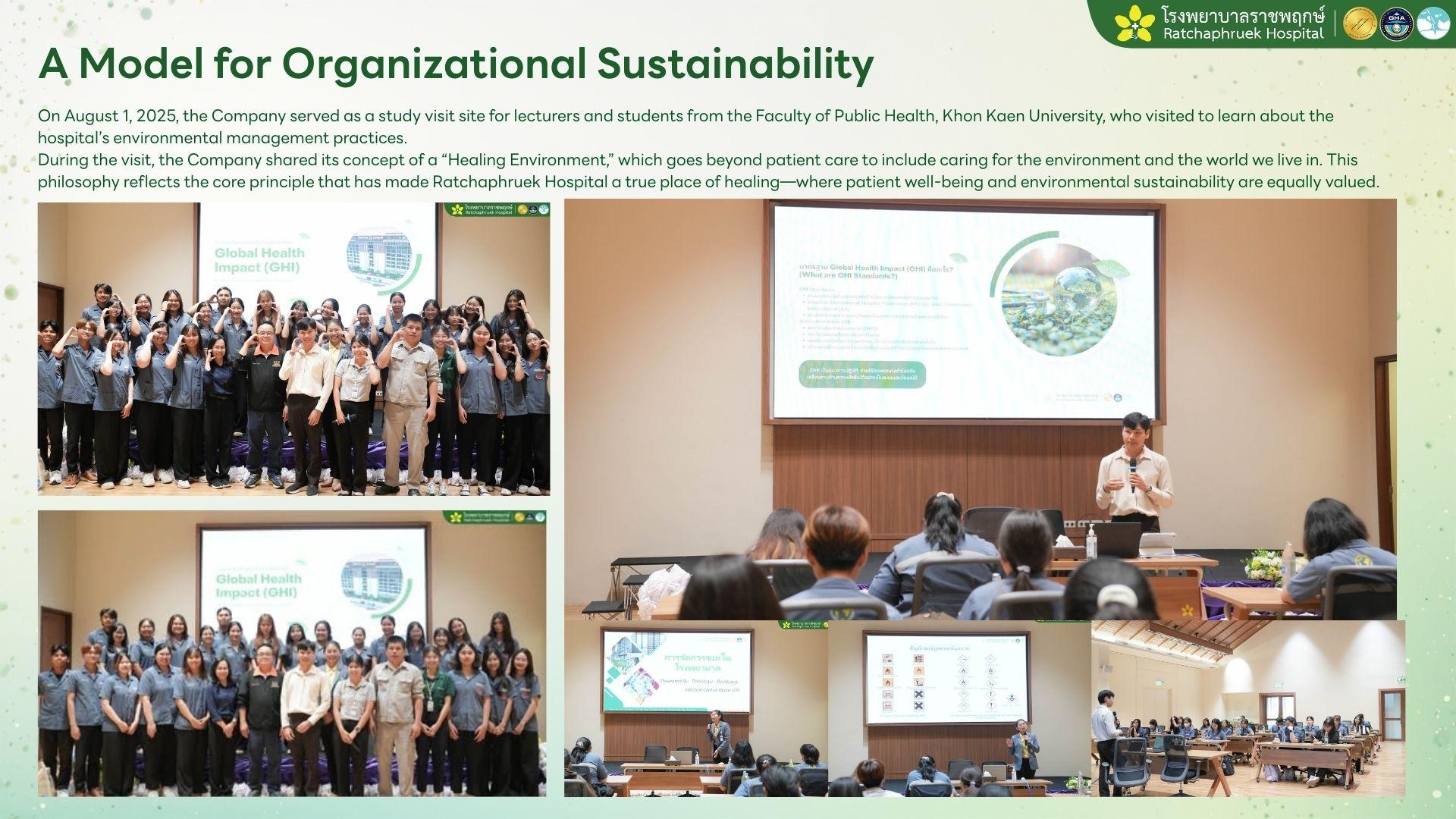
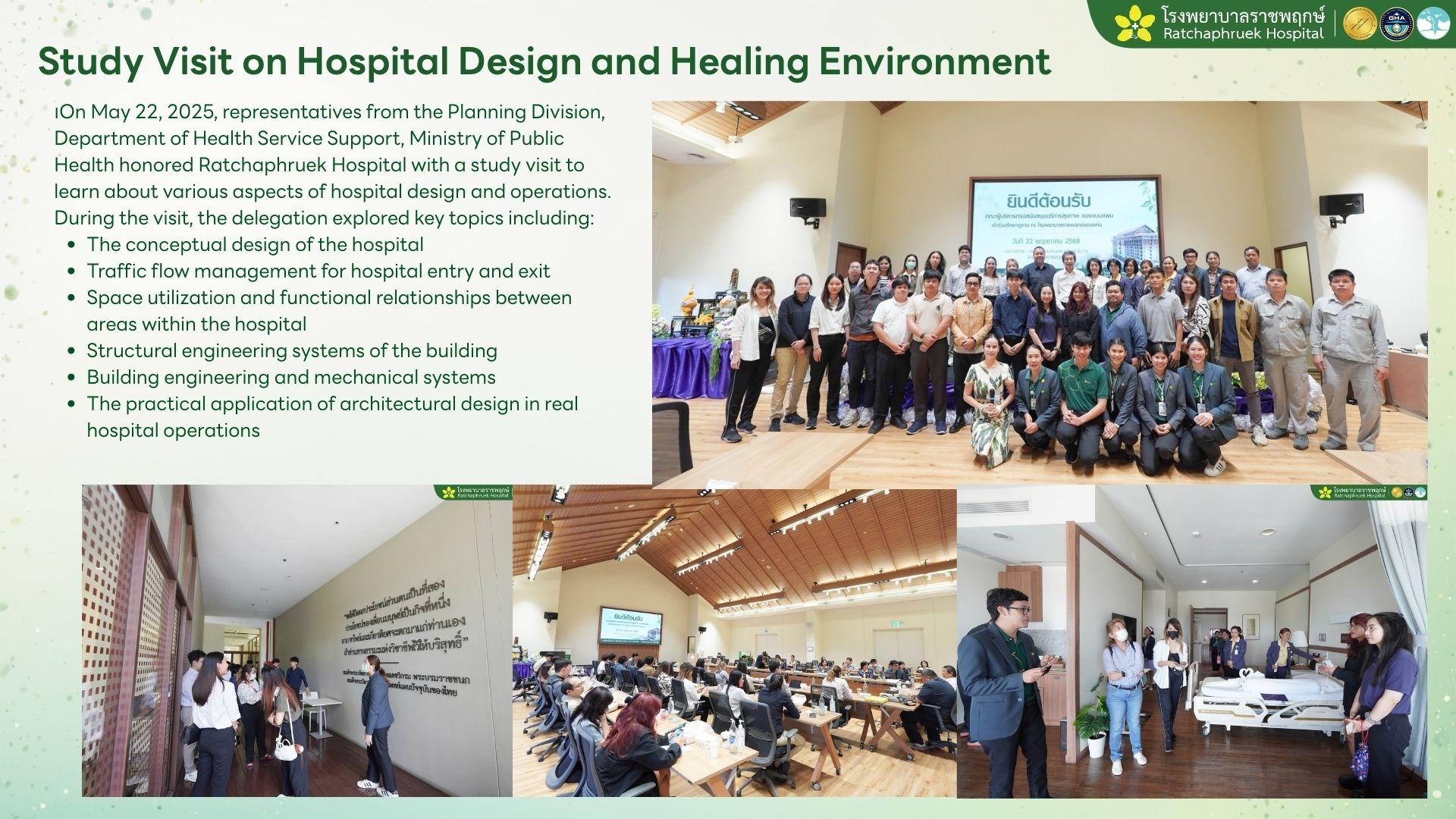
Study visit opportunities related to hospital management and operations
SDGs: Goal 4 – Quality Education
GRI: 404
2.4 Occupational Health and Safety
Annual health check-ups for employees
Annual fire drills and emergency evacuation exercises
Chemical spill management training (Spill Kit)
No fatal workplace accidents reported
SDGs: Goal 3
GRI: 403
2.5 Patient and Community Care
Quarterly mobile health check-up units
Free shuttle services for patients within municipal areas
Continuous transportation support for dialysis patients
Monthly blood donation activities
Dissemination of health knowledge through website and Facebook
SDGs: Goal 3, Goal 11
GRI: 413, 416
3. Environmental Dimension
3.1 Resource Management
Established policies on energy, water, waste, and environmental management
Regular water quality and workplace environment monitoring
Annual inspection of electrical and fire protection systems
SDGs: Goal 13 – Climate Action
GRI: 302, 303, 306
3.2 Climate Change Adaptation and Resource Reduction
Reduction in paper usage through digitalization
Promotion of energy conservation practices
Reduction of single-use plastic packaging
SDGs: Goal 13
GRI: 302, 305
3.3 Water and Waste Management
Wastewater treatment prior to discharge
Proper segregation of general and infectious waste
No community complaints regarding environmental pollution
SDGs: Goal 6 – Clean Water and Sanitation
Goal 12 – Responsible Consumption and Production
GRI: 303, 306
UN Sustainable Development Goals
| SDG Goal |
|---|
| Goal 3 Good Health and Well-being |
| Goal 4 Quality Education |
| Goal 5 Gender Equality |
| Goal 6 Clean Water and Sanitation |
| Goal 8 Decent Work and Economic Growth |
| Goal 10 Reduce Inequalities |
| Goal 11 Sustainable Cities and Communities |
| Goal 12 Responsible Consumption and Production |
| Goal 13 Climate Action |
| Goal 16 Peace, Justice and Strong Institutions |
Policy Review
Policy Reviewed This Year
Yes
Policy Changed This Year
Yes
Review Details
Environmental Performance in the Past Year
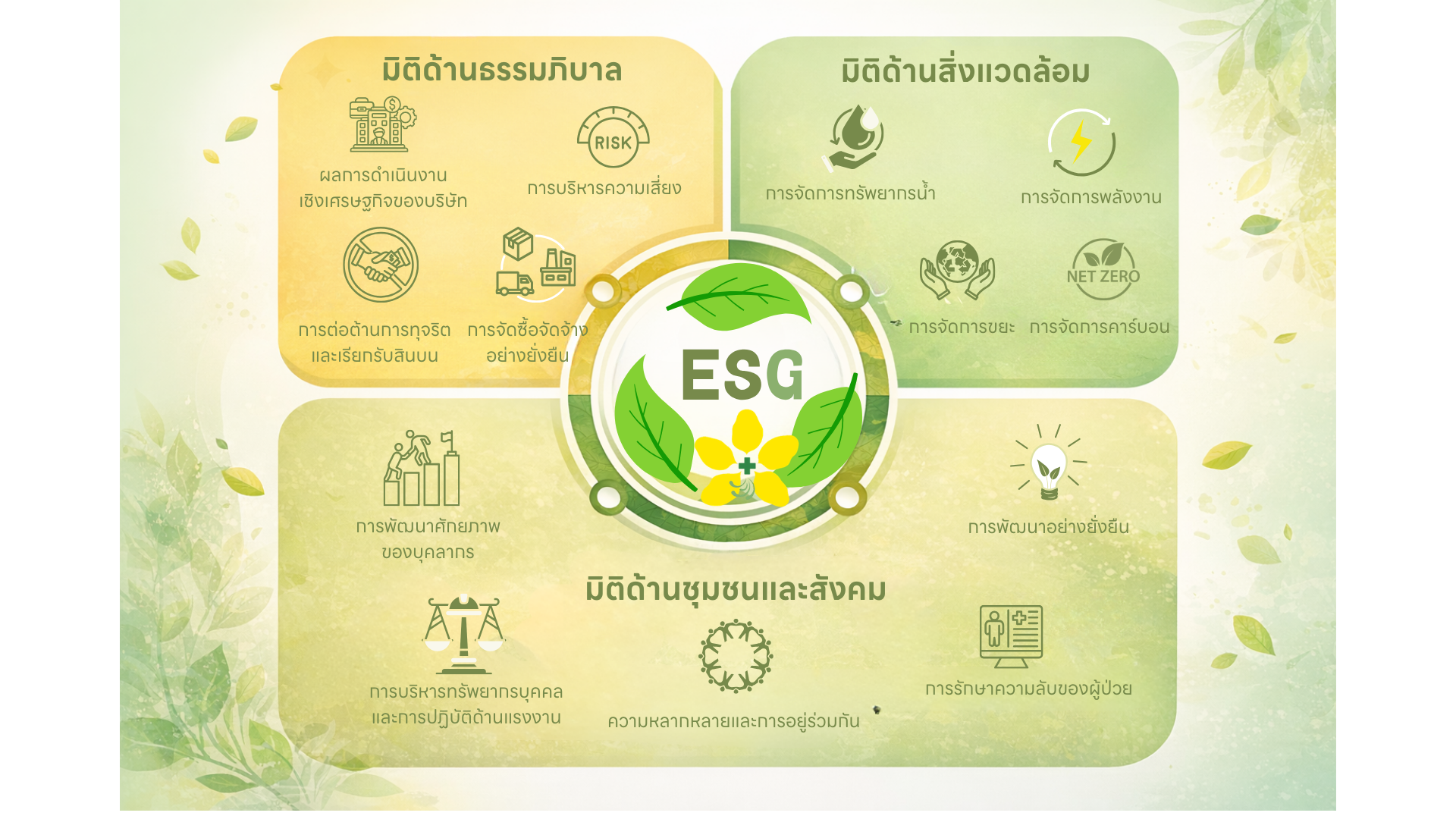
During the past year, Ratchaphruek Hospital Public Company Limited has continuously implemented its Environmental Policy and Practices (HP-GLD-016) by integrating environmental impact management into its operational processes. The Company aims to promote efficient resource utilization, reduce environmental impacts, and support sustainable organizational development. Key initiatives undertaken during the year are summarized as follows:
1. Resource and Energy Management
The Company promotes efficient use of energy and natural resources by regularly inspecting electrical systems and utility infrastructure within the hospital. In addition, internal campaigns encouraging energy conservation among employees have been implemented to reduce resource consumption and minimize environmental impacts from organizational operations.
2. Water and Environmental Quality Management
The Company continuously monitors water quality and workplace environmental conditions. Wastewater is treated prior to discharge into the public system to ensure compliance with environmental standards and to prevent negative impacts on surrounding communities.
3. Medical Waste Management
The Company properly segregates and manages different categories of waste, including infectious waste generated from medical services. Waste management and disposal processes are conducted in accordance with public health and environmental standards to minimize risks to employees, communities, and the environment.
4. Efficient Resource Utilization
The Company promotes resource efficiency by reducing paper usage through digital systems and encouraging responsible resource consumption across the organization, thereby reducing environmental impacts in the long term.
5. Environmental Awareness within the Organization
The Company encourages employees at all levels to recognize their role in environmental stewardship through continuous communication of environmental policies and practices. This initiative helps ensure that the Company’s operations align with sustainable development principles.
Through these initiatives, the Company has reduced environmental impacts arising from its operations, enhanced environmental awareness among employees and stakeholders, and contributed to the organization’s sustainable development goals.
Business Value Chain
Value Chain Description
Managing Impact on Stakeholders in the Business Value Chain
Operations with Stakeholders
The Company places importance on engaging with stakeholders by identifying relevant stakeholder groups throughout the business value chain. It analyzes and ranks these stakeholders based on the level of impact from the Company’s operations on each group and the influence stakeholders have on the business. The Company also conducts surveys to understand stakeholders’ needs and expectations to ensure appropriate responses that meet their expectations in a way that aligns with international healthcare standards. This ensures comprehensive and effective management throughout the value chain, with relevant departments assigned to address and respond to stakeholders' needs and expectations appropriately according to the guidelines set by the Company, divided into 9 stakeholder groups.
o Shareholders / Investor /Analyst
o Patient /Customer
o Employees and Family
o Partner/Supplier
o competitor
o Creditors/Financial institutions
o Community and Social
o Environment
o Governance
Stakeholder Analysis
Stakeholder Analysis
| Stakeholder Type | Stakeholders | Stakeholder Expectations | Response to Expectations | Communication Activities |
|---|---|---|---|---|
| External stakeholders | 2904 · Description: Investors or investment institutions · 2905 · Description: Analysts · 2913 · Description: Shareholders | o Achieve strong business performance and sustainable income growth.
o Provide reasonable returns on investment for shareholders and investors.
o Ensure sustainable business development in alignment with the capital market framework.
o Establish plans to support business changes in both the short and long term.
o Ensure equal, transparent, and timely disclosure of information.
o Uphold shareholder equality and protect the rights and interests of shareholders and investors.
o Provide fair and equal rights to all groups of shareholders.
o Conduct business in accordance with the principles of good corporate governance.
o Be aware of and strictly comply with the Company’s code of conduct.
o Drive sustainable business operations and long-term value creation.
o Organize shareholder and investor meetings regularly.
o Establish policies for fair dividend payments and appropriate shareholder returns. | o Strive to achieve continuous and sustainable growth in business performance.
o Provide consistent and appropriate dividend payments to shareholders in line with the Company’s performance.
o Strictly comply with regulations of the Securities and Exchange Commission (SEC), with no warnings received from regulatory authorities.
o The Company’s financial statements are audited and certified by external auditors with no qualified opinion (Unqualified Opinion). | 2938 · Description: Visit · 2939 · Description: Press Release · 2941 · Description: Online Communication · 2944 · Description: Annual General Meeting (AGM) |
| External stakeholders | 2923 · Description: Customers | o Provide medical services delivered by specialists across various fields.
o Utilize modern, safe, and standardized medical equipment and technologies.
o Deliver healthcare services in accordance with high quality standards.
o Offer convenient communication channels to provide information and respond to inquiries promptly.
o Provide services with courtesy, sincerity, and attentive care for patients.
o Strive to deliver an excellent service experience that exceeds expectations.
o Ensure service fees are fair and reasonable.
o Protect personal data and strictly maintain patient confidentiality and privacy. | o Provide medical services delivered by experienced physicians and multidisciplinary healthcare professionals across various specialties.
o Ensure equal treatment and non-discriminatory care for all patients.
o Deliver healthcare services in accordance with international standards, with continuous accreditation from JCI.
o Provide complimentary patient transportation services to facilitate convenient access to medical care.
oOffer multiple payment channels to enhance convenience for patients and customers. | 2941 · Description: Online Communication · 2945 · Description: Complaint Reception · 2949 · Other name: Satisfaction assessment through specified channels · Description: Others |
| Internal stakeholders | 2921 · Description: Employees | o Responsible business growth with consideration for environmental and social impacts.
o Human rights and labor practices, including health, hygiene, and workplace safety.
o A safe working environment and work–life balance.
o Skills development and capacity building.
o Career advancement opportunities and job security.
o Fair compensation, welfare, and employee benefits. | o Communicate with employees regarding the Company’s current business achievements and performance.
o Promote awareness among employees on contributing to solutions addressing global climate change.
o Operate in compliance with the Thai Labor Standard (TLS) and treat employees fairly in accordance with human rights and labor principles.
o Establish an Occupational Health and Safety Committee to manage risk areas and prevent or reduce environmental impacts within the organization through employee participation activities such as the 5S program.
o Implement Individual Development Plans (IDP) to enhance employees’ skills and support the development of multi-skilled personnel.
o Provide fair and appropriate compensation and welfare comparable to those offered by companies within the industry.
o Foster a corporate culture that views complaints as opportunities for improvement, encouraging the mindset that “complaints are a gift.”
o Provide channels for whistleblowing and grievance reporting, including measures for the protection of whistleblowers. | 2941 · Description: Online Communication · 2942 · Description: Internal Meeting · 2946 · Description: Employee Engagement Survey · 2947 · Description: Satisfaction Survey · 2948 · Description: Training / Seminar · 2949 · Other name: Announcement of various orders, Intranet system, RPH Staff system · Description: Others · 2949 · Other name: 56-1 One report · Description: Others |
| External stakeholders | 2900 · Description: Business partners | o Suppliers are selected and evaluated on a regular basis, both quarterly and annually.
o Meetings, seminars, and activities are organized to strengthen relationships with suppliers and business partners.
o The Company listens to feedback, suggestions, and complaints regarding supplier services.
o Emphasis is placed on service quality and the timely delivery of goods in accordance with established standards.
o Business is conducted with suppliers based on ethics, integrity, and accountability.
o Procurement processes are clearly defined, transparent, and auditable. | o Fair commercial terms and contracts are established and strictly adhered to.
o The Company complies with the Supplier Code of Conduct and does not solicit, accept, or offer any improper benefits to suppliers.
o The Company maintains trust and confidence in its business operations with suppliers.
o No business disputes with suppliers were reported.
o No incidents of corruption were identified in supplier-related operations.
o Suppliers deliver goods and services in accordance with requirements and within the specified timeframe, while complying with the Supplier Code of Conduct, with no complaints or warnings received from suppliers. | 2938 · Description: Visit · 2941 · Description: Online Communication · 2943 · Description: External Meeting · 2947 · Description: Satisfaction Survey · 2948 · Description: Training / Seminar |
| External stakeholders | 2898 · Description: Competitors | o Conduct business under fair and acceptable competitive practices.
o Refrain from improperly soliciting or poaching employees from competitors.
o Do not interfere with or improperly obtain competitors’ confidential or proprietary information.
o Refrain from engaging in unfair price-cutting competition. | o Private Hospital Association Meeting
o Executives meet according to tradition
o Fair competition
o Keep trade secrets and cooperate in creative business | 2939 · Description: Press Release · 2941 · Description: Online Communication · 2943 · Description: External Meeting |
| External stakeholders | 2894 · Description: Creditor · 2925 · Description: Financial institution | o Fulfillment of contractual terms and conditions.
o Full and timely payment in accordance with agreed terms.
o Complete, accurate, and transparent disclosure of information in the annual report and financial statements.
o No disputes or legal proceedings related to business operations. | o Comply strictly with commercial terms and contractual agreements.
o Disclose financial information accurately, completely, and transparently.
o Respond to financial inquiries and clarifications accurately, promptly, and clearly.
o Implement a system to monitor and process payments to creditors through the bank’s online system, with scheduled payment cycles on the 10th and 25th of each month. | 2941 · Description: Online Communication · 2943 · Description: External Meeting · 2947 · Description: Satisfaction Survey · 2949 · Other name: Financial Statement Disclosure · Description: Others |
| External stakeholders | 2902 · Description: Community · 2928 · Description: Society | o Participate in community and social engagement activities.
o Take part in activities organized by communities and government agencies.
o Contribute to community development initiatives.
o Provide support and assistance to promote the health and well-being of the community. | o Refrain from engaging in business activities that may negatively impact society or infringe upon the rights of individuals within the community.
o Instill continuous awareness of social and community responsibility among all levels of management and employees.
o Implement measures to prevent and mitigate potential negative impacts of the Company’s operations on communities and society.
o Promote the preservation of local culture, customs, and traditions.
o Collaborate with various organizations to support community development.
o Provide support for activities that contribute to public welfare.
o Generate income and support local economies by promoting employment and community-based products.
o Foster positive relationships between the Company and communities based on integrity, transparency, and fairness.
o Communication Channels
o Social Events
o Online Communication Channels | 2940 · Description: Social Event · 2941 · Description: Online Communication · 2943 · Description: External Meeting |
| External stakeholders | 2931 · Description: Government agencies and Regulators · 2933 · Description: Non-profit organization / NGOs · 2935 · Description: Independent entities | o Fully comply with all applicable laws and regulations.
o Provide support for activities or projects upon request, as appropriate.
o Cooperate with government and other organizations in accordance with relevant laws and regulations.
o Pay taxes in full and in accordance with legal requirements within the specified timeframe.
o No reports of legal violations were received.
o No warnings were issued by regulatory authorities. | o Comply with the regulations, guidelines, and corporate governance policies of the Stock Exchange of Thailand.
o Adhere to all applicable laws, regulations, and statutory requirements in all aspects.
o Cooperate with the Ministry of Public Health and other relevant health authorities.
o Support activities and provide cooperation or assistance upon request by relevant authorities or organizations. | 2939 · Description: Press Release · 2940 · Description: Social Event · 2943 · Description: External Meeting |
| External stakeholders | 2929 · Description: Media | o Access to accurate, complete, and transparent information.
o Appropriate access to organizational representatives for clarification and information sharing.
o Timely, clear, and responsive communication.
o Cooperation in providing information, press releases, and updates on organizational activities.
o Constructive and professional relationships between the organization and the media. | o Disclose accurate, complete, and transparent information through the Company’s communication channels.
o Designate responsible representatives or departments to coordinate and provide information to the media appropriately.
o Communicate information, updates, and clarifications in a timely, clear, and responsive manner.
o Support and cooperate with the dissemination of press releases and organizational activities.
o Build constructive and sustainable relationships with the media based on transparency, accuracy, and professionalism. | 2938 · Description: Visit · 2939 · Description: Press Release · 2941 · Description: Online Communication |
Environmental Sustainability — Overview
Introduction
Sustainable Business Policy
The Company conducts its business with a focus on maintaining a balanced approach across three key dimensions: economic and governance, social, and environmental aspects. This approach supports the achievement of the Company’s vision and mission to become a leading private hospital providing healthcare services that meet international standards while delivering care with compassion and humanity.
The Company provides comprehensive medical services through specialized clinics and a multidisciplinary team of experienced physicians. The organization upholds professional integrity and medical ethics while conducting its operations with responsibility toward all stakeholders, society, and the environment. The Company has also established a systematic framework for corporate social responsibility under the policy of “Driving Sustainable Growth.”
Assessment of Material Sustainability Issues
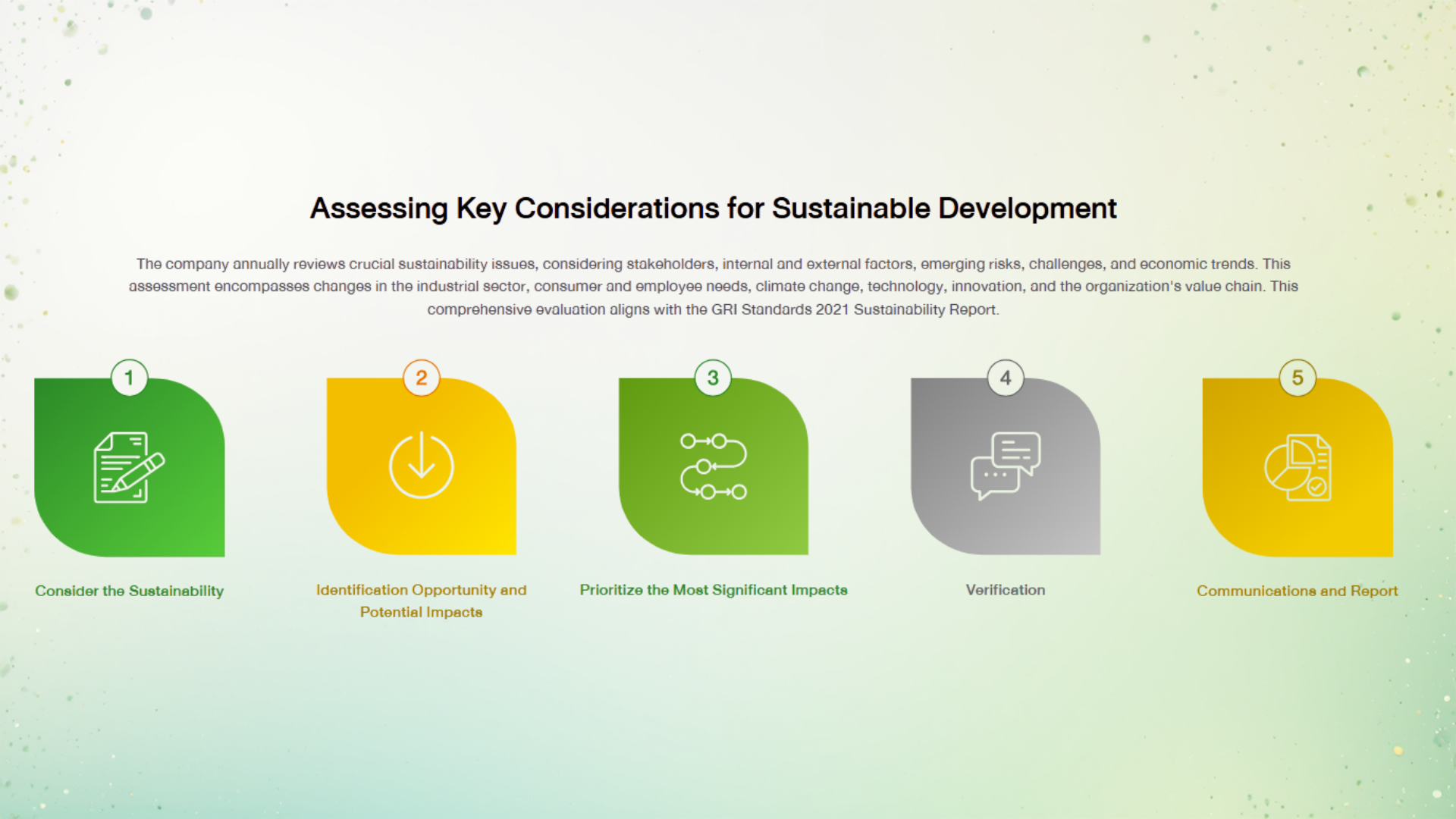 The Company reviews and evaluates material sustainability issues on an annual basis. The assessment considers stakeholder perspectives, internal and external factors, emerging risks and challenges, economic trends, industry changes, customer and employee expectations, climate change, technology and innovation, as well as the Company’s value chain.
This assessment process is conducted in accordance with the GRI Standards 2021 framework and includes the following key steps:
Identification of material sustainability issues
Identification of opportunities and potential impacts
Prioritization of material issues
Validation and verification of the identified issues
Communication and reporting of sustainability performance to stakeholders
Operating Results — Introduction
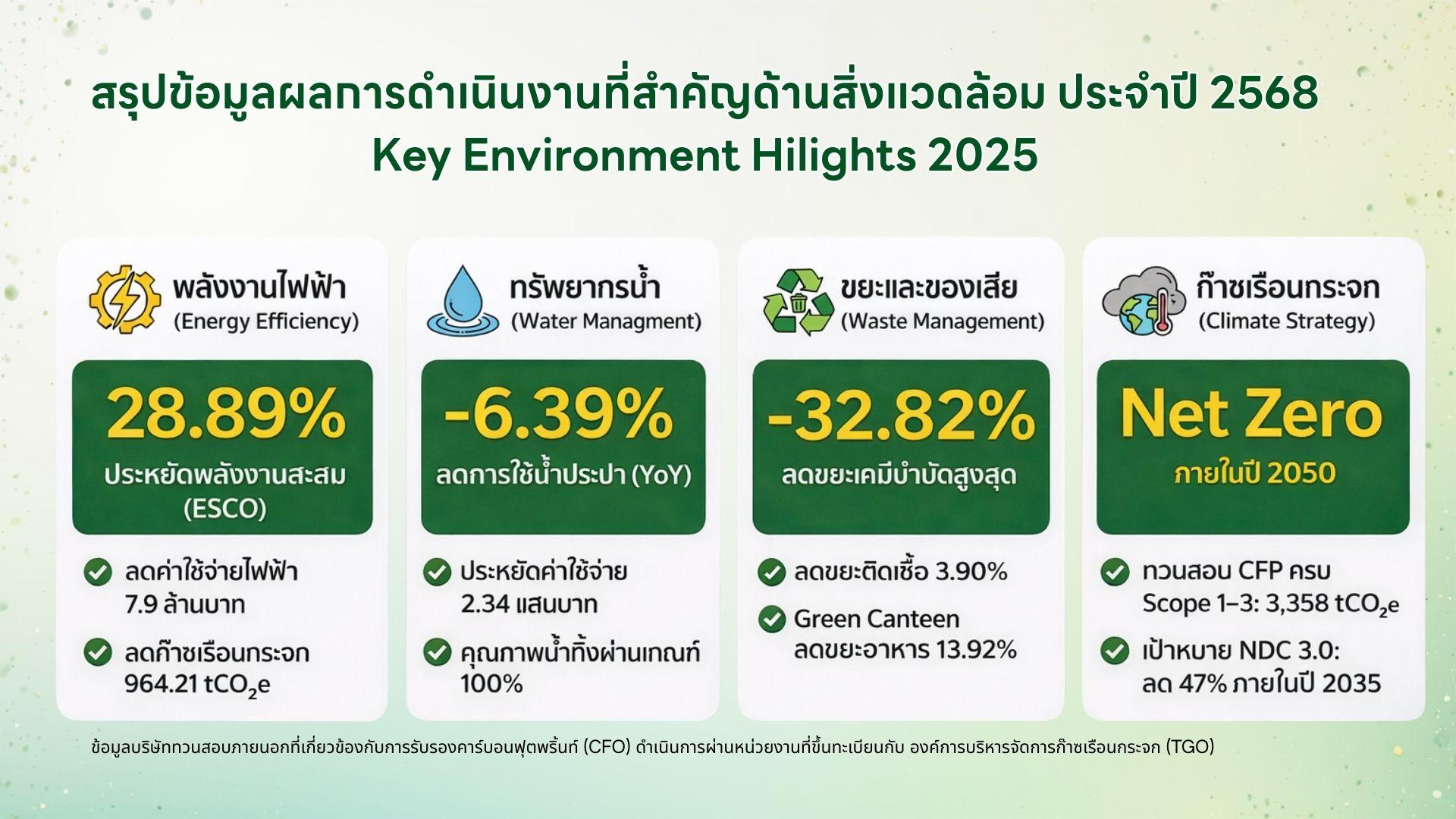
Environmental Policy & Guidelines
Introduction
Sustainable Development Policy

Ratchaphruek Hospital Public Company Limited (“the Company”) is committed to conducting its business in accordance with sustainable development principles under a strong corporate governance framework. The Company operates with responsibility toward society and the environment while taking into consideration the impacts on all stakeholder groups.
The Company places importance on creating balance throughout its business value chain across the economic, social, and environmental dimensions in order to generate long-term value and drive the organization toward sustainable growth, in alignment with the Company’s vision and mission.
Accordingly, the Company has established a Sustainability Development Policy to serve as a framework for managing sustainability initiatives in accordance with international standards.
Has an Environmental Policy
Yes
Policy Description
Environmental Policy and Practices
The Company places importance on environmental conservation alongside its business operations. It is committed to minimizing environmental impacts arising from its activities and promoting the efficient use of resources in order to create a balance between healthcare services, the well-being of stakeholders, and environmental and social sustainability.
The Company encourages employees at all levels to participate in environmental protection efforts and to strictly comply with relevant environmental laws and standards. The key operational approaches are as follows:
Efficient resource utilization: Reduce the consumption of energy, water, and consumable materials in healthcare service operations.
Environmental protection and impact prevention: Properly manage medicines, medical supplies, medical gases, chemicals, and medical waste in accordance with applicable laws and standards.
Climate change response: Promote measures to reduce environmental impacts and enhance preparedness for risks associated with climate change.
Promotion of recycling: Support waste segregation and the use of environmentally friendly materials in operations.
Awareness and training: Provide training and internal communication to enhance employees’ awareness and understanding of environmental responsibility.
Continuous monitoring and improvement: Regularly assess and improve environmental policies and practices to ensure compliance with relevant laws and standards.
The Company is committed to conducting its business while protecting the environment in order to achieve sustainable growth for both the organization and society.
Environmental Guidelines
| Guideline |
|---|
| Electricity Management |
| Fuel Management |
| Renewable/Clean Energy Management |
| Water Management |
| Waste Management |
| Greenhouse Gas and Climate Change Management |
| Air Quality Management |
Environmental Policy Review
Policy Reviewed This Year
Yes
Review Details
During the past year, the Company conducted an annual review of its material environmental policies and targets through the governance mechanism of the Energy Conservation and Environmental Management Committee. The purpose was to update operational practices to ensure alignment with international standards, particularly the Global Health Impact (GHI) framework under JCI Edition 8, and to reaffirm the Company’s strong commitment to supporting Thailand’s national strategic goals and greenhouse gas reduction commitments.
On 26 July 2025, the Hospital was awarded accreditation under the JCI Accreditation Standards for Hospitals and Academic Medical Centers (AMC), 8th Edition, the latest global accreditation standard. This certification encompasses both patient safety and quality of care, as well as environmental sustainability dimensions, in accordance with internationally recognized accreditation standards.
Management Approach and Standards
The Company has developed an environmental sustainability action plan that identifies and assesses material environmental issues. The plan focuses on sustainable environmental management, with key objectives to enhance resource efficiency, reduce waste, lower greenhouse gas emissions, and establish a standardized
environmental management system.
These initiatives not only help reduce operating costs but also strengthen the Company’s reputation as an environmentally responsible healthcare institution, aligned with national and international sustainable development frameworks.
The Hospital’s sustainability initiatives include energy management, waste management, pollution reduction, and climate adaptation. These efforts improve efficiency in the use of energy, water, and other resources while simultaneously enhancing the quality of medical services. Oversight is provided by the Enterprise Risk Management Committee and Hospital-level committees, covering climate change risk management, greenhouse gas management, and organizational carbon footprint management.
Energy Management
The Company has established policies to improve energy efficiency by implementing energy conservation measures, such as smart energy control systems to minimize unnecessary consumption and internal energy-saving programs. These initiatives help reduce electricity and fuel expenses in the long term while optimizing resource utilization.
The Company also conducts continuous maintenance of energy systems to prevent avoidable energy losses, directly reducing operational costs. In the future, the Company aims to advance sustainable environmental practices through the development of clean energy projects.
Waste Management
The Company prioritizes reducing waste generated across all operational processes. Waste management measures include waste segregation, reduction of single-use plastics, increased reuse of materials, and proper disposal of medical waste in accordance with international standards.
These measures reduce environmental impacts, lower waste management costs, and reinforce the Company’s commitment to social responsibility. Wastewater treatment systems are also implemented to enable water reuse for non-patient-impact activities, such as landscape irrigation and cleaning of public areas, thereby reducing water consumption and operational costs. The Company also maintains comprehensive water management systems.
Greenhouse Gas Reduction
The Company has implemented an organizational carbon footprint project to measure greenhouse gas emissions arising from operations and to develop concrete emission reduction plans. Measures include reducing fossil fuel consumption, improving the energy efficiency of medical equipment and devices, and selecting environmentally friendly materials.
These initiatives reduce environmental impact, lower energy costs, and position the Company as a socially and environmentally responsible organization.
Climate Change Adaptation
The Company has strengthened climate resilience by developing early warning systems and emergency response plans for natural disasters such as earthquakes, floods, droughts, and storms. These measures ensure continuity of medical services even during emergencies.
The Company also promotes clean energy use and efficient resource management to mitigate climate change impacts, thereby reducing disaster-related risks and enhancing long-term business resilience.
Driving Sustainability Excellence
The Company has established measurable and ambitious environmental strategic targets, integrating medical standards with environmental responsibility to systematically enhance resource efficiency and mitigate climate change impacts.
To provide a clear operational framework and enable effective monitoring, the Company has announced both long-term and short-term goals as follows:
Long-term Goals
Greenhouse Gas Reduction (NDC 3.0): Reduce emissions by 47% by 2035 (compared to the 2025 baseline year).
Net Zero: Achieve net zero greenhouse gas emissions by 2050.
Short-term Goals
1. Resource Management Dimension
Total Energy Consumption
Reduce total energy consumption by at least 5% compared to the previous year.
Control energy intensity to not exceed 121 kWh per patient bed-day (kWh/PBD) per month.
Water Management
Reduce total water consumption by at least 5% compared to the previous year.
Control water intensity to not exceed 2,430 liters per patient bed-day (Liter/PBD) per month.
2. Waste Management Dimension
General Waste: Manage waste volume to achieve at least a 5% reduction target.
Infectious and Hazardous Waste: Maintain infectious waste, sharps waste, hazardous waste, and chemotherapy waste generation within a 5% control threshold.
Food Waste: Reduce food waste volume by 5%.
Total Net Waste: Achieve an overall 5% reduction in total waste generation.
3. ESCO Performance Dimension
Cumulative Energy Savings: Achieve cumulative energy savings exceeding 17.22% (as specified in contractual requirements).
Electricity Reduction: Reduce electricity consumption by more than 1.2 million kWh per year.
Carbon Reduction: Reduce greenhouse gas emissions by more than 600 tCO2e per year.
Cost Savings: Achieve electricity cost savings exceeding THB 5.5 million per year.
Recycling Revenue: Generate average revenue from recyclable materials exceeding THB 4.08 per kilogram.
4. Environmental Impact and Business Continuity Dimension
Environmental Complaints: Maintain zero complaints from stakeholders (Zero Complaints).
Natural Disaster Impact: Ensure zero damage to life, property, and economic value resulting from natural disasters.
Service Continuity: Maintain uninterrupted medical services, with zero service disruptions or patient appointment postponements due to natural disasters (0 incidents per year).
Policies & Guidelines Changed
| Change |
|---|
| Electricity Management |
| Fuel Management |
| Renewable/Clean Energy Management |
| Water Management |
| Waste Management |
| Biodiversity Management |
| Greenhouse Gas and Climate Change Management |
| Air Quality Management |
| Noise Pollution Management |
Energy — Plan & Guidelines
Introduction
To enhance energy efficiency and reduce greenhouse gas emissions, the Company regularly inspects and maintains the condition of equipment and machinery to ensure optimal energy performance. The Company also improves and replaces machinery with energy-efficient equipment, while continuously studying and developing renewable and alternative energy innovations for potential use within the organization.
Has an Energy Management Plan
Yes
Plan Description
Energy Management Principles & Strategy
Ratchaphruek Hospital Public Company Limited Due has a healthcare facility operating 24 hours a day, energy and resource consumption remains significantly high. The company therefore recognizes the importance of effective energy management to achieve continuous and tangible energy conservation, which represents one of the core pillars of environmental sustainability. Key operational strategies include:
Clear Policy Establishment
The company has announced an energy conservation policy to serve as a shared organizational guideline and operational direction.
Management Structure
A dedicated energy management working team has been appointed to define roles and responsibilities and to drive implementation plans.
Operational Process
The organization emphasizes data collection, performance monitoring against targets, and continuous review and improvement of operational outcomes.
Stakeholder Engagement
Collaboration is encouraged across all levels of the organization—from senior management to employees—through effective communication and actionable implementation plans.
Building Service & Energy Profile
The Company operates as a full-service medical facility. Service processes include consultation, registration, appointment scheduling, diagnosis, treatment (both outpatient and inpatient), billing, and pharmaceutical dispensing. Each process relies heavily on a stable electrical energy supply to ensure uninterrupted operation of medical support systems and building engineering infrastructure.
Electrical Energy Management Data
The company receives electricity from the Provincial Electricity Authority (PEA). Key technical specifications and annual energy statistics for 2025 (January–December) are as follows:
Electrical System: Primary voltage 22 kV and secondary voltage 416/220 V with a total transformer capacity of 3,000 kVA (Designated Building category).
Power System Efficiency: Average Power Factor of 0.93, reflecting efficient electrical system management.
Total Annual Electricity Consumption: 4,763,080 kWh
Peak Demand: 960 kW
Total Annual Electricity Cost: THB 19,439,030.11
Average Electricity Tariff: THB 4.0867 per kWh
Designated Building Compliance
The Company places importance on energy management in compliance with relevant laws and energy management standards. The hospital building is classified as a Designated Building under applicable regulations. Therefore, the Company implements an 8-step energy management process in a systematic manner to enhance energy efficiency and promote energy conservation within the organization.
Key operational approaches include:
Appointing an energy management team with clearly defined roles and responsibilities.
Assessing the current energy management status and identifying opportunities for energy conservation.
Establishing organizational policies, targets, and plans for energy conservation.
Implementing energy conservation projects and activities, including training and awareness programs for employees.
Monitoring, reviewing, and evaluating energy performance on a continuous basis.
Regularly reviewing and improving the energy management process to enhance the organization’s energy efficiency.
Integrated Energy Conservation Project
The Company has implemented a structured energy-saving program consisting of five phases:
Phase 1: Energy Audit & Baseline Modeling
Detailed walkthrough audits by engineering teams
Collection of operational variables such as patient volume, weather conditions, staff numbers, and MRI usage
Development of predictive baseline models using Multiple Linear Regression
Phase 2: Implementation of Five Core Measures
Installation of Current Optimizers (600 kVA at MDB1, 900 kVA at MDB2)
Installation of Voltage Regulators (700 kVA at MDB1, 1,000 kVA at MDB2)
Replacement of 3,219 fluorescent lamps with high-efficiency LED lighting
Deployment of Chiller Plant Management System (CPMS) with Variable Speed Drives (VSD)
Installation of VSD-controlled exhaust fans in kitchen ventilation systems
Phase 3: Measurement & Verification (M&V)
Quarterly monitoring comparing actual energy consumption with baseline projections to determine verified energy savings.
Phase 4: Staff Training & Empowerment
Technical and practical training for engineering and maintenance teams aligned with JCI standards (GHI.2).
Phase 5: Monitoring & Reporting
Quarterly reporting to senior management to support strategic decision-making.
Risk Management and Preventive Maintenance
Preventive Maintenance Plans are applied to critical equipment, including aerators and pumps in wastewater treatment systems, to minimize breakdown risks. The company also enforces PPE requirements and ensures legally compliant sludge disposal through licensed contractors.
Energy Management Strategy
Ratchapruek Hospital emphasizes systematic energy management to enhance efficiency, reduce operational costs, and minimize environmental impact in alignment with Environmental and Governance (ESG) principles.
1. Building Energy Performance Enhancement
The company assesses building envelope performance using OTTV and RTTV indicators. While OTTV meets Building Energy Code (BEC) standards, RTTV remains above target levels. Strategic improvement measures include thermal insulation installation, reflective roofing materials, and upgraded roof systems to reduce heat transfer and Scope 2 emissions.
2. Renewable and Alternative Energy
The Company is evaluating solar rooftop installations to reduce fossil fuel dependency, stabilize energy costs, and support long-term energy transition goals.
3. Smart Energy Management & IoT
Plans include implementing IoT-based monitoring and smart HVAC systems for real-time energy analysis, improved operational efficiency, and enhanced data transparency for ESG reporting.
4. EV Charging Infrastructure Development
The company is assessing EV charging station installations (AC and DC) to support low-carbon transportation, enhance sustainability positioning, and create future business opportunities.
Energy — Electricity Consumption
Electricity Consumption
| Metric | Current Year | Previous Year | Two Years Ago |
|---|---|---|---|
| Total electricity consumption within the organization (Kilowatt-Hours) | 4,763,080 | 4,914,980 | 4,886,080 |
| Electricity purchased for consumption from non-renewable energy sources (Kilowatt-Hours) | |||
| Electricity purchased or generated for consumption from renewable energy sources (Kilowatt-Hours) |
Energy — Fuel Consumption
Fuel Consumption
| Metric |
|---|
| Jet fuel (Litres) |
| Diesel (Litres) |
| Gasoline (Litres) |
| Fuel oil (Litres) |
| Crude oil (Barrels) |
| Natural gas (Standard cubic feet) |
| LPG (Kilograms) |
| Steam (Metric tonnes) |
| Coal (Metric tonnes) |
Energy — Targets
Has Set Targets
Yes
Targets
| Target | Base Year | Base Year Value | Target Year | Target Change (%) | Unit | Per Unit (Intensity) | Per Unit — Please Specify |
|---|---|---|---|---|---|---|---|
| Reduction of electricity purchased for consumption | 2,024 | 4,914,980 | 2,025 | 5 | Kilowatt-hour | Baht | Baht |
Energy — Performance & Outcomes
Has Performance Results
Yes
Performance Description
Operating Performance in 2025
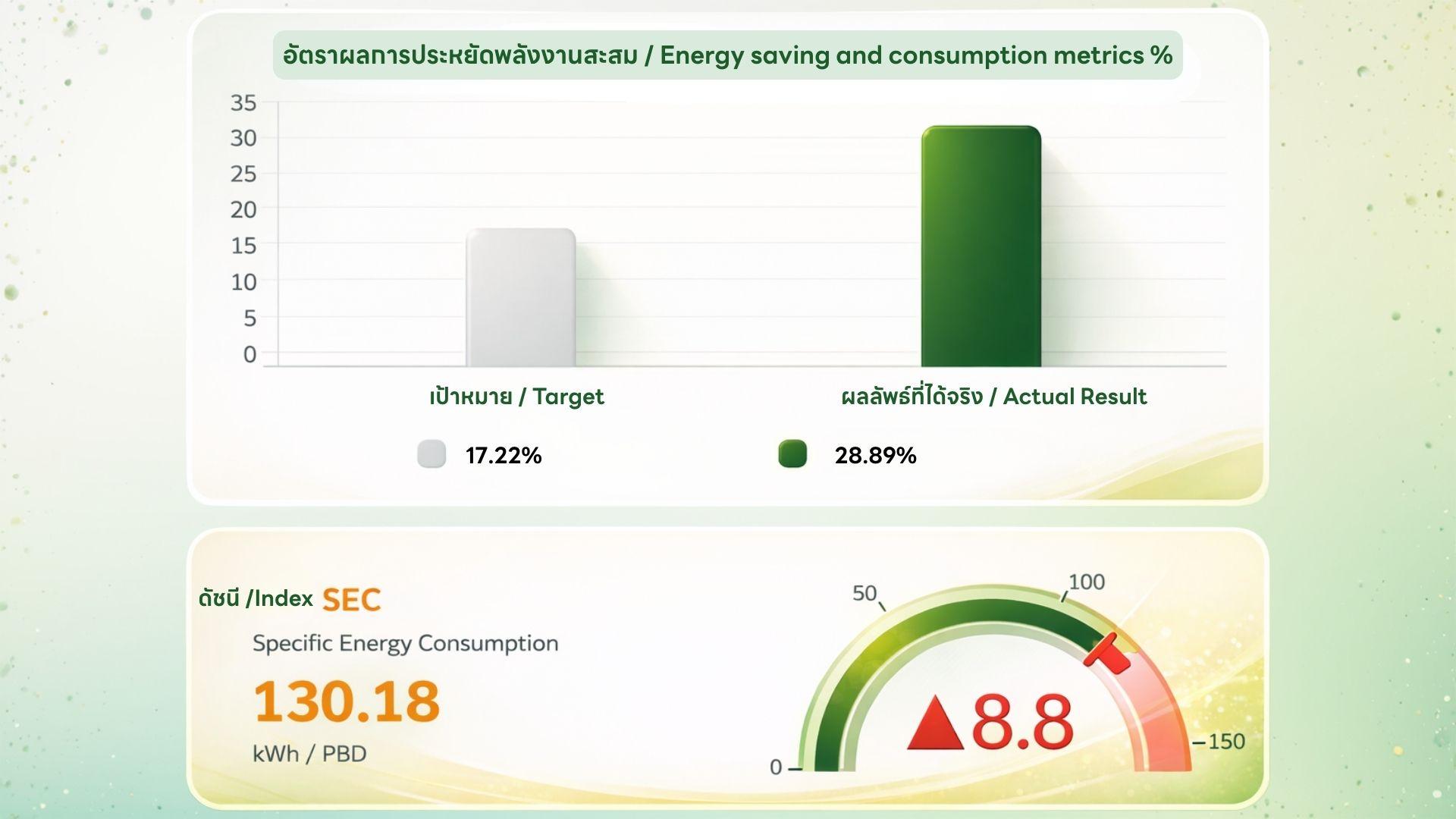
In fiscal year 2025 (B.E. 2568), the Company systematically implemented its energy management strategy by integrating energy conservation measures under the ESCO project with the management of building engineering systems. This initiative aimed to enhance energy efficiency, reduce operational costs, and minimize environmental impacts. The results of the implementation demonstrate clear and measurable achievements as follows:
1) Energy Performance
The Company achieved an Accumulated Energy Saving of 28.89%, which significantly exceeded the contractual Guaranteed Saving target of 17.22%. This result reflects the effectiveness of implemented measures and the organization’s disciplined monitoring under its energy management framework.
2) Economic & Environmental Impact
As a result of the energy-saving initiatives, the Company was able to:
Reduce electricity costs by more than THB 7.9 million
Reduce greenhouse gas emissions by 964.21 tCO2e, exceeding the annual target of 600 tCO2e
These outcomes demonstrate the Company’s progress toward becoming a Low Carbon Organization and its commitment to tangible environmental performance.
3) Key Findings & Challenges
Although overall energy-saving performance showed strong progress, certain efficiency indicators require continued monitoring:
Specific Energy Consumption (SEC) averaged 130.18 kWh/PBD, which is higher than the control target of 121.43 kWh/PBD.
The main contributing factors included:Increased service load during seasonal disease outbreaks
Higher ambient temperatures during the summer period (April–June), which intensified HVAC system operations to maintain medical-grade indoor air quality and temperature standards.
Total Energy Consumption decreased by an average of 3.11%. While this reflects positive direction, it remains below the challenging target of 5%, mainly due to service expansion and the adoption of new energy-intensive medical technologies.
4) Strategic Adjustments & Next Steps
The Energy and Environmental Management Committee has established measurable improvement strategies to control costs and reduce SEC, including:
Load profile optimization and peak demand control to reduce maximum electricity demand and enhance energy stability
Enhancement of building envelope and thermal insulation, particularly roof improvements, to reduce heat gain and HVAC load
Solar Rooftop feasibility assessment to increase clean energy utilization, offset rising electricity demand, and support long-term greenhouse gas reduction targets
Water Management — Overview
Introduction
Develop Energy and Water Resource Management System
Water Resource Management
The Company has implemented a water conservation project by reusing treated wastewater from the wastewater treatment system. The treated water is further filtered through a carbon filter tank system, which helps remove turbidity, color, odor, and organic substances by using activated carbon filtration.
The carbon filter is installed inside the filtration tank, allowing water to flow through the pores and gaps between carbon particles. This process improves water quality and ensures safety before being reused in areas that do not directly affect users, such as watering plants and landscape maintenance.
In addition, the Company continuously maintains its water supply system and installs automatic faucets to reduce unnecessary water consumption and promote more efficient water usage.
Water — Plan & Guidelines
Has a Water Management Plan
Yes
Plan Description
Compliance with Water Management Principles and Standards
Strategy and Conceptual Framework
The Company adheres to the principles of sustainable water resource management, recognizing that water is a fundamental factor in business operations and in ensuring the hygiene and well-being of patients and service users. The organization has therefore established an integrated water management policy based on the Circular Economy concept and the 3Rs principles (Reduce, Reuse, Recycle) to maximize water-use efficiency, minimize water loss, and reduce environmental impacts.
At the same time, the Company strictly complies with relevant laws and regulations, including the Enhancement and Conservation of National Environmental Quality Act B.E. 2535 (1992) governing water pollution control, as well as the Department of Health Notification on Drinking Water Quality Standards B.E. 2563 (2020) to ensure the cleanliness and safety of water used within the hospital.
Wastewater Treatment System and Technology
The Company has invested in constructing and operating a high-efficiency wastewater treatment system, utilizing the Activated Sludge (AS) process, a globally recognized biological treatment technology.
The treatment process is designed to cover wastewater generated from all operational activities, with key stages including:
Pretreatment
Removal of solid waste and separation of grease and oil from wastewater.
Biological Treatment
Microorganisms are used to biologically decompose organic substances within aeration tanks.
Sedimentation
Separation of microbial sludge from treated water, with a return sludge system to maintain treatment efficiency.
Quality Control Measures and Legal Compliance
To ensure the effectiveness of water management, the Company has established strict monitoring and compliance measures as follows:
Water Quality Monitoring
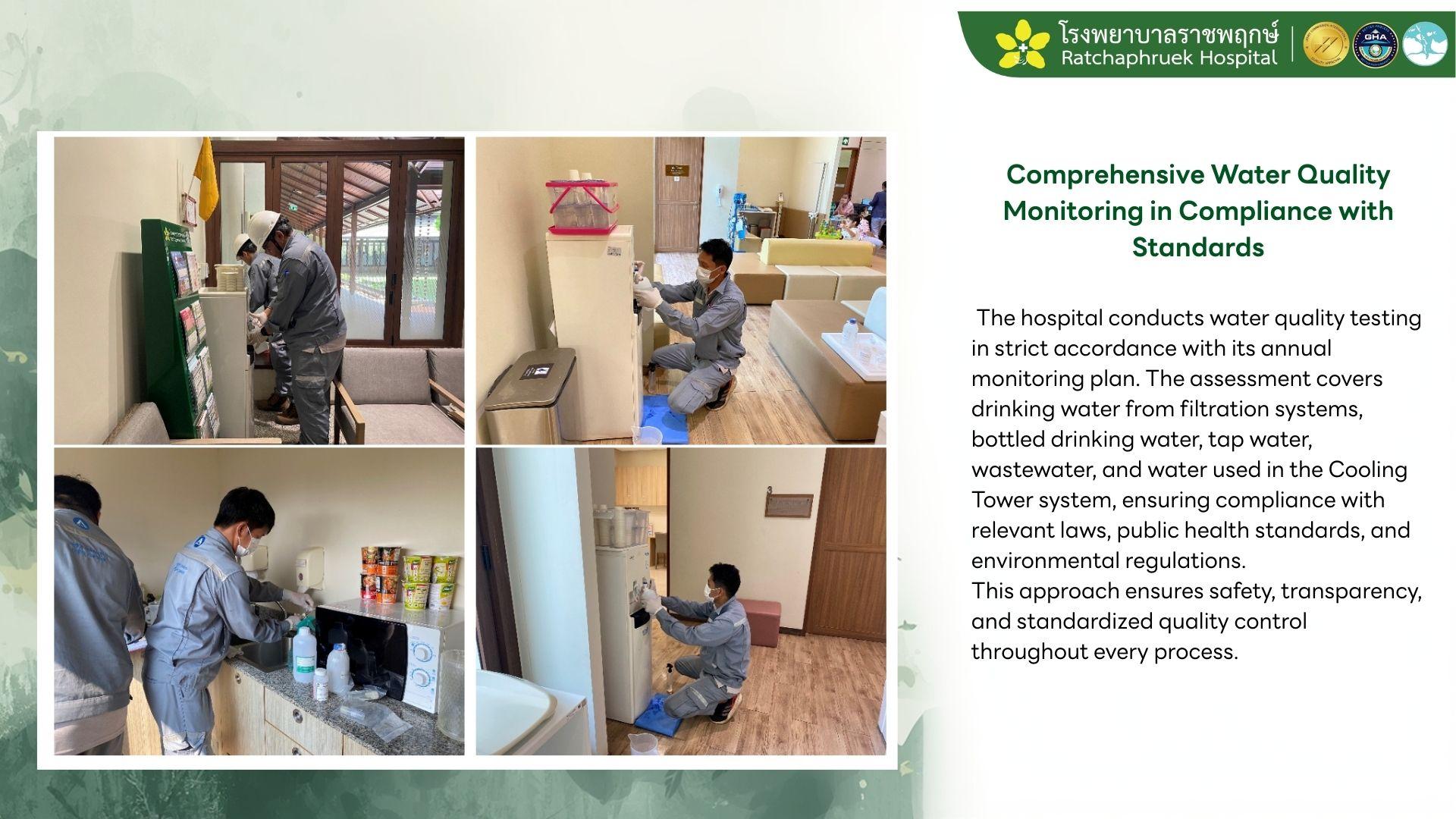
Wastewater quality is tested daily and monthly, with key parameters analyzed, including:
pH
Biochemical Oxygen Demand (BOD)
Chemical Oxygen Demand (COD)
Suspended Solids (SS)
Oil and Grease
Sludge volume
Legal Compliance
All wastewater quality results must consistently comply with the standards set by the Ministry of Natural Resources and Environment, ensuring that the hospital’s operations do not create negative impacts on surrounding ecosystems or communities.
Data Management and Resource Efficiency
Data Analytics
Water consumption data is continuously recorded and analyzed through water meter monitoring systems, providing a data-driven basis for resource planning and reduction initiatives.
Water Conservation Initiatives
Reduce
Installation of water-saving sanitary equipment and regular inspection of pipeline systems to prevent leakage.
Reuse / Recycle
Treated and disinfected water meeting safety standards is reused for non-potable purposes, such as landscape irrigation and outdoor cleaning.
This practice helps reduce municipal water consumption and minimize wastewater discharge into public systems.
Water Management Plan
The Company has developed a plan to further enhance water management efficiency across its facilities. The strategy focuses on improving water efficiency through technology implementation, operational management, and employee participation.
The objective is to reduce excessive water consumption, lower long-term operational costs, and support sustainable water resource management in alignment with the Company’s environmental strategy.
One key measure currently under consideration involves upgrading water fixtures to high-efficiency equipment. The Company plans to replace existing standard showerheads and faucets with water-saving devices certified under industrial water conservation standards or the Thai Water Efficiency Label No. 5. These fixtures will regulate water flow while maintaining user comfort.
Based on preliminary technical assessments, the implementation of this measure is expected to generate significant water savings of approximately 11,532.90 cubic meters per year, equivalent to an estimated annual cost reduction of approximately 360,403.26 THB.
The project requires an estimated investment budget of approximately 891,000 THB, with an estimated payback period of approximately 2.47 years. These figures represent preliminary estimates used for planning and policy decision-making purposes.
Additional Measures Under Consideration
The Company is also considering several supplementary initiatives, including:
Establishing a regular inspection and maintenance plan for plumbing systems, including the installation of zonal water meters to improve monitoring and water-use control.
Introducing additional water-saving technologies, such as dual-flush toilets, low-water or waterless urinals, and greywater recycling systems.
Implementing water management strategies for supporting operations such as laundry services, landscape irrigation, and the reuse of condensate water from air-conditioning systems or rainwater harvesting.
Developing organizational water efficiency policies, setting water reduction targets, and promoting internal communication and training to enhance employee awareness.
The implementation of this Water Management Plan serves as a key environmental management framework for the organization. It will enable the hospital to manage water resources more efficiently, minimize environmental impacts, and support long-term sustainable growth.
Water — Withdrawal, Discharge & Consumption
Water Withdrawal, Discharge & Consumption
| Metric | Current Year | Previous Year | Two Years Ago |
|---|---|---|---|
| Total water withdrawal (Cubic meters) | 91,750 | 98,008 | 106,910 |
| Total water withdrawal by third-party water (Cubic meters) | |||
| Total water withdrawal by surface water (Cubic meters) | |||
| Total water withdrawal by groundwater (Cubic meters) | |||
| Total water withdrawal by seawater (Cubic meters) | |||
| Total water withdrawal by produced water (Cubic meters) | |||
| Percentage of wastewater treated before discharge (%) | |||
| Total water discharge (Cubic meters) | |||
| Total water discharge to third-party water (Cubic meters) | |||
| Total water discharge to surface water (Cubic meters) | |||
| Total water discharge to groundwater (Cubic meters) | |||
| Total water discharge to seawater (Cubic meters) | |||
| Total water consumption (Cubic meters) | 91,750 | 98,008 | 106,910 |
| Recycled water (Cubic meters) |
Water — Targets
Introduction
Sustainable Water Management
The Company recognizes that water resources are essential to healthcare services, patient hygiene, and overall operational continuity. Currently, water-related risks are becoming increasingly significant due to climate change, population growth, and economic development, which may affect the long-term security of water resources. Therefore, the Company places great importance on effective water management to ensure the efficient use of water resources and minimize environmental impacts.
The Company manages water use within its hospital operations systematically by applying the 3Rs principles (Reduce, Reuse, Recycle) to maximize water-use efficiency, reduce dependence on natural water sources, and promote water reuse. This approach is aligned with Sustainable Development Goal 6 (SDG 6: Clean Water and Sanitation) and Thailand’s 20-Year Water Resources Management Master Plan.
Water used within the hospital primarily comes from the municipal water supply and is utilized in supporting activities such as landscape maintenance and green space irrigation. Water used in various activities is directed into the hospital’s wastewater treatment system before being reused in appropriate applications. This practice helps increase water-use efficiency, reduce the demand for fresh water, and minimize wastewater discharge into the environment.
In addition, the Company has established water management practices aimed at maximizing the benefits of water use while reducing environmental risks and preventing potential conflicts over water use with surrounding communities. The Company conducts its operations responsibly with consideration for all stakeholders.
The Company also promotes collaboration with suppliers and business partners in water conservation and sustainable water management by integrating the 3Rs principles into the Supplier Code of Conduct and operational guidelines, thereby extending water risk management practices throughout the Company’s supply chain.
Water Management Targets
The Company aims to continuously improve water-use efficiency each year by implementing the 3Rs principles (Reduce, Reuse, Recycle). It also ensures that water resources are sufficient in quantity and appropriate in quality to support healthcare services.
Furthermore, the Company is committed to improving water-use systems and wastewater treatment efficiency to reduce reliance on natural water sources. At the same time, the Company carefully considers both the quality and quantity of water usage to avoid adverse impacts on surrounding communities and the environment, while supporting sustainable water resource management in the long term.
Has Set Targets
Yes
Targets
| Target | Base Year | Base Year Value | Target Year | Target Change (%) | Unit | Per Unit (Intensity) | Per Unit — Please Specify |
|---|---|---|---|---|---|---|---|
| Reduction of water withdrawal | 2,024 | 98,008 | 2,025 | 5 | Cubic meters | Cubic meter of product | Cubic meter of product |
Water — Performance & Outcomes
Has Performance Results
Yes
Performance Description
Sustainable Water Management Performance – FY 2025
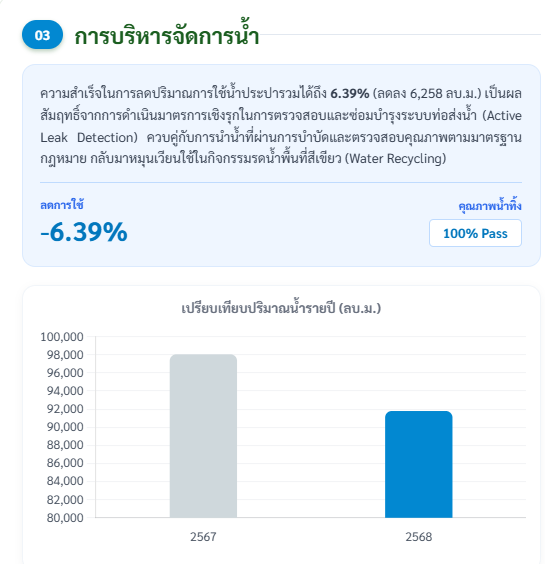
In 2025, Ratchaphruek Hospital successfully enhanced its water resource management efficiency, achieving a 6.39% reduction in total municipal water consumption compared to the previous year. This exceeded the Company’s organizational target of more than 5% reduction.
This achievement resulted from proactive measures, including systematic leak detection and repair (Leak Detection & Repair) and improvements in internal water usage behavior.
Economic & Environmental Impact
The reduction in water consumption generated direct utility cost savings of approximately THB 234,000 per year. It also reduced reliance on natural water sources and lowered wastewater treatment burdens.
Furthermore, wastewater quality monitoring results remained fully compliant with all legal standards (100% compliance), reflecting strict responsibility toward the community and the environment.
In-depth Analysis & Challenges
Although overall water consumption decreased, analysis of the Water Intensity indicator showed an average of 2,497.42 liters per patient bed day (Liter/PBD), which remains slightly above the control target (approximately 2.7%).
The primary contributing factors include:
Enhanced Infection Control standards, requiring increased water usage for cleaning and sterilization to ensure maximum patient safety.
Expansion of outpatient (OPD) services, which increased overall water consumption but is not fully reflected in the patient bed-day (PBD) denominator.
Strategic Adjustment
The working committee has established the next-phase strategy, focusing on:
Investment in high-efficiency water fixtures.
Installation of sub-metering systems in specific operational zones to enable more precise monitoring and management of water consumption by department.
These measures aim to reduce Water Intensity to within the target threshold.
Water Consumption Analysis
Annual Overview
Total municipal water consumption in 2025 amounted to 91,750.00 cubic meters, compared to 98,008.00 cubic meters in 2024.
This represents a net reduction of 6,258.00 cubic meters, or a 6.39% year-on-year decrease, exceeding the organizational target of more than 5%.
Key Success Factors
The significant reduction resulted from “Quick Win” initiatives, including:
Intensive inspection and repair of leaks in the main water supply system.
Maintenance of sanitary fixtures in public areas.
Optimization of water pressure in each operational zone.
Monthly Trend Analysis
Water consumption declined consistently during Q1 and Q2 of 2025 compared to the previous year.
However, an upward trend was observed in September and October, consistent with the rainy season, during which more frequent cleaning of external areas and drainage systems was required. Additionally, seasonal disease-related patient increases contributed to higher water usage.
Water Intensity Analysis (Liter/PBD)
Performance
The average water consumption per patient bed day (PBD) in 2025 was 2,497.42 liters/PBD.
Comparison with Target
This figure slightly exceeded the control threshold of 2,430.45 liters/PBD by approximately 2.7%.
Challenge Analysis
The higher-than-target intensity is primarily attributable to:
Strengthened infection control measures requiring increased cleaning and sterilization activities in patient rooms and operating theaters.
Expansion of outpatient (OPD) services, which indirectly increases water consumption in common areas but is not fully accounted for in the PBD denominator.
Cost Management Analysis
Financial Savings
Effective water management reduced total water expenses from THB 3,061,090.24 in 2024 to THB 2,826,999.92 in 2025.
Return on Efficiency
This represents total cost savings of THB 234,090.32, or a 7.65% reduction, directly lowering hospital operating costs and demonstrating the financial return of investments in water system maintenance.
Effluent Quality Control
Legal Compliance
Beyond consumption management, the Company prioritizes strict wastewater quality control.
Average annual effluent monitoring results for key indicators — including:
Biochemical Oxygen Demand (BOD)
Chemical Oxygen Demand (COD)
Suspended Solids (SS)
pH levels
were fully compliant with all applicable legal standards (100% compliance).
Positive Environmental Impact
Strict effluent quality control confirms the effectiveness of the Company’s Activated Sludge wastewater treatment system and demonstrates strong social and environmental responsibility by preventing pollution discharge into public water sources.
Waste Management — Overview
Introduction
Waste and Unused Material Management
The Company has established a committee for waste management and has implemented clear waste separation practices, dividing it into two categories: general waste and infectious waste. The details and management approach are as follows:
• General Waste refers to waste materials generated from the Company's operations, such as cardboard boxes, packing crates, and plastic straps. The waste committee will review and classify all waste, considering whether it can be sold to local buyers, and will conduct regular bidding each year.
• Infectious Waste, such as face masks, bandages, and cotton swabs, must be disposed of in designated "infectious waste" bags, separated by trash bins, and stored securely.
The waste will then be collected by the local municipal authorities and contracted private companies for proper disposal and destruction. The Company recognizes the importance of waste and unused material management, focusing on maximizing the utility of waste and adding value through technology.
This not only helps reduce environmental impact but also lowers the costs of waste disposal resulting from the Company’s operations, both directly and indirectly. It also enhances the value of waste for potential reuse in other areas.
The Company’s approach to managing waste and unused materials is as follows:
1) Maximizing the use of raw materials and materials by developing and adding value throughout the production process to delivery to consumers.
2) Focusing on sorting and reusing materials.
3) Improving work processes to minimize waste generation.
4) Adding value by using waste or by-products for other beneficial purposes.
Hazardous Material and Waste Management
1) The Company has established a systematic process for the safe handling of chemicals within the hospital to ensure the safety of employees who use or come into contact with chemicals.
2) The Company has created safety data sheets (Material Safety Data Sheets) and a register of all chemicals used in the hospital, which are made available and posted in the areas where these chemicals are used
Waste — Plan & Guidelines
Has a Waste Management Plan
Yes
Plan Description
Waste management in hospitals must be carried out systematically. Executives and related personnel must play a role in setting policies, planning waste management in accordance with standards, ensuring safety and effectively complying with relevant laws, including promoting the reduction of waste or the creation of unnecessary waste, leaving the least amount of waste to be disposed of, as well as the proper use of waste. Waste management in hospitals can be divided into 3 main types as follows:
1) General waste
2) Infectious waste
3) Toxic or hazardous waste
The company has waste and waste generated from all 3 types of business operations, especially type 3, which is specific toxic or hazardous waste generated from hospital service and treatment processes that must be managed in a special manner according to specific standards or laws, such as chemical waste (medical laboratories), waste with high content of heavy metals, and radioactive waste, which must be managed properly in 2024.
Waste Management Plan
The company has signed a memorandum of understanding on the destruction of hazardous waste and infectious waste with Khon Kaen Municipality. The company's staff will separate hazardous waste and infectious waste into red plastic bags for the municipal staff to collect and destroy. They will come to collect the waste every day, once a day.
General Waste Management
The company collects and sells to external buyers. The general waste sold includes double-sided paper, cardboard, glass, and plastic.
Infectious waste
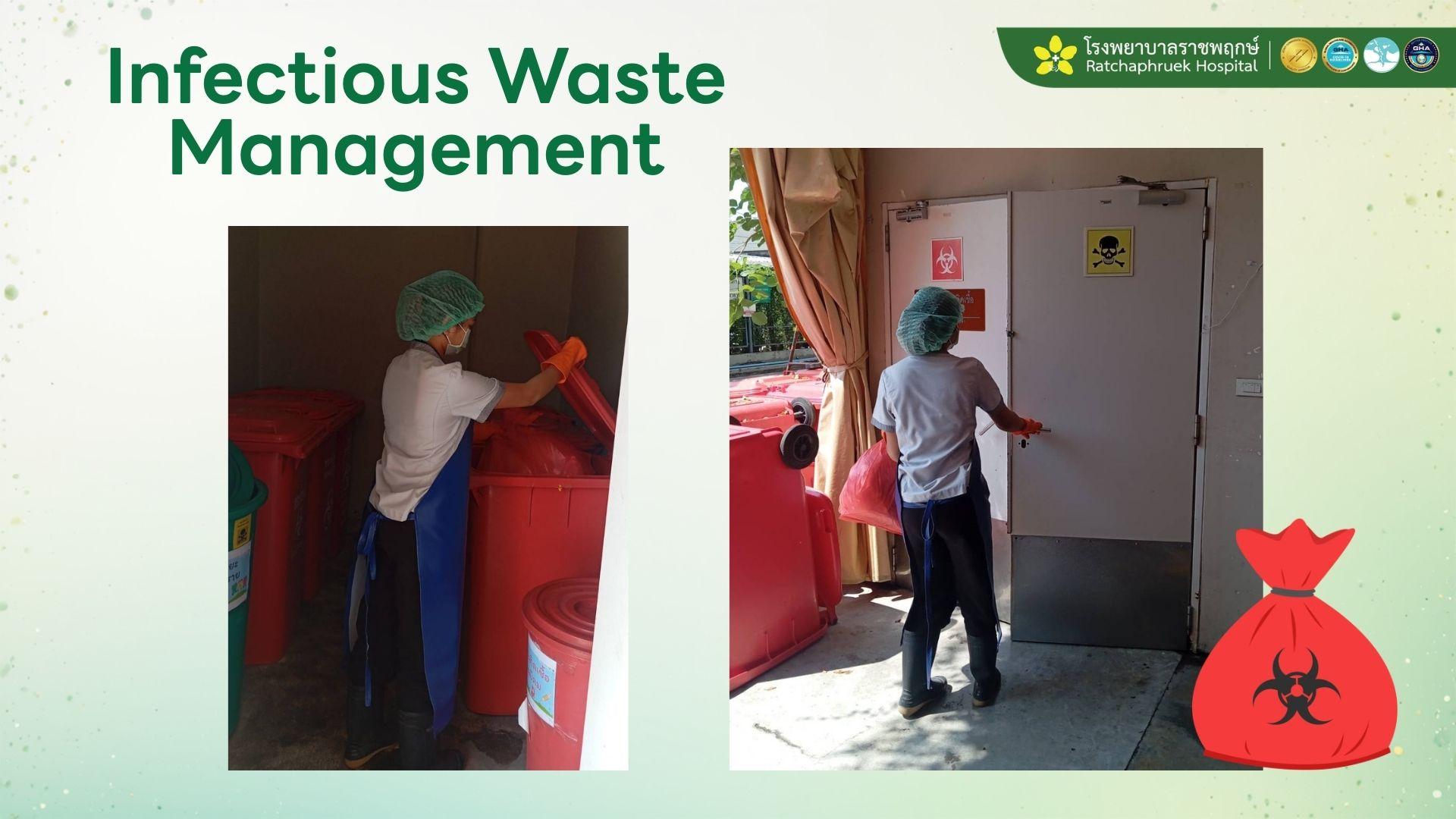
However, since the company is engaged in medical and nursing services, the company does not reuse waste such as syringes, syringes, gloves, masks, etc. that are classified as hazardous.
However, since the company is engaged in medical and nursing services, the company does not reuse waste such as syringes, syringes, gloves, masks, etc. that are classified as hazardous. The company has a policy for waste management within the hospital, which is controlled and supervised by the Prevention and Control of Infection Committee (PCIC) to ensure efficient medical waste management. All types of waste management use the World Health Organization's waste management guidelines (Safe management of wastes from health-care activities, World Health Organization, Second Edition).
Waste — Generation, Disposal & Recycling
Waste Generation, Disposal & Recycling
| Metric | Current Year | Previous Year | Two Years Ago | Remark |
|---|---|---|---|---|
| Total waste generated (Kilograms) | 200,105.13 | 827,174 | 124,831.15 | |
| Non-hazardous waste (Kilograms) | 131,072 | 115,448 | 48,720.8 | In 2024, the Company began recording the weight of organic waste, which was subsequently included in the total waste calculation. As a result, the reported waste volume increased compared to 2023. |
| Non-hazardous waste - Landfilling (Kilograms) | ||||
| Non-hazardous waste - Incineration (with energy recovery) (Kilograms) | ||||
| Non-hazardous waste - Incineration (without energy recovery) (Kilograms) | ||||
| Non-hazardous waste - Other disposal operations (Kilograms) | ||||
| Hazardous waste (Kilograms) | 69,033.13 | 711,726 | 76,110.35 | |
| Hazardous waste - Landfilling (Kilograms) | ||||
| Hazardous waste - Incineration (with energy recovery) (Kilograms) | ||||
| Hazardous waste - Incineration (without energy recovery) (Kilograms) | ||||
| Hazardous waste - Other disposal operations (Kilograms) | ||||
| Total reused/recycled waste (Kilograms) | ||||
| Reused/Recycled non-hazardous waste (Kilograms) | ||||
| Reused non-hazardous waste (Kilograms) | ||||
| Recycled non-hazardous waste (Kilograms) | ||||
| Reused/Recycled hazardous waste (Kilograms) | ||||
| Reused hazardous waste (Kilograms) | ||||
| Recycled hazardous waste (Kilograms) |
Waste — Targets
Has Set Targets
Yes
Targets
| Waste Type | Disposal Approach | Target | Base Year | Base Year Value | Target Year | Target Change (%) | Unit |
|---|---|---|---|---|---|---|---|
| Non-hazardous waste | 2758 · Description: Reuse · 2759 · Description: Recycle | Reduce waste volume | 2,025 | 0 | 2,027 | 2 | Kilograms |
Waste — Performance & Outcomes
Has Performance Results
Yes
Performance Description
Waste and Waste Management Performance 2025
In 2025, Ratchaphruek Hospital implemented a comprehensive waste management system under the Company’s Environmental Policy framework. The operations were aligned with the World Health Organization (WHO: Safe Management of Wastes from Health-care Activities) guidelines and relevant Ministry of Public Health regulations.The system covers the entire waste management process, including source segregation, collection, storage, transportation, disposal, and monitoring.
Oversight is conducted through:
Infection Prevention and Control Committee (PCIC)
Facilities Management and Safety Committee (FMS)
The Company established a target to control waste generation in each category to achieve at least a 5% reduction in accordance with corporate objectives.
2. Key Activities Implemented in 2025
2.1 Source Segregation Enhancement
Improved color-coded waste classification system and clear signage at all service points
Conducted training programs for new employees and annual refresher training
Performed monthly random audits to assess segregation accuracy
Results:
Waste segregation accuracy rate exceeded 90%
Reduced risk of cross-contamination between general waste and infectious waste
2.2 Control of Infectious and Hazardous Waste
Controlled the generation rate of infectious waste, sharps, and cytotoxic waste within the 5% target threshold
Implemented dedicated transportation routes for hazardous waste
Ensured disposal by licensed external contractors with complete documentation and traceability
Results:
No leakage or environmental incidents
Zero complaints from the community
Zero legal violations
2.3 Single-use Reduction Initiative
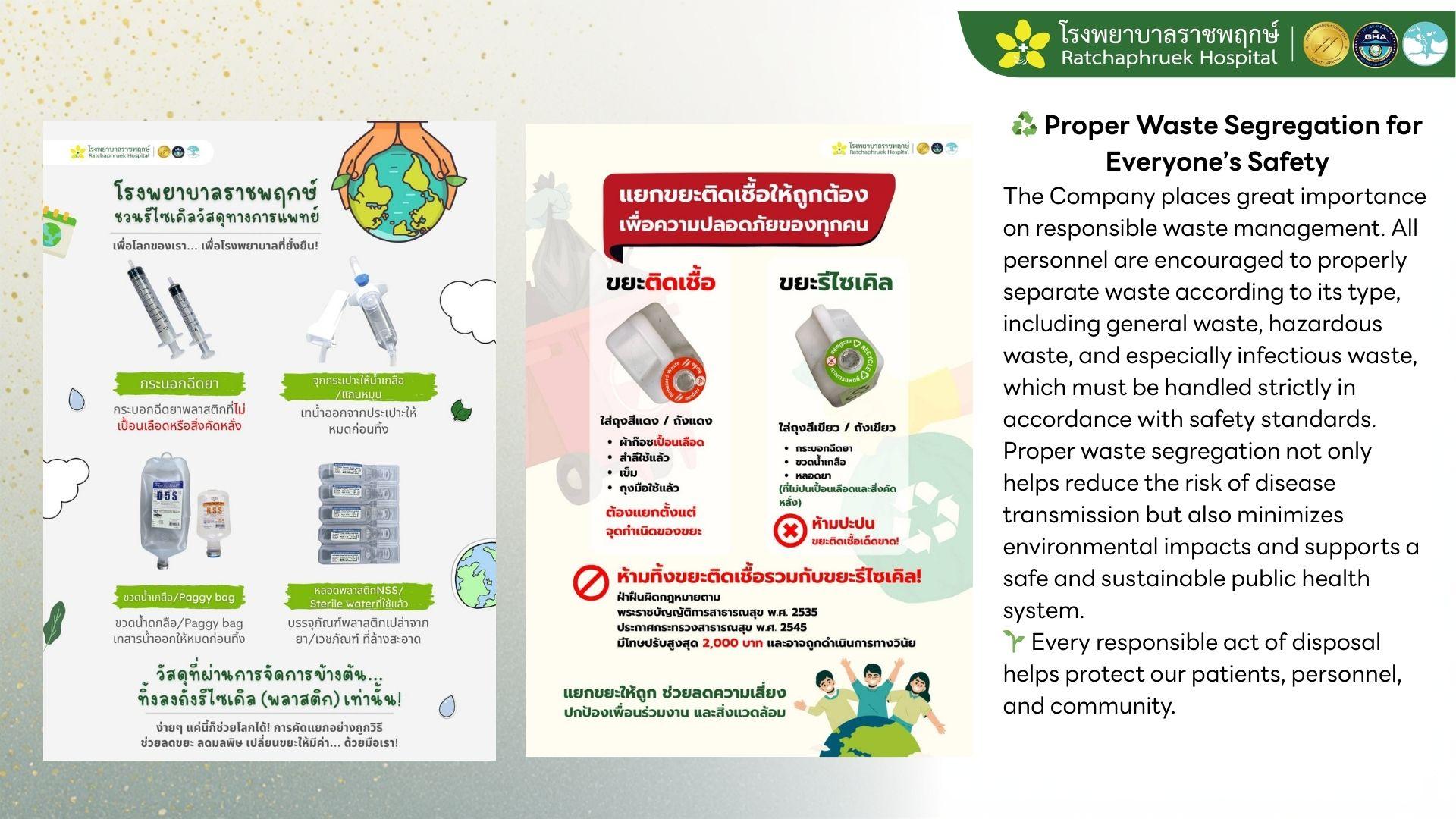 Promoted the use of reprocessed and reusable medical devices in compliance with safety standards
Reduced single-use plastic consumption in supporting departments
Results:
Decreased overall infectious waste volume
Reduced disposal costs, particularly for high-cost infectious waste
2.4 Recycling and Food Waste Management
Implemented source-level recycling segregation
Supported the sale of recyclable materials
Controlled food waste volume in line with the 5% reduction target
Results:
Generated revenue from recyclable materials
Reduced total net waste volume
Supported Circular Economy principles
Summary of Waste Management Performance 2025
In 2025, the Company maintained a structured and systematic waste management approach covering the full lifecycle of waste handling. Governance was conducted under designated committees and aligned with legal and international standards for healthcare waste management.
Key Performance Highlights
Achieved targeted 5% reduction in waste categories
Maintained waste segregation accuracy above 90%
Controlled infectious, sharps, hazardous, and cytotoxic waste within established thresholds
Ensured disposal by legally authorized contractors with full documentation
Environmental and Governance Outcomes
No hazardous waste leakage incidents
Zero environmental complaints
Zero legal violations
Reduced health, safety, and legal risks
Positive Organizational Impact
Lowered infectious waste disposal costs through improved segregation
Supported Circular Economy through recycling and reduction of single-use materials
Strengthened the Company’s sustainability and responsible healthcare image
Performance vs Target Analysis
In 2025, the hospital’s total net waste amounted to 200,105 kilograms, representing an increase of 6.89% compared to the previous year. This result did not meet the strategic target of a 5% reduction.
However, a deeper analysis of individual waste categories reveals significant positive developments that contribute to long-term sustainability performance.
Infectious Waste Management Efficiency
Despite an increase in patient volume (discharged patients increased by 2.28%), the volume of infectious waste and sharps waste decreased by 3.90%.
This outcome reflects improved waste segregation efficiency among medical personnel. Proper classification of general waste versus infectious waste reduced the volume of waste requiring specialized treatment and disposal, which carries higher costs and greater environmental impact.
Analysis of the Increase in General Waste
General waste increased by 19.87%, primarily due to two key factors:
1. External Factor
The recovery of hospital activities and increased patient and visitor volume resulted in higher consumption-related waste.
2. Improved Segregation Practices
The increase also represents a positive outcome of stricter waste segregation measures. Non-contaminated materials were more accurately separated as general waste rather than being improperly disposed of as infectious waste, as had occurred previously. This reflects improved risk management and regulatory compliance.
Food Waste Management Excellence
The hospital achieved a significant 13.92% reduction in food waste (a decrease of more than 3,000 kilograms), clearly exceeding organizational targets.
This achievement resulted from:
Improved supply chain planning aligned with actual patient demand
Reduced food loss during preparation
Active participation in the Green Canteen initiative
This represents one of the most tangible and impactful sustainability successes of the year.
Recyclable Waste Trend
Recyclable waste volume decreased by 3.65%, consistent with the organization’s paper reduction and single-use plastic reduction policies.
Despite the decline in total weight, revenue from recyclable materials remained stable. This indicates that although overall volume decreased, the recyclable materials collected were of higher quality and higher market value (high-value recyclables).
GHG — Plan & Guidelines
Has a GHG Management Plan
Yes
Plan Description
Development of Low Carbon and Climate Resilient Health Care
The development of low carbon health care is divided into 3 phases:
Preparation phase
1. Determining policies and responsible persons
1) Determining policies for operations towards becoming a low carbon hospital and preparing for emergency situations from
2) Determining responsible persons for working groups/committees/teams and roles and responsibilities for operations towards becoming a low carbon hospital and preparing for emergency situations from climate change (floods/droughts/storms)
2 Planning and communication
1) Determining a low carbon and climate change-aware hospital operation plan
2) There is public communication to create understanding of operations with participation from the entire organization.
Implementation phase
Developing a low carbon health care hospital
1. The hospital operates according to the JCI - Global Health Impact (GHI) standards towards becoming a low carbon hospital.
2. Calculating greenhouse gas emissions for the hospital
1) Set a target for reducing greenhouse gas emissions within the hospital.
2) Collect the amount of activities that generate greenhouse gases within the hospital, at least including: - Electricity usage - Water usage - Cooking gas usage - Paper usage - Diesel/gasoline usage - Urea fertilizer usage - Infectious waste, hazardous waste, general waste - Others
3) Calculate the amount of greenhouse gas emissions through the Health Care Emissions Impact Calculator Facility.
4) The amount of greenhouse gas emissions according to the specified target.
3. Establish guidelines/guidelines for preparing for emergencies from climate change.
The guidelines/guidelines cover the following issues:
1) The hospital assesses its vulnerability and impacts from climate change according to the flood checklist. Or drought or storm
2) Analyze the risks and vulnerabilities of the hospital according to the risk factors
3) Set guidelines for monitoring the trends of disaster situations
4) Create guidelines for preparing a plan to cope with climate disasters, divided into prevention, preparation, response, and recovery, etc.
5) Create a contingency plan to prepare for the situation
Monitoring and evaluation period
Monitoring, evaluation, reviewing, and developing efficient processes
1. Analyze and compare the amount of greenhouse gas emissions to prepare a plan to reduce greenhouse gas emissions of the hospital
2. Evaluate and analyze and review guidelines for preparing a plan to cope with climate disasters
3. Review, rehearse and understand the contingency plan to prepare for the situation
4. Review and make proposals or set a project plan to develop and improve the efficiency of the operation process.
Plan Document Link
https://investor.rph.co.th/en/sustainability/environmental
GHG — Emissions
GHG Emissions
| Metric | Current Year | Two Years Ago |
|---|---|---|
| Total GHG emissions (Metric tonnes of carbon dioxide equivalent) | 3,358 | 0 |
| Total greenhouse gas emissions 1 (Metric tonnes of carbon dioxide equivalent) | 621 | |
| Total greenhouse gas emissions 2 (Metric tonnes of carbon dioxide equivalent) | 2,259 | |
| Total greenhouse gas emissions 3 (Metric tonnes of carbon dioxide equivalent) | 478 |
GHG — Emissions Verification
Introduction
In 2025, the Company hired a Carbon Footprint Consultant to plan and provide advice on environmental sustainability management.
Emissions Verified by a Third Party
Yes
Verifying Body
3180
GHG — Principles & Standards
Principles & Standards Applied
| Standard |
|---|
| 2671 |
| 2676 |
GHG — Targets
Has Set GHG Targets
Yes
GHG Targets — Net Zero
Introduction
The Company aims to achieve Net-Zero Greenhouse Gas Emissions by reducing net Scope 1, 2 and 3 greenhouse gas emissions by more than 5 percent by 2031 compared to the base year of 2025, using carbon offset measures in conjunction with greenhouse gas emission reduction.
Net Zero Targets
| Emission Scope | TGO Certification | Base Year | Base Year Emissions | Near-term Target Year | Near-term Target Change (%) | Long-term Target Year | Long-term Target Change (%) | Target Year | Target Change (%) | Unit |
|---|---|---|---|---|---|---|---|---|---|---|
| 2716 | Net zero pathway | 2,025 | 0 | 2,035 | 10 | 2,050 | 0 | 2,035 | 10 | Metric tonnes of carbon dioxide equivalent |
GHG — Performance & Outcomes
Has Performance Results
Yes
Performance Description
Greenhouse Gas Emissions Reduction Performance
In 2025, Ratchaphruek Hospital Public Company Limited demonstrated a strong commitment to environmental management in alignment with ESG principles by preparing and verifying its Corporate Carbon Footprint of Organization (CFO).
The assessment covered all medical service buildings and office buildings under the operational control boundary. The results were verified by a leading independent third party, BSI Group (Thailand) Co., Ltd., in accordance with the criteria of the Thailand Greenhouse Gas Management Organization (Public Organization) (TGO).
The performance results are summarized as follows:
Performance Analysis & Key Insights
Scope 1 Analysis (18.49%)
Total Scope 1 emissions amounted to 621 tCO2e, arising from key on-site activities, including:
Fuel consumption for vehicles (emergency ambulances and patient transport vehicles)
Fuel use for backup generators
Refrigerant leakage from air-conditioning systems
Management Approach:
The Hospital focuses on preventive maintenance of air-conditioning systems to minimize refrigerant leakage and improve operational efficiency.
Scope 2 Analysis (67.27%)
Scope 2 represents the most significant aspect of the organization’s GHG emissions, totaling 2,259 tCO2e.
These emissions result primarily from purchased electricity used in air-conditioning systems, medical equipment, and lighting systems throughout the hospital.
Management Approach:
The Hospital will intensify building energy efficiency measures and implement a Solar Rooftop project to substitute grid electricity consumption. This initiative is expected to significantly reduce Scope 2 emissions in the coming years.
Scope 3 Analysis (14.24%)
Scope 3 emissions cover other indirect activities related to energy acquisition, transportation, waste management, and water consumption.
Management Approach:
The Hospital emphasizes waste minimization at source and efficient water resource management, which will indirectly contribute to reducing carbon emissions in this category.
Verification Statement
The GHG data covering the period from 1 January to 31 December 2025 was verified by an independent verifier. No material misstatements were identified (Materiality threshold +5%).
The Hospital has officially registered its Corporate Carbon Footprint with the Thailand Greenhouse Gas Management Organization (TGO) for Scope 1 and Scope 2 emissions, totaling 2,880 tCO2e.
This achievement reflects Ratchaphruek Hospital’s responsibility in managing environmental impacts, enhancing energy efficiency, and supporting sustainable development goals. It also aligns with environmental and sustainability requirements under JCI standards, ESG reporting frameworks, and sustainability best practices within the healthcare sector.
Environmental Legal Incidents
Number of Incidents — Introduction
Throughout 2025, the Company has had no incidents related to violating laws or creating negative impacts on the environment.
Legal Violation Incidents
| Metric | Current Year | Previous Year | Two Years Ago |
|---|---|---|---|
| Number of cases or incidents of legal violations or negative environmental impact (cases) | 0 | 0 | 0 |
Other Environmental Management
Plan Description
Information on Compliance with Environmental Principles and Standards
Compliance with Environmental Management Principles and Standards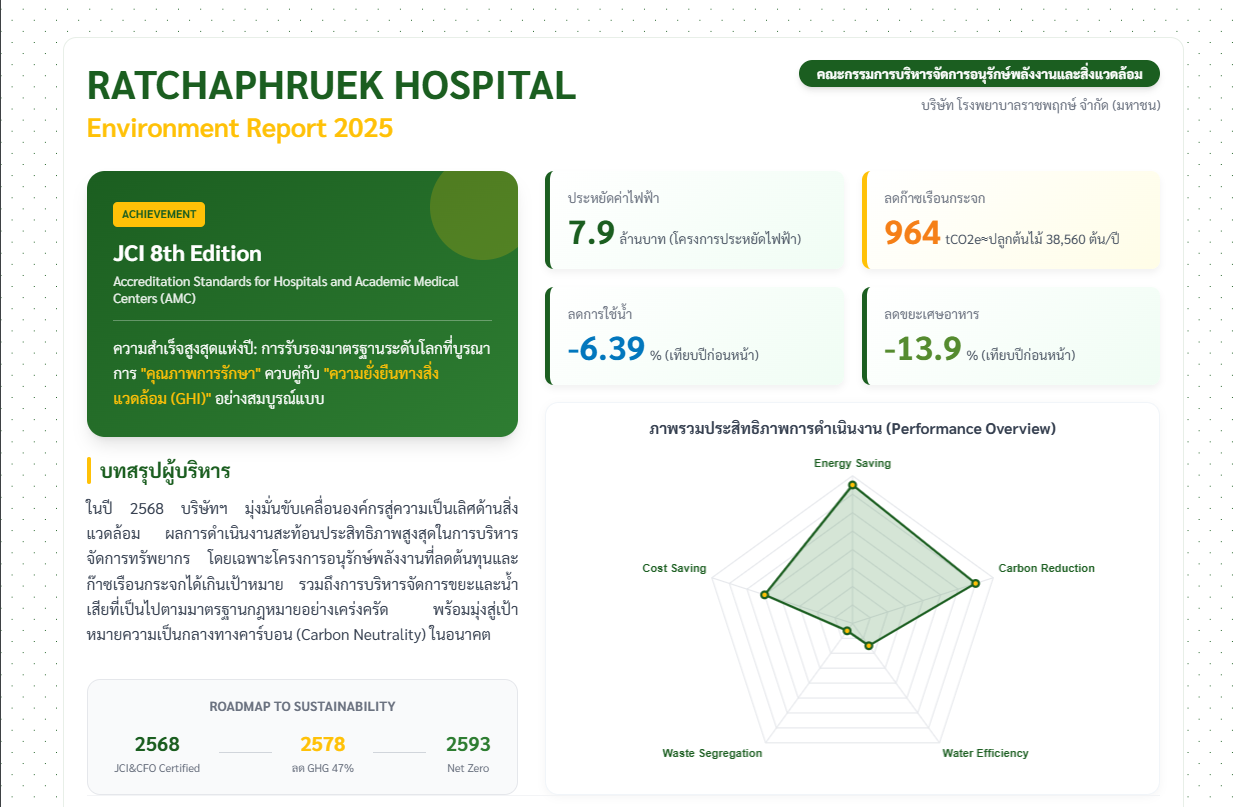
The Company is committed to integrating environmental practices into its healthcare delivery processes. It has initiated and implemented key clinical activities aimed at reducing environmental impacts, as follows:
Telemedicine
The Company promotes the use of telemedicine technology to reduce the need for patients to travel to the hospital. This directly contributes to the reduction of greenhouse gas emissions from transportation (Scope 3 emissions). It also helps reduce the consumption of resources such as paper and medical supplies, while improving accessibility and efficiency of care delivery.
Brought-in Medication Policy
The Company has established a policy allowing patients to continue using their own prescribed medications brought from home (limited to medications previously dispensed by public hospitals or Ratchaphruek Hospital), provided that the medications are clearly labeled and verified by a pharmacist.
This measure reduces duplicate prescriptions, optimizes pharmaceutical resource utilization, and decreases pharmaceutical waste within the healthcare system.
Reduction in the Use of Desflurane
The Company has implemented measures to reduce or limit the use of Desflurane, an anesthetic gas with a significantly high Global Warming Potential (GWP). Medical personnel are encouraged to consider alternative agents with lower environmental impact, such as Sevoflurane or Propofol, thereby significantly reducing the Company’s carbon footprint.
Reprocessed/Reusable Medical Devices
The Company supports transitioning from single-use medical devices to reusable devices, where clinically appropriate and in compliance with safety standards. Such devices undergo validated sterilization and cleaning protocols in accordance with international standards.
This initiative substantially reduces infectious and medical waste while promoting sustainable cost management.
Green Supply Chain Management
The Company has established a Green Procurement Policy to enhance sustainability standards across its supply chain. Key practices include:
Local Sourcing Optimization
Priority is given to suppliers and vendors operating within nearby areas or local communities in order to reduce logistics distances. This significantly lowers transportation-related greenhouse gas emissions (Scope 3 emissions).
Supplier Environmental Commitment
Supplier selection criteria include evaluation of clear environmental policies, ESG performance, and concrete measures for pollution reduction, including employee training and awareness programs.
Eco-friendly Product Selection
The Company prioritizes procurement of materials and equipment made from natural, recycled, or environmentally friendly materials to reduce resource depletion and support sustainable consumption practices.
Sustainable Food & Nutrition Management
The company adheres to principles of sourcing food ingredients that ensure quality, safety, and traceability. It implements a local sourcing policy, with approximately 90% of total procurement sourced within Khon Kaen Province.
This approach supports the local economy while significantly reducing carbon emissions associated with long-distance food transportation (food miles). Key supplier partnerships include:
Rice
Procured from Ban Ped Rice Mill, Ban Ped Subdistrict, Mueang Khon Kaen District, Khon Kaen Province, which sources high-quality rice directly from local farmers.
Fresh Vegetables and Fruits
Sourced from Sam Liam Community Fresh Market, a nearby community market serving as a distribution center for fresh agricultural products from local farmers.
Seasonings and Dry Ingredients
Procured from Mahachai Wholesale Store, a local supplier certified under food safety standards.
The above initiatives reflect the Hospital’s commitment to strengthening food security while simultaneously promoting environmental stewardship and sustainable community economic development.
the Green Procurement
The Company places importance on procurement practices that take environmental impacts into consideration and promotes the selection of products, materials, and packaging that are environmentally friendly in line with the Green Procurement approach. In doing so, the Company considers products that help reduce resource consumption, minimize waste, and lessen environmental impact, while also taking into account quality, price, and suitability for use.
In 2025, the Company promoted and encouraged the use of more environmentally friendly materials and packaging, such as eco-friendly food wrapping materials, wooden forks, banana leaves for wrapping desserts, and improved packaging that is more environmentally friendly. These efforts were intended to reduce the use of single-use plastics and support responsible consumption.
Such practices reflect the Company’s commitment to environmentally conscious procurement and support the organization’s operations in alignment with its sustainability goals.
Employee Management — Overview
Introduction

The Company recognizes the vital role of employees as a key driving force behind business growth and the achievement of organizational objectives. Accordingly, the Company is firmly committed to managing its human resources in alignment with its corporate strategy.
To ensure effective, fair, and transparent human resource management amid an ever-changing global environment, the Company has implemented a Human Resource Management Policy that provides a clear framework and direction for workforce administration. This policy is designed to enhance employee motivation, engagement, and organizational commitment, while ensuring consistency with the Company’s strategic goals.
Through the implementation of this policy, the Company aims to foster sustainable success and shared long-term growth for both employees and the organization.
Employees — Plan & Guidelines
Introduction
The Company recognizes and values the diverse ideas, skills, and experiences of its employees, which can be integrated into a vital driving force for organizational growth and effectiveness. Accordingly, the Company promotes equal, fair, and non-discriminatory employment practices throughout the entire employment lifecycle, from recruitment and selection, employment and management, to the termination of employment.
Such practices are implemented through appropriate procedures aligned with the Company’s Anti-Corruption and Anti-Bribery Policy, as well as the principles set forth in the Code of Business Ethics. Key practices are summarized as follows:
Has an Employee Management Plan
Yes
Plan Description
1. Fair Compensation and Employee Welfare Management
Ratchaphruek Hospital Public Company Limited places high importance on fair, transparent, and legally compliant human resource management. The Company establishes a competitive and fair compensation policy that reflects responsibilities aligned with each position and market standards within the private healthcare industry.
The Company provides equitable employment conditions without discrimination and ensures compliance with statutory benefits, including Social Security Fund and Workmen’s Compensation Fund. In addition, the Company offers enhanced employee benefits, including:
Overtime payment and shift allowances
Annual bonus based on company performance and individual performance
Provident fund
Retirement benefits
Housing welfare and fieldwork allowances
Emergency and disaster assistance
Educational support and professional development programs
Annual uniform provision (two sets per year) and business attire (blazer)
The compensation structure is reviewed annually to ensure alignment with economic conditions, business performance, and industry competitiveness.
2. Human Capital Development and Succession Planning
The Company recognizes that its personnel are a key driver of sustainable growth. Therefore, it has established policies on Human Capital Development and Succession Planning under the supervision of the Human Resources Department.
Employee development is conducted based on principles of equality, transparency, and non-discrimination, taking into account role requirements, competencies, and individual potential to support career advancement.
In 2025, the Company promoted two staff-level employees to managerial positions and established a new department, reflecting its commitment to internal talent development and organizational growth.
3. Career Development Plan and Individual Development Plan
The Company promotes lifelong learning through the integration of information technology platforms, including:
Online Training
Video Learning
Self-Learning
On-the-Job Training
Continuing Professional Education (CPE)
Performance evaluations are conducted under clear, transparent, and auditable criteria, assessing both work performance outcomes and behaviors aligned with the Company’s core values. Training records are systematically maintained through the ERP system to ensure effective tracking of employee development.
4. Performance Management System
The Company has established a structured performance evaluation framework covering three key dimensions:
1) Knowledge
Assessment through pre-test and post-test evaluations, interviews, and comprehension testing following training programs.
2) Skills
Evaluation based on practical job performance, direct observation by supervisors, and hands-on competency assessments.
3) Behavior
Assessment under the Company’s Competency Model, which defines expected behaviors and measurable performance indicators evaluated by direct supervisors.
This comprehensive framework ensures that employee development is effective and aligned with the Company’s strategic objectives.
5. Occupational Health, Safety, and Environment (OHSE)
The Company places the highest priority on the safety of employees, patients, contractors, and the surrounding community. It has established comprehensive Occupational Health, Safety, and Environmental (OHSE) policies covering both employees and contractors.
Hazard identification and risk assessments are conducted at least annually, considering job characteristics, workplace conditions, social factors, and historical incident data.
Summary of Safety Department Activities in 2025
1. Safety Training and Awareness
Monthly 6-hour safety orientation for new employees
Working-at-height training for maintenance and landscaping staff (5 sessions)
Chemical spill response (Spill Kit) training
Annual fire prevention training and evacuation drills
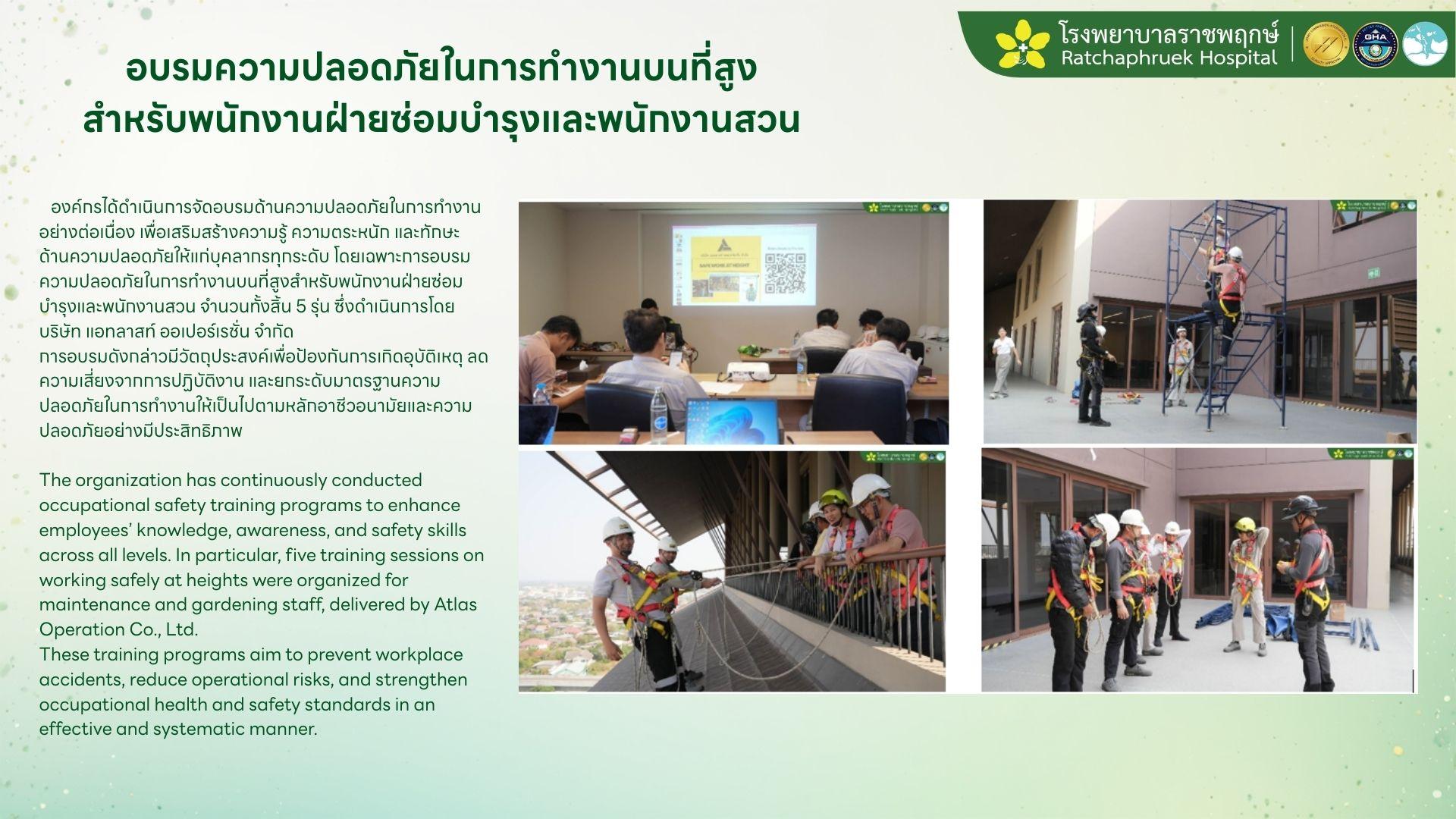
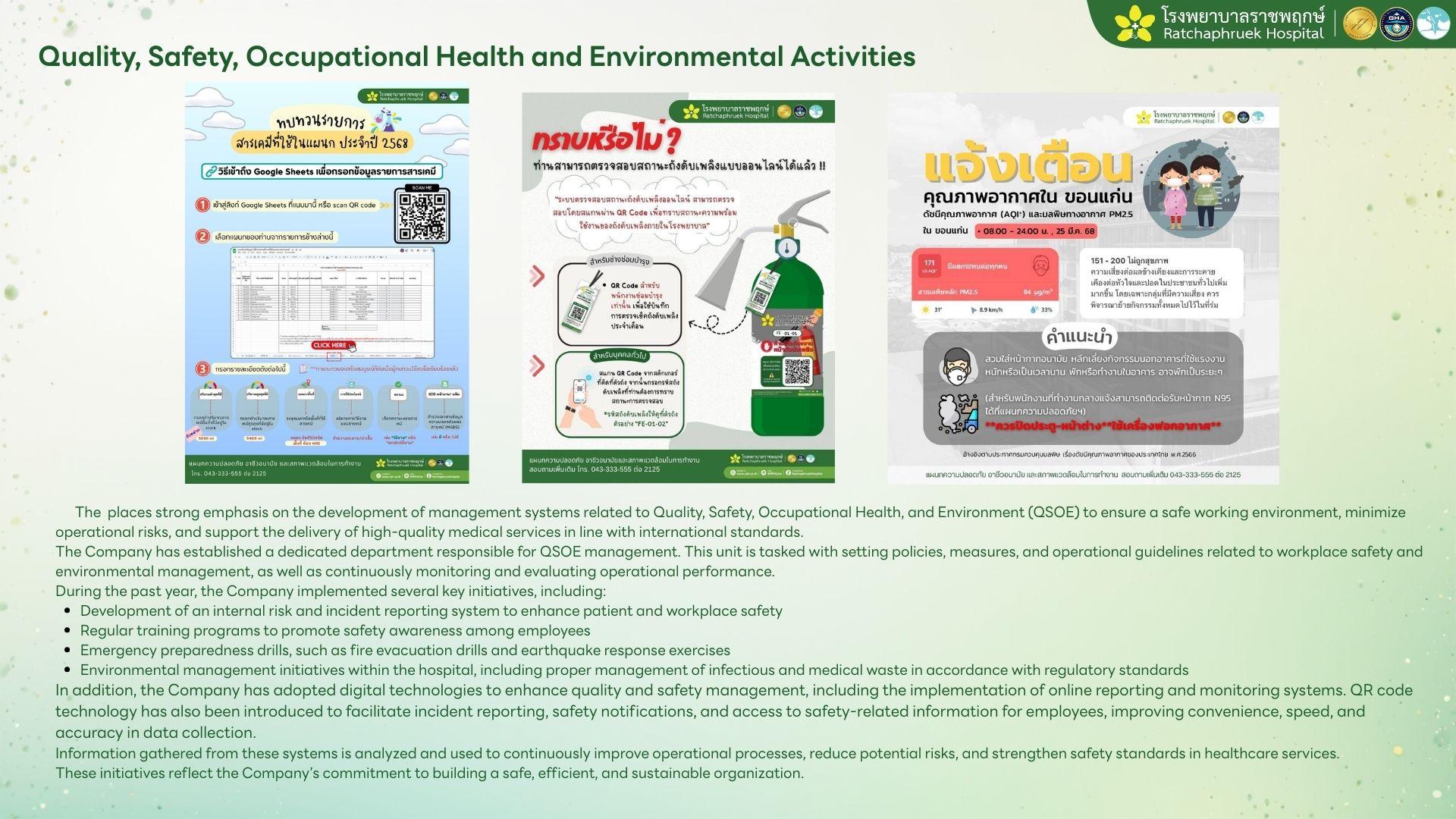 Objective: To reduce workplace accidents and strengthen a preventive safety culture.
2. Emergency Preparedness and Response
Emergency drills conducted under the Code System framework, including:
Code 3 – Violence / Property Damage
Code Mass – Mass Casualty Incident
Code Pink – Infant/Child Abduction
Code 9 – Fall Risk Incident
Code Earth – Earthquake
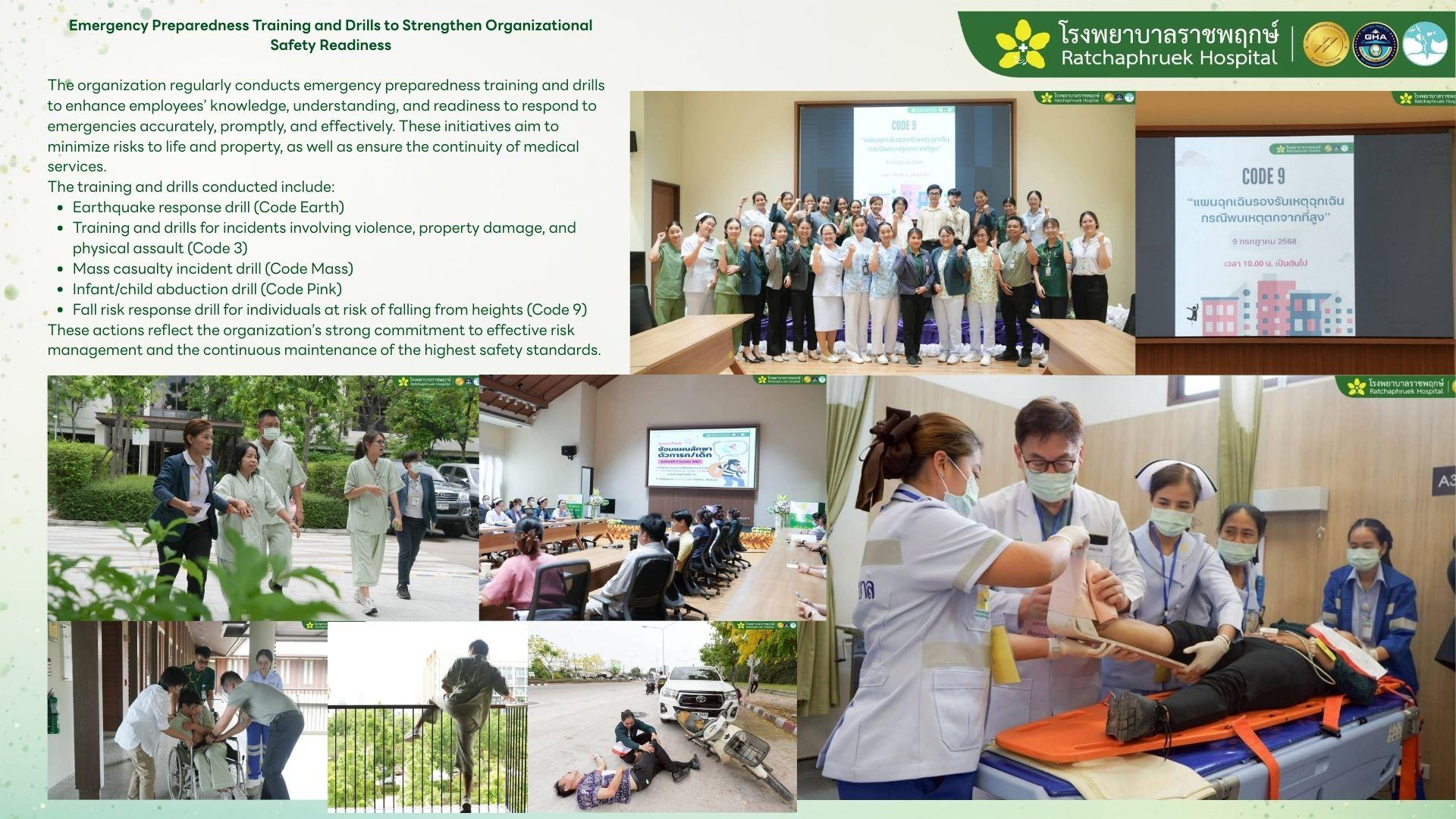
Objective: To enhance emergency response readiness, minimize potential losses, and ensure service continuity.
3. Inspection and Systematic Risk Control
Water quality testing (drinking water, wastewater, tap water, cooling tower systems)
Workplace environmental monitoring (noise, lighting, heat, dust, chemicals)
Annual building inspection and post-earthquake structural assessment
Annual electrical system inspection
LPG storage safety inspection
Fire alarm and fire suppression system inspection (including Ansul System)
Regular FMS (Facility Management and Safety) rounds
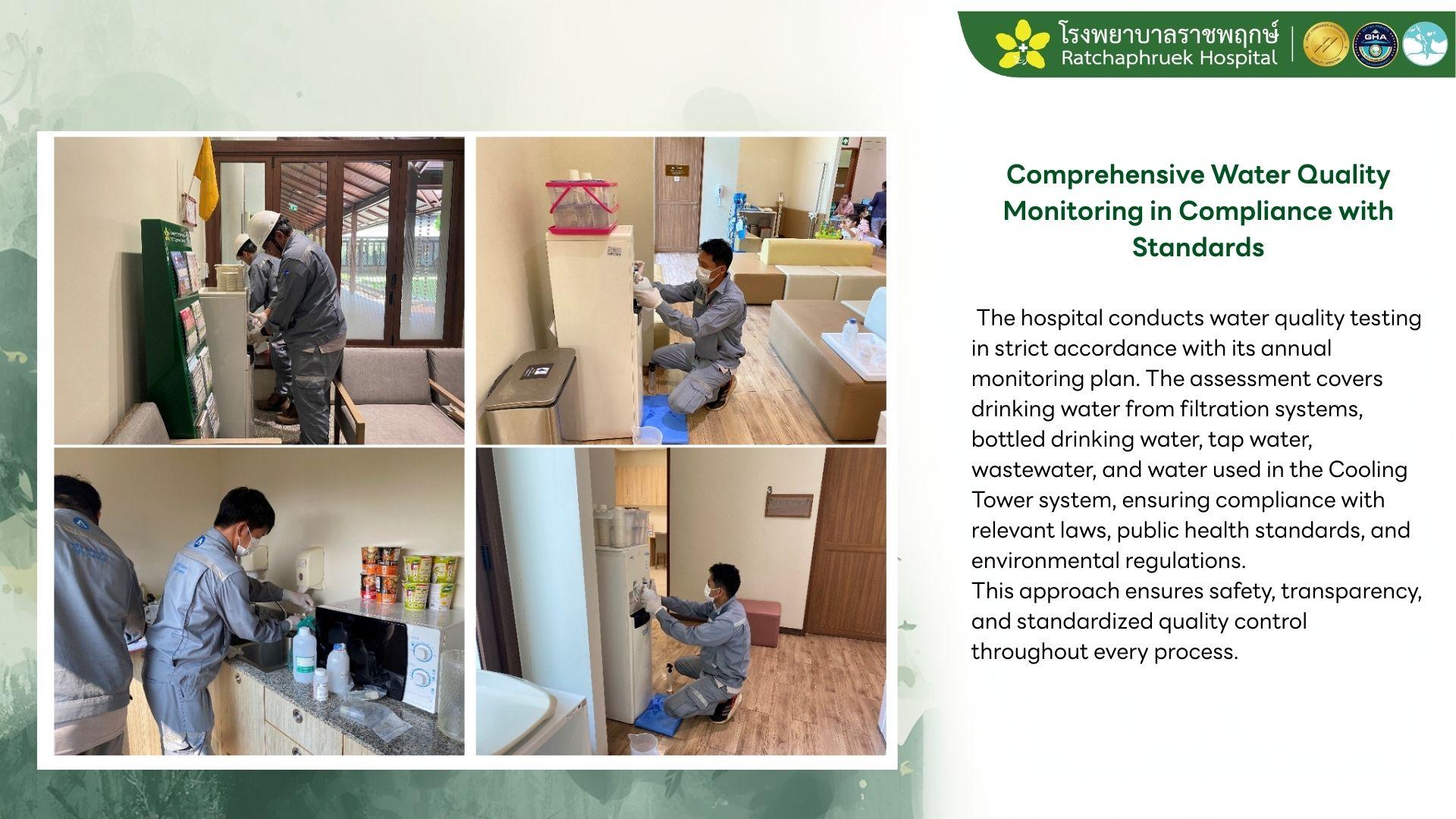
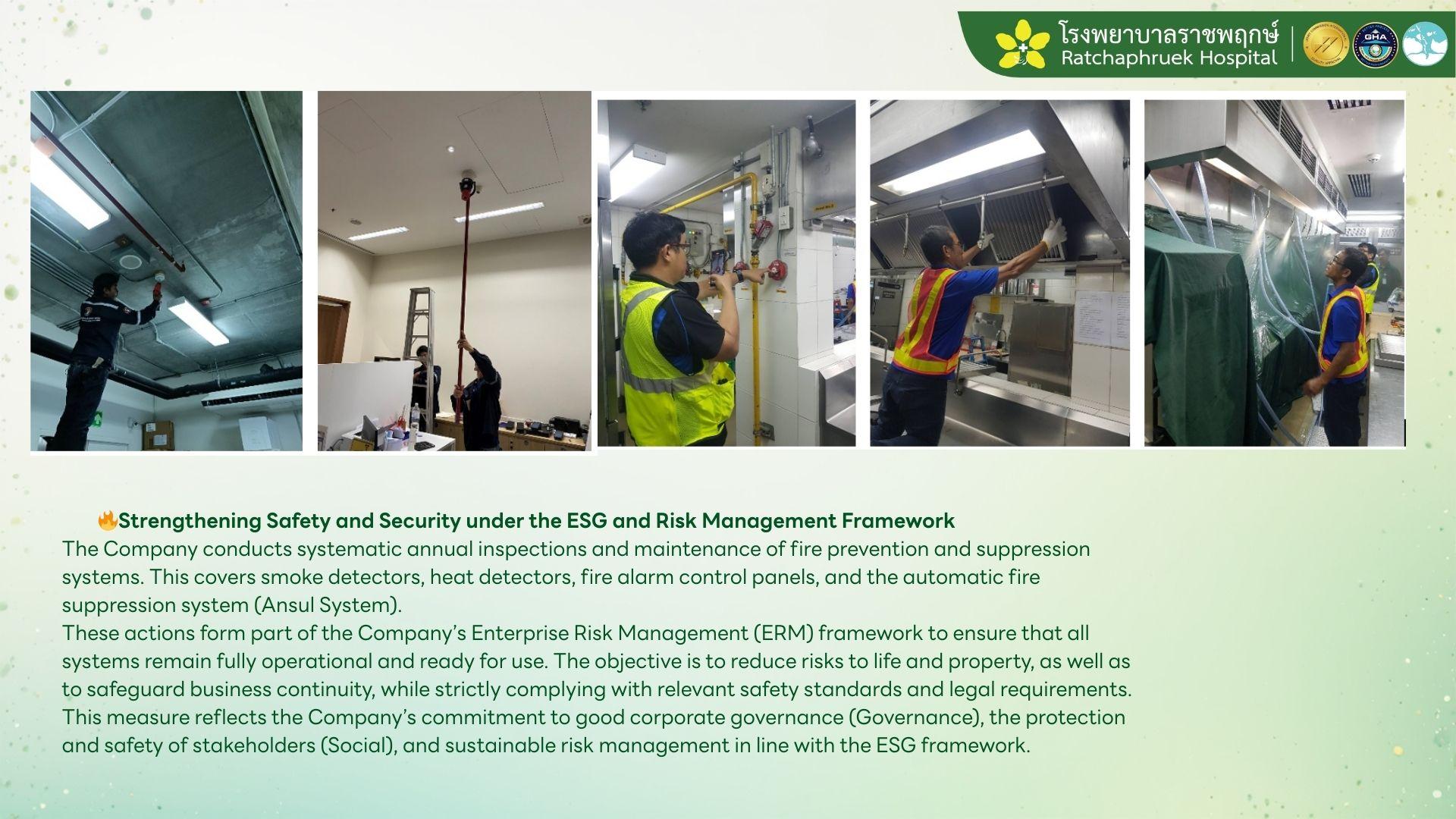
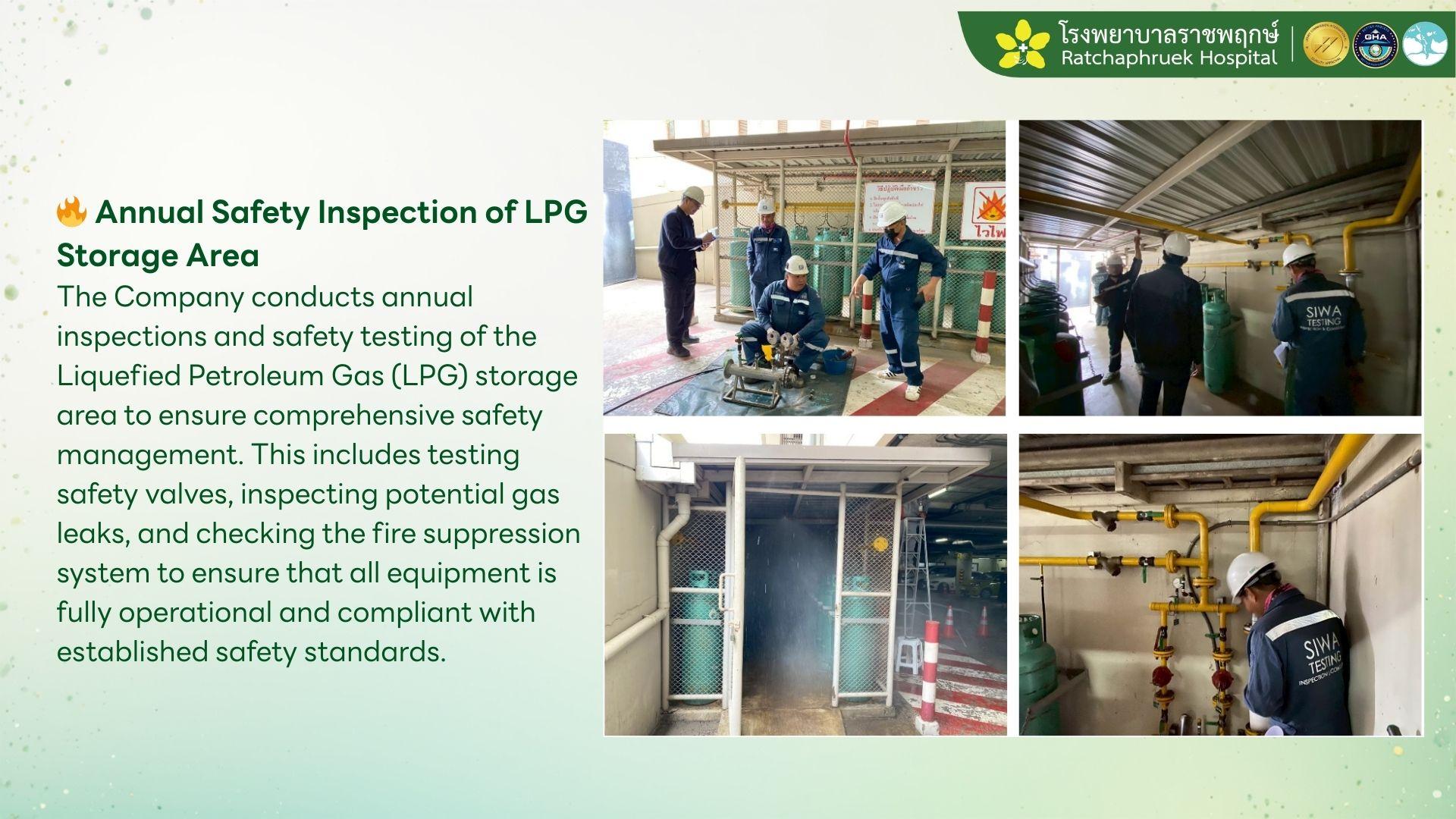
4. Security and Safety Infrastructure Enhancement
Installation of Access Control systems in high-risk areas
Installation of emergency assistance buttons in blind spots
Expansion of CCTV coverage
Improvement of Spill Kit tracking and categorization systems
Objective: To strengthen physical security and enhance chemical incident management efficiency.
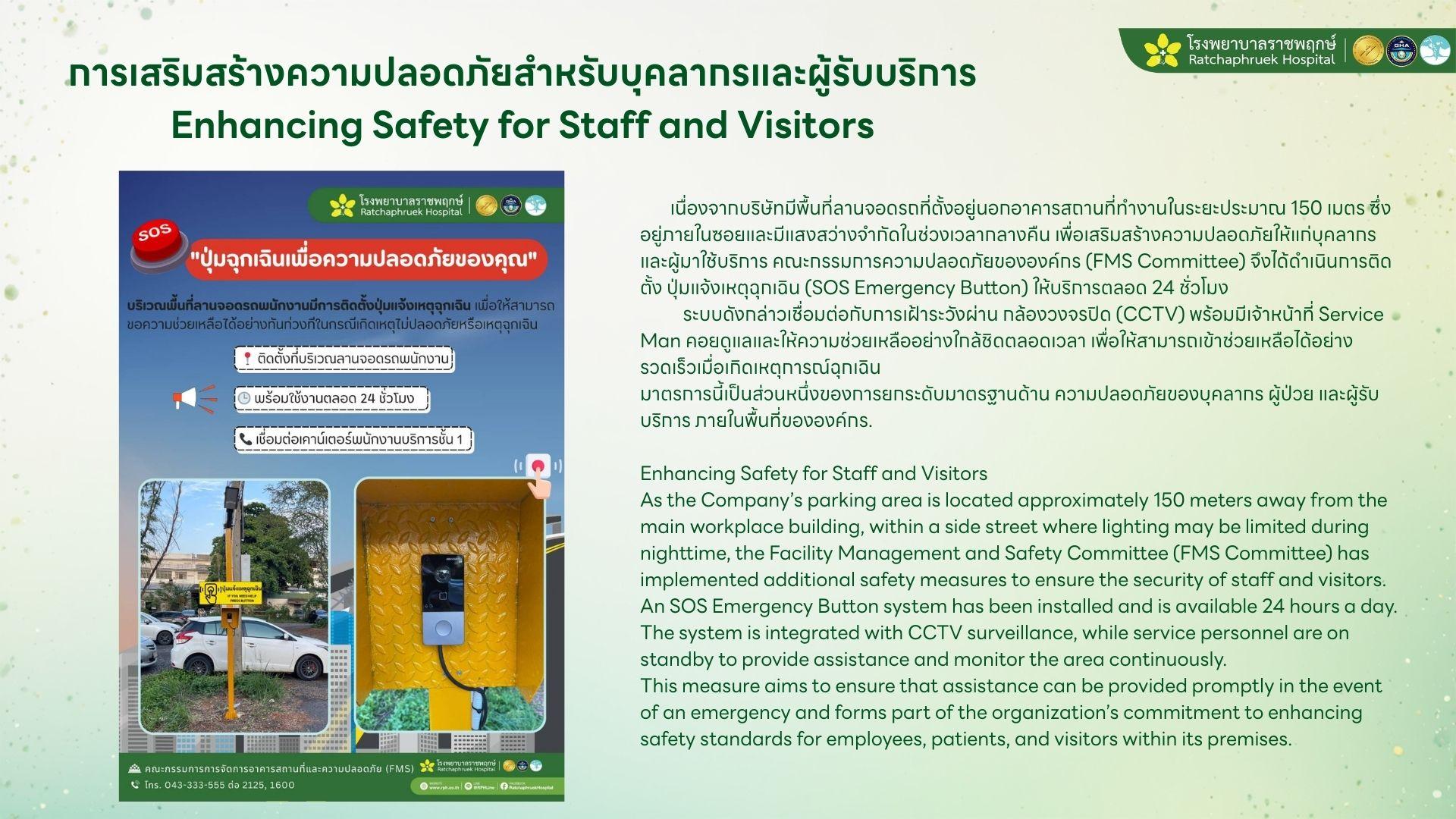
Plan Areas
| Plan Area |
|---|
| Fair employee compensation |
| Employee training and development |
| Promoting employee relations and participation |
| Occupational health and safety in workplace |
Employees — Workforce
Employees with Disabilities — Introduction
The company has signed a memorandum of understanding on the employment of disabled people in social work with the Labor Rehabilitation Center, Region 4, Ministry of Labor for a period of 3 consecutive years, therefore, it has joined in hiring disabled employees for subcontracting work or hiring services to work at the business or other business establishments.
Workforce Data
| Metric | Current Year | Previous Year | Two Years Ago |
|---|---|---|---|
| Total number of employees (Persons) | 777 | 783 | 780 |
| Number of male employees (Persons) | 125 | 127 | 127 |
| Number of female employees (Persons) | 652 | 656 | 653 |
| Total employment of disabled persons (people) | 785 | 792 | 788 |
| Total disabled employees (people) | 8 | 8 | 8 |
| Total male disabled employees (people) | 4 | 5 | 6 |
| Total female disabled employees (people) | 4 | 3 | 2 |
| Total disabled workers who are non-employee (people) | 777 | 784 | 780 |
| Contributions to the fund for promoting and improving the quality of life for disabled persons | 0 | 0 | 0 |
| Total number of male employees in operational level (Persons) | 111 | 114 | 114 |
| Total number of male employees in management level (Persons) | 13 | 12 | 12 |
| Total number of male employees in executive level (Persons) | 1 | 1 | 1 |
| Total number of female employees in operational level (Persons) | 596 | 596 | 596 |
| Total number of female employees in management level (Persons) | 56 | 60 | 57 |
| Total number of female employees in executive level (Persons) | 0 | 0 | 0 |
Employees — Remuneration & Provident Fund
Remuneration & Provident Fund
| Metric | Current Year | Previous Year | Two Years Ago | Remark |
|---|---|---|---|---|
| Total disabled employees (people) | 284,744,835.33 | 244,297,567.38 | 242,168,065.32 | Based on total revenue |
| Total male employee remuneration (Baht) | 45,924,365.88 | 38,089,710.81 | 37,213,629.46 | |
| Total female employee remuneration (Baht) | 238,820,469.45 | 206,207,856.57 | 204,954,435.86 | |
| Number of employees eligible to participate in PVD (persons) | 620 | 561 | 506 | |
| Total number of employees joining employee provident fund (Persons) | 544 | 550 | 473 | |
| Percentage of total number of employees joining employee provident fund to total number of employees (%) | 70.01 | 70.24 | 60.64 | |
| Number of PVD members / Total eligible employees (%) | 87.74 | 98.04 | 93.48 | |
| Total amount of provident fund contributed by the Company (Baht) | 2,405,835.38 | 2,236,411.77 | 1,844,539.54 | |
| Total amount of provident fund contributed by employee (baht) | 5,570,627.14 | 4,316,171.22 | 1,737,362.89 |
Employees — Training & Development
Training Data
| Metric | Current Year | Previous Year | Two Years Ago | Remark |
|---|---|---|---|---|
| Average employee training hours (Hours / Person / Year) | 1,315 | 550 | 419.87 | |
| Employee development and training expenses (baht) | 1,394,530.01 | 730,917.07 | 815,732 | Internal and External Training Programs in 2025 In 2025, the Company promoted employee capability development through both internal and external training programs. The details are as follows: External training programs: 1,136 sessions with a total budget of Baht 703,485.01 Internal training programs: 179 sessions with a total budget of Baht 691,045.00 This reflects the Company’s commitment to continuously enhancing employees’ knowledge, skills, and competencies in order to improve work performance and support the organization’s long-term growth. |
Employees — Occupational Health & Safety
Occupational Health & Safety Data
| Metric | Current Year | Previous Year | Two Years Ago | Remark |
|---|---|---|---|---|
| Total number of lost time injury incidents by employees (Cases) | 12 | 3 | 3 | In 2025, the Company recorded 12 workplace accidents that resulted in employees taking leave from work. A total of 12 employees were injured and required at least one day of absence, representing 1.49% of the total workforce. No work-related fatalities were reported, and no accidents occurred involving contractors or business partners operating within the Company’s premises. Based on safety performance calculations, the following indicators were identified: Injury Frequency Rate (I.F.R.) was 5.20 cases per 1,000,000 working hours, or 1.04 cases per 200,000 working hours. Injury Severity Rate (I.S.R.): The Company recorded 12 cases of work-related accidents resulting in lost workdays, with a total of 34 lost working days (equivalent to 272 hours). Based on standard calculations, the Injury Severity Rate (I.S.R.) was 14.75. The severity rate was primarily caused by accidents that required employees to take several days of leave. The main cause was identified as unsafe practices during quality inspection procedures (Quality Control: QC). The most severe incident involved an injury to the knee, which falls under musculoskeletal system disorders, resulting in limited mobility and requiring the employee to take several consecutive days of leave. The Company has conducted a comprehensive review and root cause analysis of all reported incidents in order to strengthen preventive measures and improve workplace safety. |
Employees — Labour Relations
Labour Relations Data
| Metric | Current Year | Previous Year | Two Years Ago |
|---|---|---|---|
| Total voluntary resignations (Persons) | 67 | 123 | 145 |
| Male employees who voluntary resigned (Persons) | 7 | 16 | 14 |
| Female employees who voluntary resigned (Persons) | 60 | 107 | 131 |
| Percentage of employee turnover leaving the Company voluntarily (%) | 8.62 | 15.71 | 18.59 |
| Evaluation result of employee engagement | 1 | 1 | 1 |
Employees — Employee Representation
Employees Are Represented Collectively
No
Employees — Targets
Has Set Employee Targets
Yes
Targets
| Indicator | Target Areas | Base Year | Base Year — Description | Target Year | Target Year — Description |
|---|---|---|---|---|---|
| The Company received no complaints during the reporting period. | 2983 · Description: Fair employee compensation · 2985 · Description: Promoting employee relations and participation · 2984 · Description: Employee training and development · 2988 · Description: Safety and occupational health at work · 2989 · Description: Non-discrimination | 2,025 | Based on the 2025 baseline, the Company aims to enhance workforce management by aligning compensation with Living Wage principles and reducing the gender pay gap to ≤ 5% by 2028. The Company will increase average training hours to ≥ 20 hours per employee per year, with ≥ 90% of employees having Individual Development Plans (IDPs). In addition, the Company targets an employee engagement score of ≥ 80%, voluntary turnover ≤ 12%, zero serious workplace injuries, and at least a 10% annual reduction in LTIFR. | 2,028 | - Ensure fair compensation aligned with Living Wage principles and continuously reduce pay gaps.
- Provide at least 20 training hours per employee per year, with Individual Development Plans (IDPs) in place.
- Maintain employee engagement at ≥ 80% and keep voluntary turnover at an appropriate level.
- Achieve zero serious workplace injuries and uphold a strict non-discrimination policy. |
Employees — Performance & Outcomes
Has Performance Results
Yes
Performance Description
The Company places strong emphasis on promoting employment opportunities for disadvantaged individuals and persons with disabilities, as well as supporting educational initiatives for children and youth in the communities where it operates. These efforts align with the United Nations Sustainable Development Goals (SDGs), particularly in advancing poverty eradication, quality education, decent work, and reduced inequalities.
As a result of this commitment, during the years 2023–2025, the Company was recognized as an “Outstanding Establishment” for three consecutive years for its significant and continuous support of the Regional Workers Rehabilitation Center Region 4.
In addition, on 31 August 2025, the Company received the “Business Empowering Khon Kaen City” award from the Khon Kaen Chamber of Commerce in recognition of its contribution to sustainable economic and social development in the province.
Customers — Plan & Guidelines
Has a Customer Management Plan
Yes
Plan Description
Patient / Consumer Responsibility
The Company was committed to conducting business with a strong sense of responsibility toward stakeholders, particularly “patients and service recipients”. Therefore, the Company established a business code of conduct for customers as a guideline for practice, as follows:
1) Clinical safety ensured accurate patient identification, effective communication between caregivers, and emphasized safety in the use of high-risk medications. Additionally, patients were protected from risks associated with the use of medical equipment and from infections within the Company’s facilities.
2) Established a Patient Safety Policy (Patient Safety Goal).
3) The Company diligently sought solutions and took full responsibility for any errors that occurred. This commitment to accountability helped build trust, reassurance, and confidence among patients and service recipients.
4) Delivered services centered around the individual (Person-Centered Care), always considering and respecting patient rights.
5) Provided high-quality service to patients and service recipients with empathy and seamless care, ensuring convenience, speed, and a positive experience under the policy: "No matter who you are, we are ready to understand and help each other."
6) Ensured fairness and protected the interests of all patients and service recipients, treating everyone equally and justly.
7) Post-service follow-up and care were critical in exceeding patients' and service recipients' expectations, creating an outstanding experience that fostered strong relationships and ensured a superior service experience at the Company’s hospital.
8) Set the confidentiality level of patient information to “Secret” and proceed in the same way as for the transmission of confidential documents.
Plan Areas
| Plan Area |
|---|
| Responsible production and services for customers |
| Communication of product and service impacts to customers/consumers |
| Development of customer satisfaction and customer relationship |
| Protection of customer personal information |
Customers — Satisfaction Results
Customer Satisfaction Results
| Metric | Current Year | Previous Year | Two Years Ago |
|---|---|---|---|
| Evaluation results of customer satisfaction | 1 | 1 | 1 |
Customers — Targets
Has Set Customer Targets
Yes
Targets
| Indicator | Target Areas | Base Year | Base Year — Description | Target Year | Target Year — Description |
|---|---|---|---|---|---|
| Number of outpatient visits (OPD) | 3009 · Description: Development of customer satisfaction and customer relationship | 2,025 | More than 85 percent of patients intend to return to use outpatient services (OPD). | 2,027 | More than 90 percent of patients intend to return to use outpatient services (OPD). |
| Number of repeat visits for In patients (IPD) | 3009 · Description: Development of customer satisfaction and customer relationship | 2,025 | More than 85 percent of patients intend to return to use outpatient services (OPD). | 2,027 | The number of repeat inpatient visits (IPD) is more than 90 percent. |
| Medical Litigation Disputes | 3007 · Description: Responsible production and services for customers | 2,025 | There is a consumer lawsuit for damages from 1 case. | 2,026 | The number of complaints and significant legal disputes is zero. |
Customers — Performance & Outcomes
Has Performance Results
No
Performance Description
Summary of Customer Management Performance and Outcomes 2025
Patient Satisfaction Performance
Overall Satisfaction
Average OPD Satisfaction: 89.5% (Q3) 90.2% (Q4)
Average IPD Satisfaction: 94.8% (Q3) 94.5% (Q4)
Outcome:
Inpatient (IPD) satisfaction remained consistently high at above 94%.
Outpatient (OPD) satisfaction improved in Q4, reflecting enhancements in service process management.
Net Promoter Score (NPS)
OPD: 88.37% (Q3) 89.22% (Q4)
IPD: 94.22% (Q3) 95.12% (Q4)
Outcome:
IPD patients demonstrate a high level of loyalty and strong willingness to recommend the hospital.
OPD scores show an upward trend, indicating improved patient experience management effectiveness.
Service Quality Performance
Key service indicators assessed include:
Respect and courtesy toward patients
Attentive listening
Clarity of communication and explanation
Gentle and professional manner of interaction
All dimensions maintained an average score between 90–95%.
This reflects that:
Personnel demonstrate strong service-minded behavior.
The organizational culture emphasizes Patient-Centered Care.
Behavioral service risk remains low.
Key Customer Management Initiative “CLOCK” Strategy
The Company implemented the CLOCK strategy to enhance patient experience management, focusing on:
Calculating realistic waiting times
Informing patients promptly when delays occur
Offering suitable alternatives
Providing compensation when significantly inconvenienced
Keeping patients regularly informed of service progress
Outcomes Achieved:
Reduced complaint risk
Improved OPD satisfaction levels
Strengthened reputational risk management
Enhanced transparency in service communication
Community & Social — Plan & Guidelines
Has a Community & Social Plan
Yes
Plan Description
Community and Social Management Plan and Performance 2025
1. Strengthening Community Relationships through Public Activities (Community Engagement & Public Activities) Implementation Approach
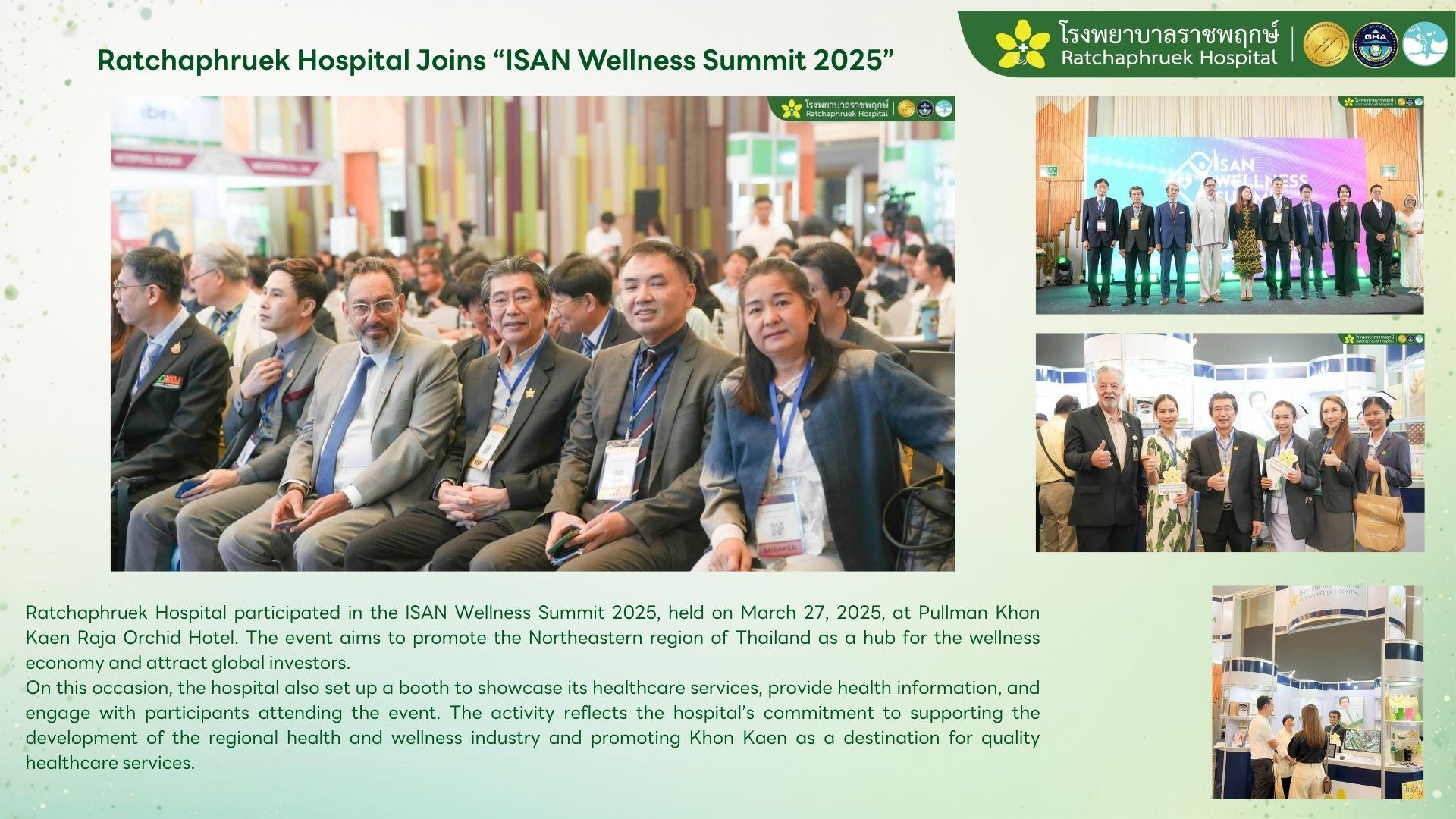
Organize public events and festive activities to foster strong relationships with the community.
Support public benefit initiatives within Khon Kaen Province.
Provide hospital facilities as a central venue for health and social activities.
Communicate regularly through online channels to maintain close engagement with the public.
Positive Impact
Strengthened public trust and reinforced the hospital’s image as a community-centered healthcare provider.
Reduced risks related to Social License to Operate.
2. Expanding Access to Specialized Healthcare Services (Access to Specialized Healthcare Services)
Implementation Approach
Develop and expand specialty clinics to meet community healthcare needs.
Reduce patient waiting times.
Enhance access to specialized medical services at the provincial level.
Support medical treatment for low-income and vulnerable groups.
Positive Impact
Reduced patient referrals outside the local area.
Strengthened the healthcare system of Khon Kaen Province.
Improved equity in access to healthcare services.
3. Connecting with Community Health Knowledge Needs (Health Knowledge & Community Education)
Implementation Approach
Organize seminars and health education activities.
Disseminate health information through online platforms.
Promote wellness and preventive healthcare initiatives.
Collaborate with public and private sector partners.
Positive Impact
Increased preventive healthcare awareness within the community.
Reduced long-term risks of chronic diseases.
Strengthened the hospital’s role as a trusted Health Partner of the community.
Governance and Monitoring Mechanisms
Community and social policies are approved by the Board of Directors.
Performance results are disclosed through the One Report and Sustainability Report.
Accessible grievance channels are available for stakeholders.
Social risks and impacts are regularly assessed and monitored.
Plan Document Link
https://investor.rph.co.th/storage/document/cg/community-and-social-engagement-and-development-policy-th.pdf
Page Number in Report
1-6
Plan Areas
| Plan Area |
|---|
| Employment and professional skill development |
| Education |
| Religion and culture |
| Sports and recreation |
| Occupational health, safety, health, and quality of life |
| Water and sanitation management |
Community & Social — Targets
Has Set Community & Social Targets
Yes
Targets
| Indicator | Target Areas | Base Year | Base Year — Description | Target Year | Target Year — Description |
|---|---|---|---|---|---|
| Increase in the number of people employed with disabilities | 3036 · Description: Employment and professional skill development · 3042 · Description: Disadvantaged and vulnerable groups | 2,025 | Currently employing 8 disabled people. | 2,027 | The number of disabled people employed increased to 10. |
Community & Social — Performance & Outcomes
Has Performance Results
Yes
Performance Description
Summary of Community and Social Performance 2025
1. Governance for Society
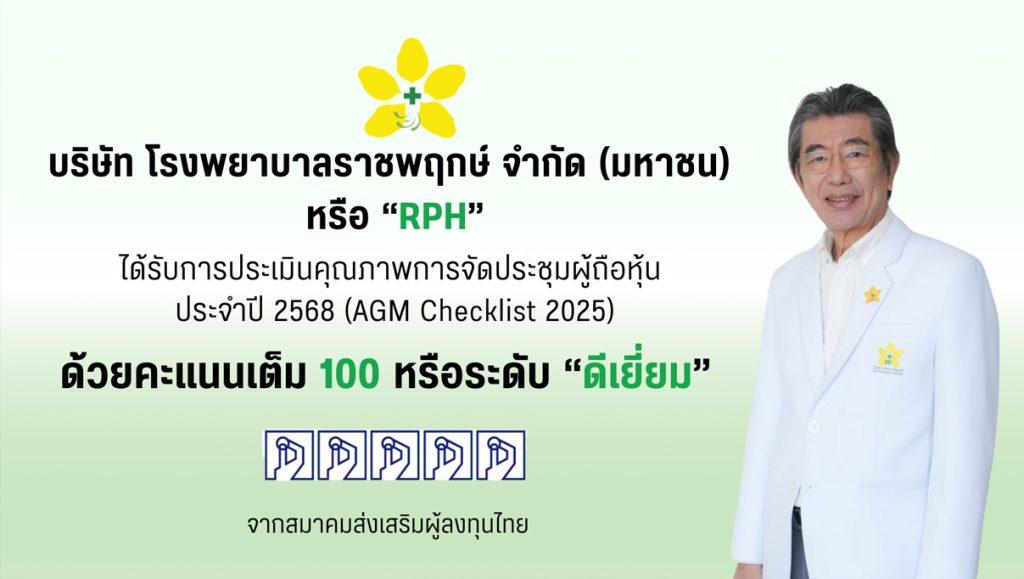
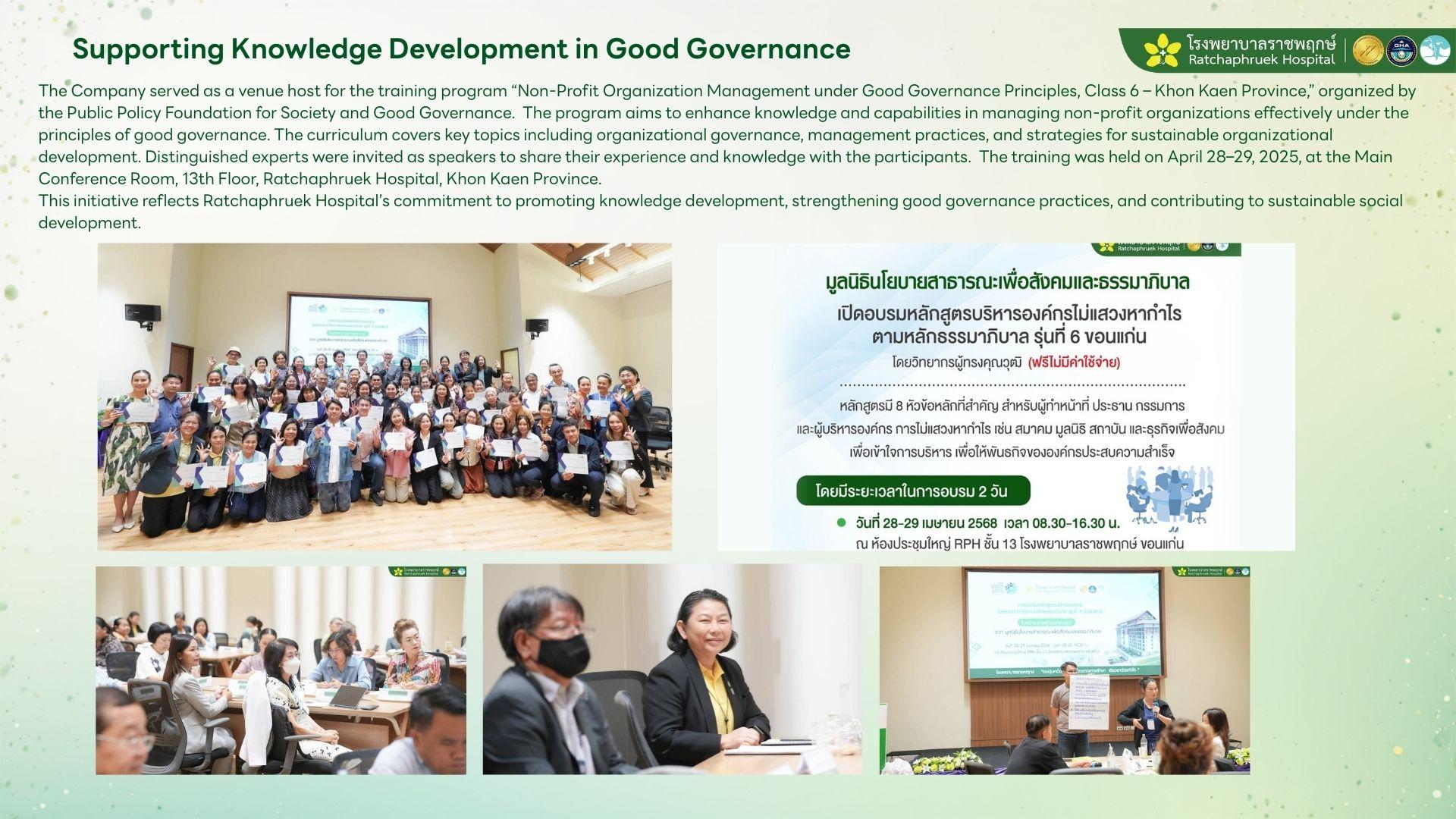 Performance Highlights
Partnered with the Public Policy for Good Governance Foundation (PPGG) to host the 6th cohort of the training program titled “Non-Profit Organization Management under Good Governance Principles”, aimed at enhancing transparency, accountability, and governance capacity among foundations and non-profit organizations.
Achievement of Excellence in Care : Ratchaphruek Hospital received a perfect score of 100 points from an external evaluation, reflecting outstanding service quality, patient safety standards, and compassionate care comparable to treating patients as family members.
2. Strengthening Community Relationships through Public Activities
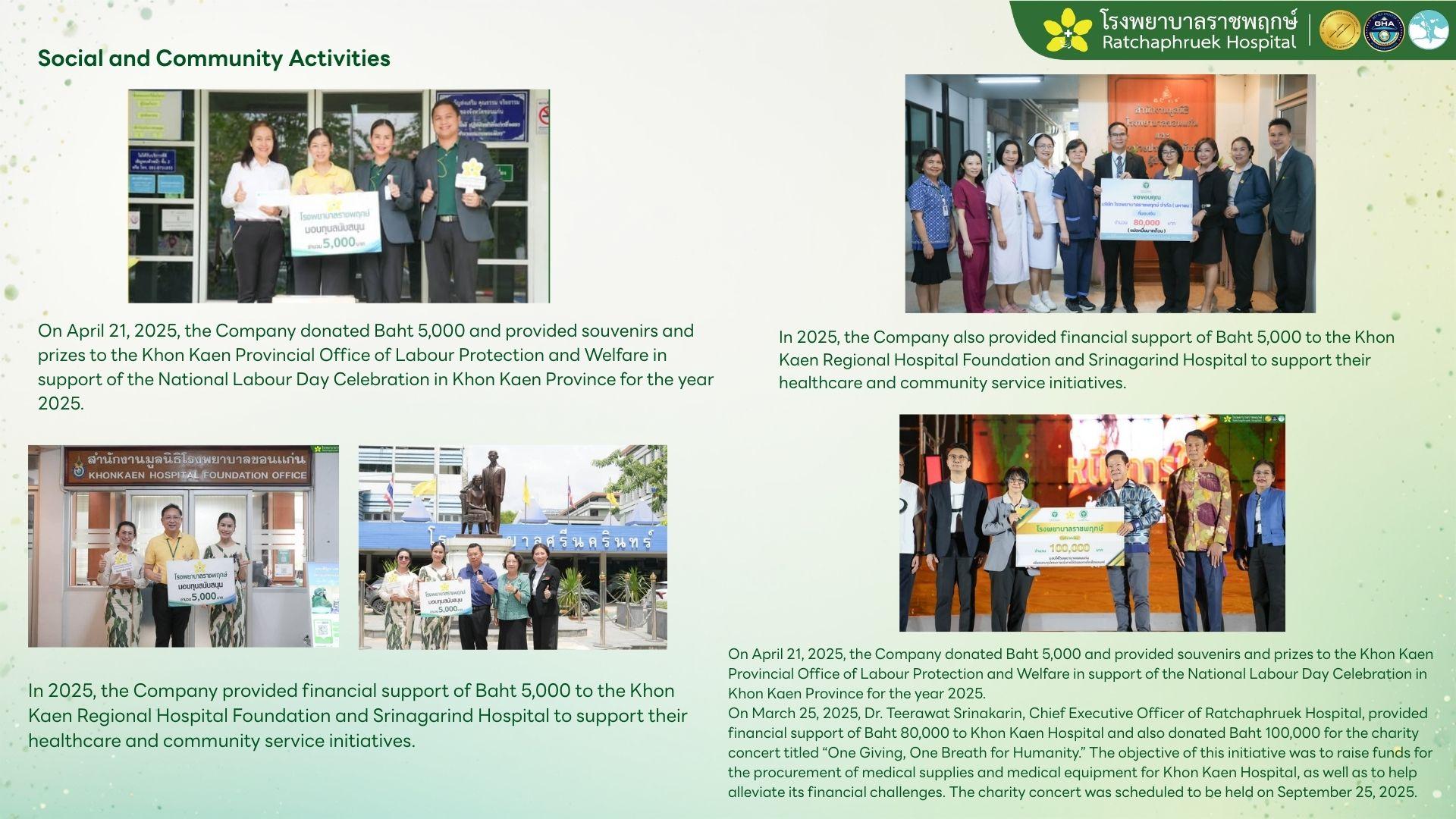
Performance Highlights
Organized National Children’s Day activities, welcoming children and families to participate in health-related activities and creative engagement programs, fostering a friendly and community-oriented environment.
Served as a supporter of the KhonKaen 21 Marathon, promoting public exercise and healthy lifestyles in collaboration with external organizations.
Conducted annual fire drill and evacuation training, ensuring safety preparedness for staff and service users.
Collaborated with volunteer networks and both public and private sector partners in Khon Kaen to support significant public events (e.g., National Life Insurance Day), raising funds to assist underprivileged patients.
Implemented the annual blood donation campaign, “Giving Blood, Giving Life,” encouraging hospital staff and the general public to donate blood to support the Thai Red Cross Society and regional hospitals, with a target of contributing 1 million units.
Launched proactive mobile medical outreach programs providing basic health screenings and preventive education on regionally prevalent diseases (e.g., liver fluke infection and cholangiocarcinoma screening).
3. Expanding Access to Specialized Healthcare Services
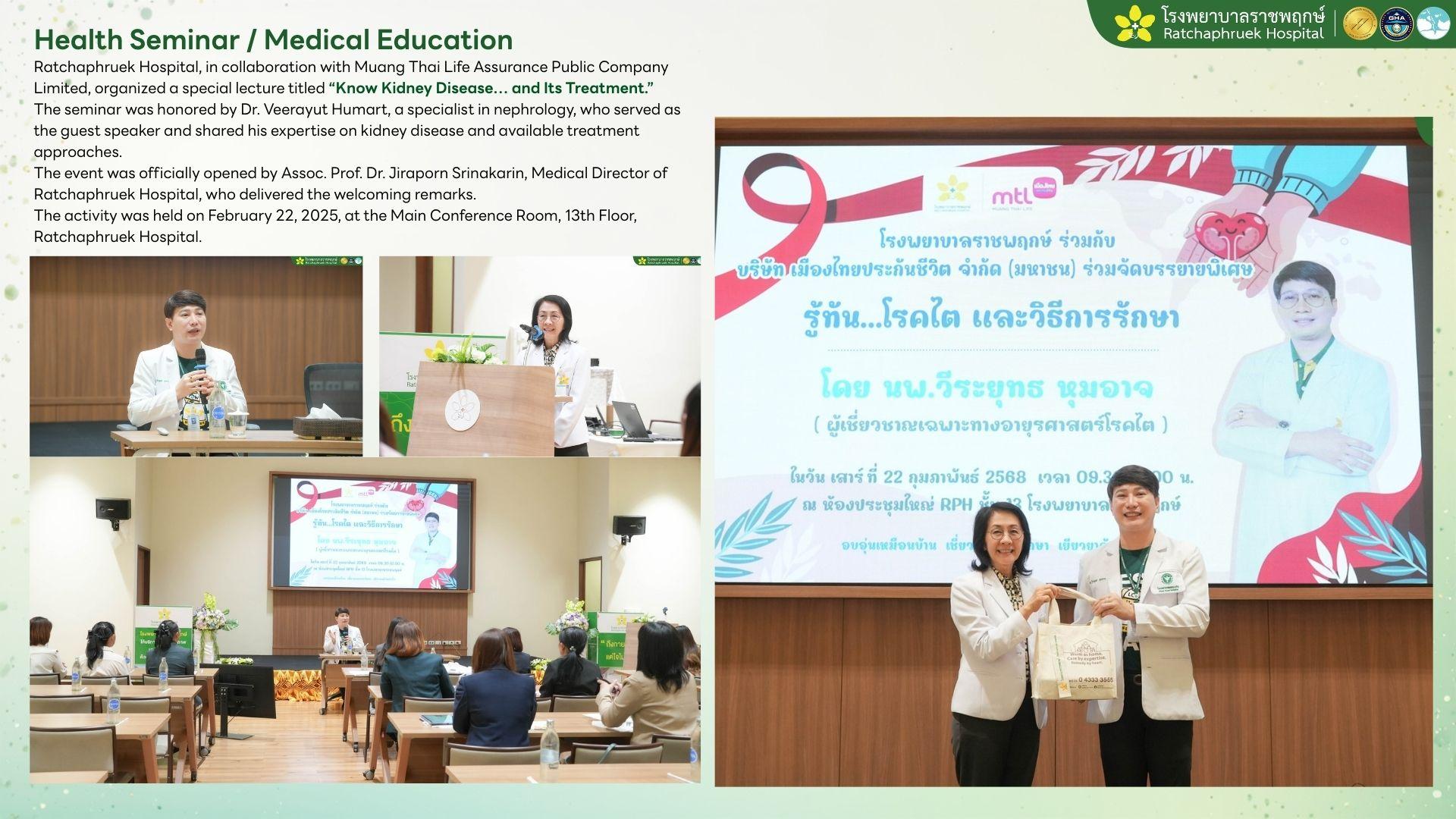
Performance Highlights
Continued providing specialized medical services, including MRI diagnostics, specialty clinics, Stroke Center, Emergency and Trauma Center, and comprehensive health check-up services.
Enhanced public awareness of medical services through active communication on social media platforms, ensuring broad and equitable access to healthcare information.
4. Connecting with Community Health Knowledge Needs
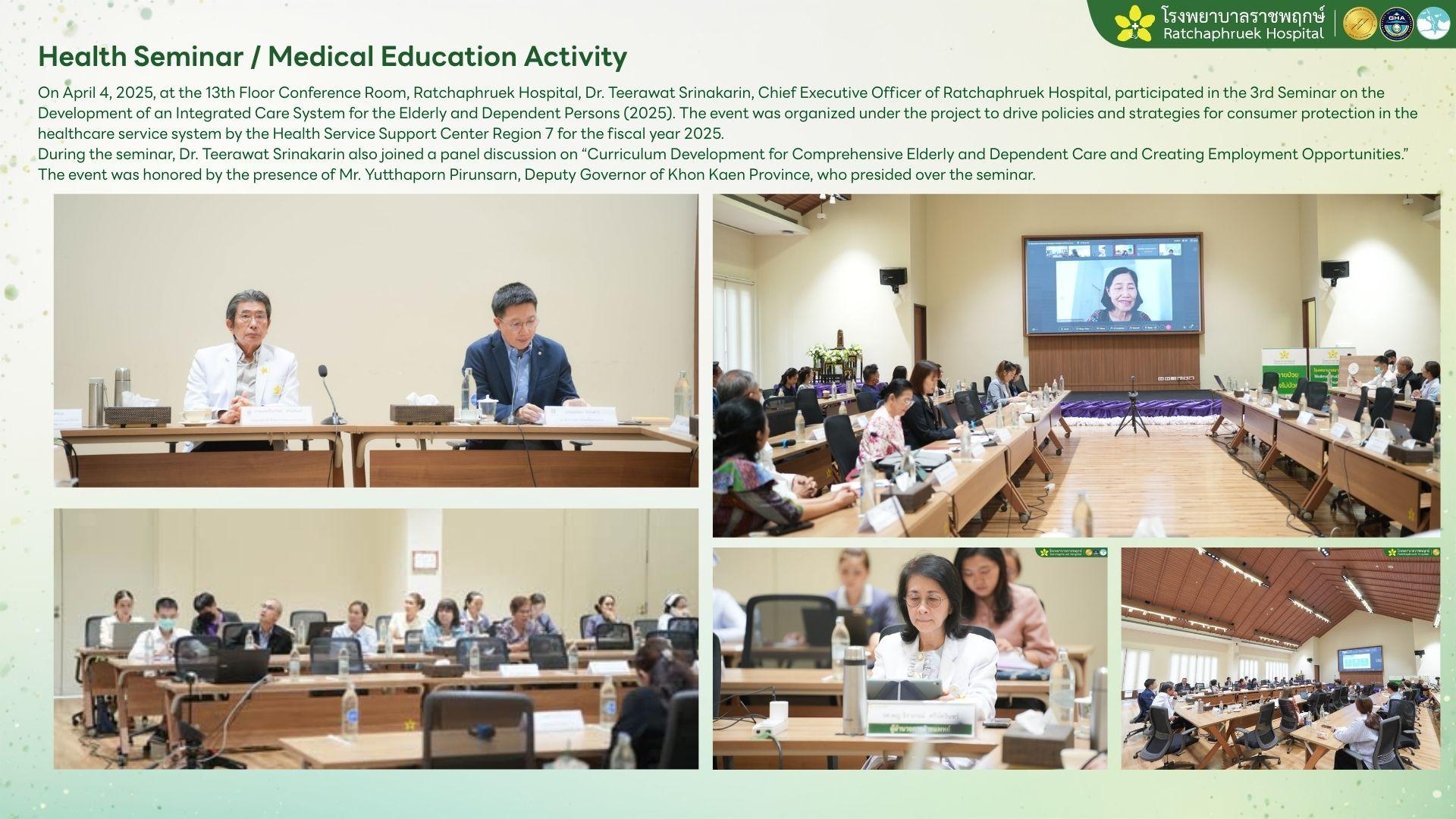
Performance Highlights
Organized health education seminars led by multidisciplinary medical specialists.
Disseminated health knowledge through the hospital’s Website and Facebook platform, covering preventive care tips, common diseases, and public health awareness topics.
Conducted Basic Life Support (BLS) and first-aid training sessions for communities, educational institutions, and corporate partners.
Continued proactive mobile health outreach programs focusing on disease prevention and early detection in local communities.
5. Reducing Healthcare Inequality
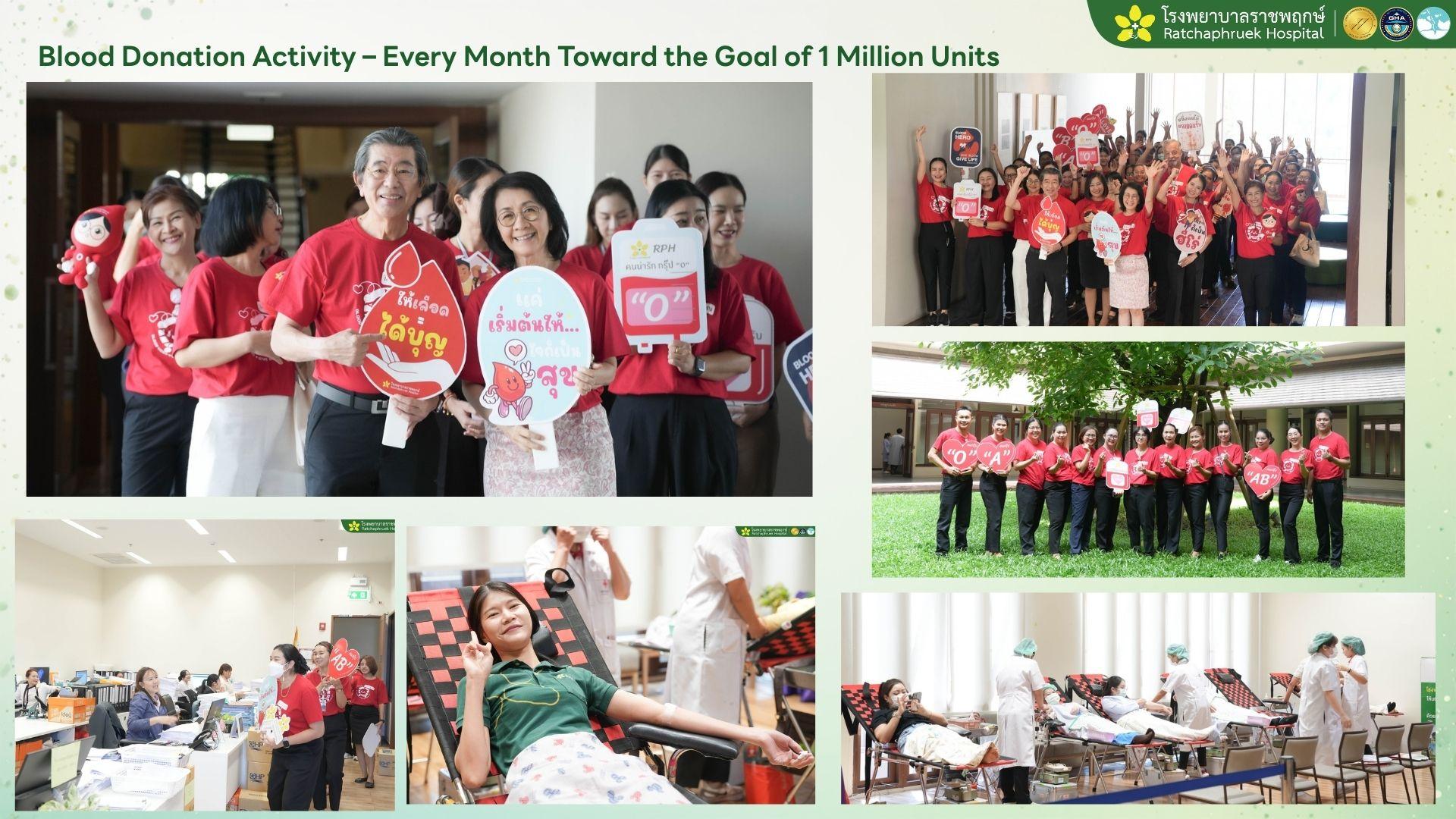
Performance Highlights
Provided free shuttle van services for patients within municipal areas who face transportation barriers.
Continued dialysis patient transportation services since 2019.
Conducted quarterly mobile health screening programs for community residents.
Organized monthly blood donation drives in collaboration with the Thai Red Cross Society.
6. Promoting Community Image and Creative Economy (Soft Power)
Performance Highlights
Supported the Mister International pageant, promoting health awareness, physical fitness, and positive lifestyle values among youth and young adults.
This initiative reflects the hospital’s commitment to proactive and holistic healthcare while strengthening its brand image among younger generations and contributing to Thailand’s creative economy.
7. Occupational Health and Employee Wellbeing
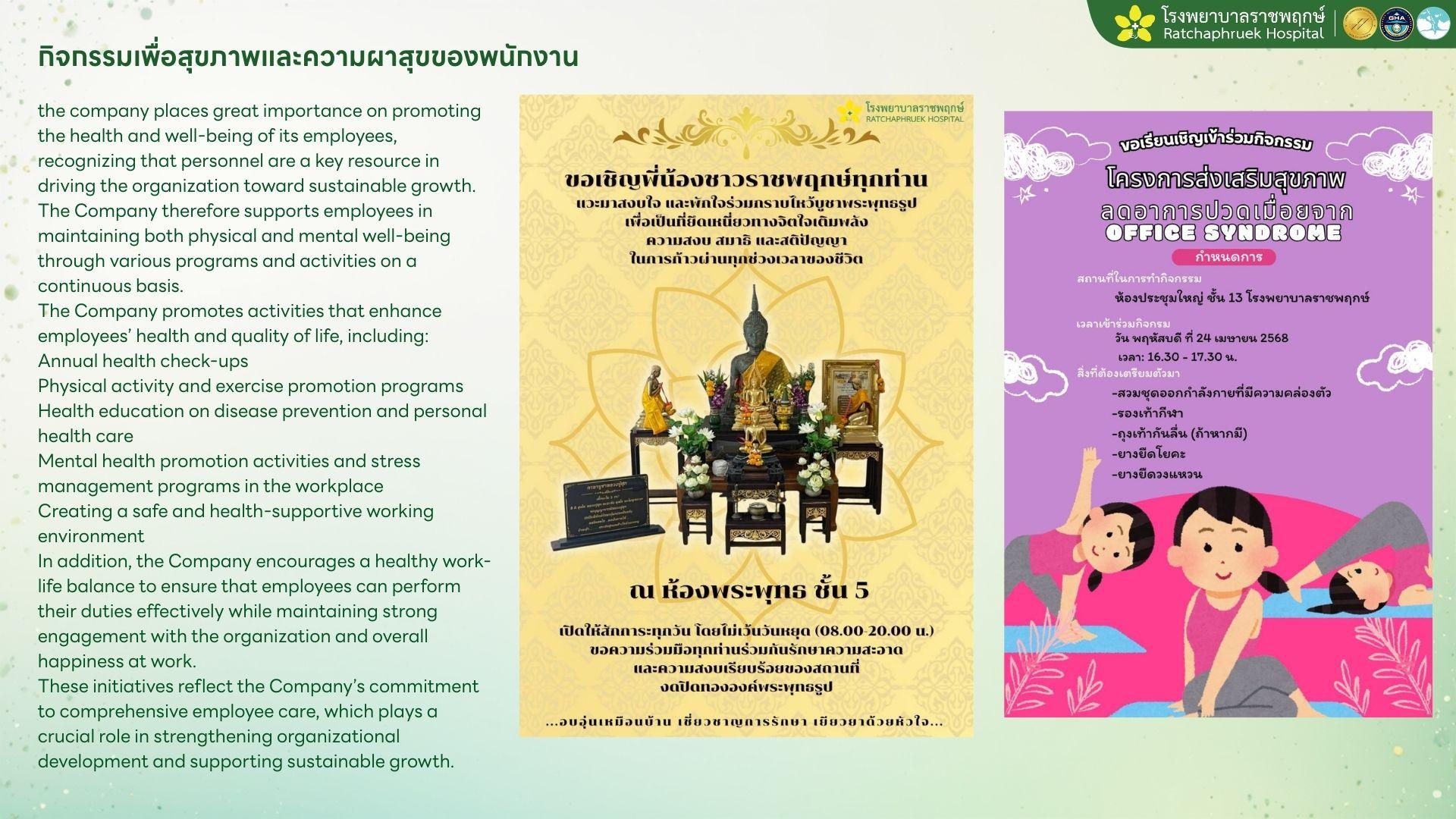 Performance Highlights
Conducted annual health check-ups for employees and their families.
Promoted employee wellness activities, including workplace exercise programs and access to fitness facilities.
Coordinated with occupational health physicians to continuously monitor and support employee health and safety.
8. Support for Religion, Culture, and Local Traditions
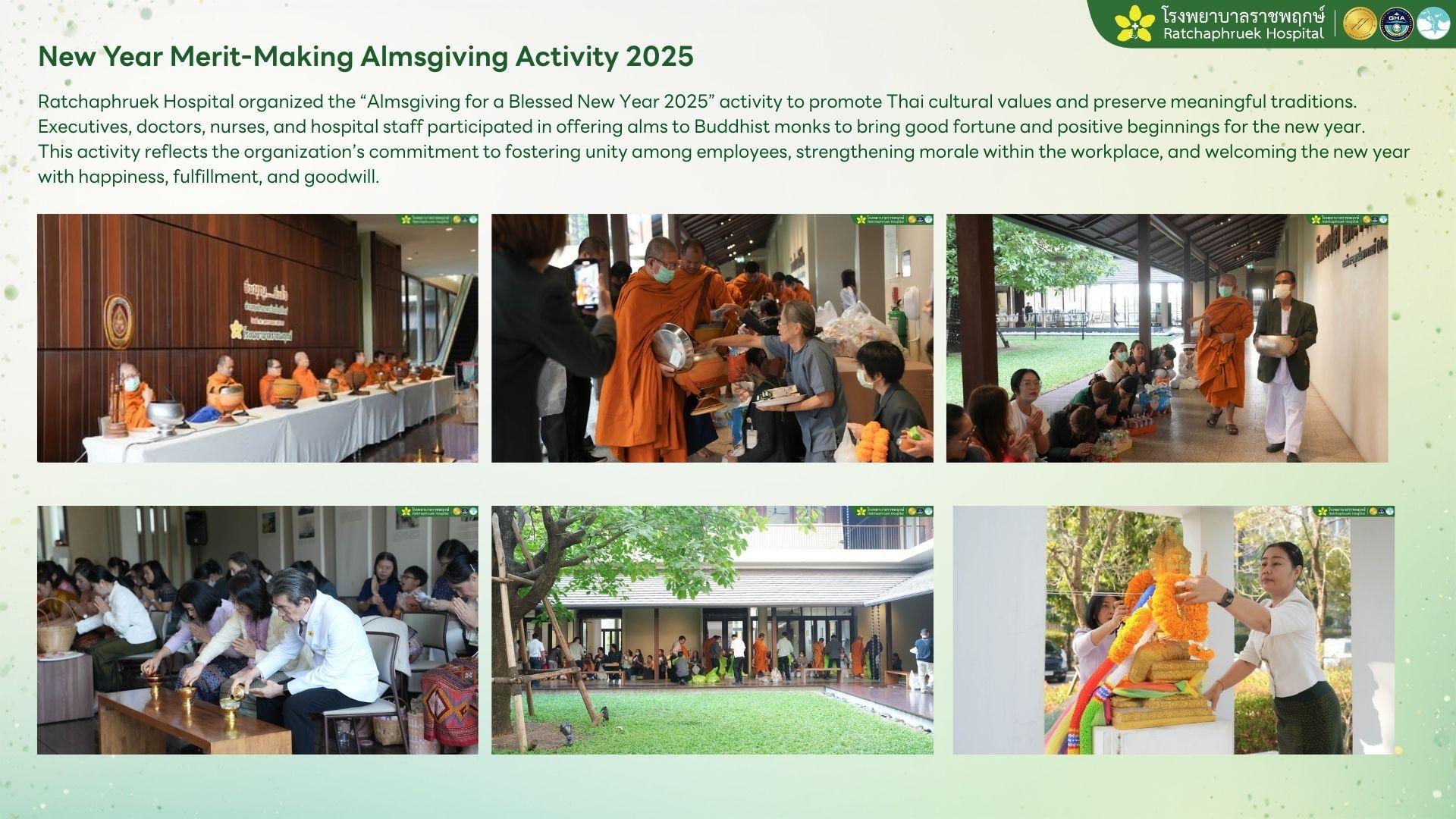
Performance Highlights
Supported activities preserving local customs and traditions.
Provided financial and material contributions for the construction and restoration of religious facilities.
Encouraged employee participation in religious and cultural activities on a regular basis.
Overall Impact in 2025
Through governance-driven initiatives, proactive healthcare outreach, equitable access programs, and strong community partnerships, Ratchaphruek Hospital reinforced its role as a trusted healthcare partner for the Khon Kaen community.
The hospital’s integrated approach to governance, social responsibility, and community engagement aligns with ESG principles and supports long-term sustainable development.
Law Violation Incidents
Law Violation Incidents
| Metric | Current Year | Previous Year | Two Years Ago | Remark |
|---|---|---|---|---|
| The total number of cases or incidents of significant violations of laws or regulations regarding social and human rights (Cases) | 0 | 0 | 0 | In 2025, the Company did not encounter any incidents that significantly violated social and human rights laws or regulations. |
| The total number of cases or incidents that cause significant labor disputes (Cases) | 0 | 0 | 0 | In 2025, the Company did not encounter any incidents that led to significant labor disputes. |
| The total number of cases or complaints related to consumer rights violations (Cases) | 0 | 0 | 0 | In 2025, the Company no has involved in a case concerning an alleged violation of consumer rights. |
| The total number of cases or complaints related to partner rights violations (Cases) | 0 | 0 | 0 | In 2025, the Company did not encounter any incidents or complaints related to the violation of the rights of its partners. |
| The total number of cases or incidents that cause disputes with the community/society (Cases) | 0 | 0 | 0 | In 2025, the Company did not encounter any incidents that caused disputes with the community/society. |
| The total number of cases or incidents related to cyber security or customer data breaches (Cases) | 0 | 0 | In 2028, the Company did not encounter any incidents or reports of cyber security incidents or customer data breaches. | |
| The total number of cases or incidents related to safety and occupational health at work (Cases) | 0 | 0 | 0 | In 2025, the Company did not encounter any incidents related to occupational safety and health. |