

CG Policy · 2025
In this section7 topics
Corporate Governance Policy
Introduction
The Board of Directors is committed to upholding high standards of good corporate governance while conducting business with integrity, respect for human rights, and responsibility toward society, the environment, and all stakeholders. The Board firmly believes that good corporate governance is a key driver of sustainable value creation, transparency, accountability, and ethical competitiveness amid a rapidly evolving business environment.
The Company places importance on delivering sustainable value and appropriate returns to shareholders, while simultaneously creating long-term benefits for society, communities, and the environment. Maintaining credibility and strengthening stakeholder confidence remain fundamental objectives of the Board’s governance approach.
The Board of Directors has established and implemented a Good Corporate Governance Policy as a guiding framework for organizational practices. The policy is reviewed and continuously improved to align with the principles of good corporate governance for listed companies and to enhance the effectiveness of the Board’s oversight responsibilities.
At the Board of Directors’ Meeting No. 4/2025, held on November 8, 2025, the Board approved a review and revision of the Company’s Good Corporate Governance Policy. Further details are available on the Company’s website under the “Corporate Governance” section.
Corporate Governance Framework
The Company’s corporate governance policy framework is structured into five key categories:
Shareholders’ Rights
Equitable Treatment of Shareholders
Roles of Stakeholders
Disclosure and Transparency
Responsibilities of the Board of Directors
The Board has oversee governance practices, maintain standards, and regularly review and enhance policies in accordance with the Good Corporate Governance Principles for Listed Companies (Revised 2017) issued by the Stock Exchange of Thailand.
Governance KPI Dashboard
To demonstrate measurable corporate governance outcomes, the Company has established a Governance KPI Dashboard to monitor the effectiveness of board oversight, ethical conduct, and compliance practices. These indicators are integrated with the Company’s risk management and internal control framework.
Governance KPI Dashboard
Board Meeting Attendance ≥ 95%
Ethics & Corporate Governance Training Completion: 100%
Zero Insider Trading Case
Whistleblowing Response Rate ≥ 95%
Ethics & Compliance Reporting to the Board at least once per year
These KPIs serve as key governance performance indicators to support continuous improvement and reinforce the Company’s commitment to transparency, accountability, and sustainable corporate governance.
Has a Corporate Governance Policy
Yes
Policy Description
Implementation of Good Corporate Governance Practices
The Board of Directors recognizes the importance of the Good Corporate Governance Principles for Listed Companies (Revised 2017) issued by the Stock Exchange of Thailand. The Company has therefore adopted these principles as a framework for organizational management to strengthen operational efficiency, transparency, accountability, and to build sustainable confidence among shareholders, investors, and all stakeholders.
The Company has established a “Company Handbook” as a practical framework covering key elements, including organizational culture (vision, mission, and core values), Code of Conduct, Code of Ethics for directors, executives, and employees, corporate governance principles, corporate social responsibility, and anti-corruption policy. All directors, executives, and employees are required to acknowledge, understand, and strictly comply with these guidelines, with ongoing monitoring and evaluation mechanisms in place.
In addition, the Company publishes the Company Handbook on its corporate website to ensure broad accessibility for stakeholders and conducts at least an annual review to align with legal developments, international standards, and evolving corporate governance practices.
Board Diversity
the Company places importance on Board Diversity, taking into account an appropriate composition that is aligned with the Company’s business strategy. This includes diversity in terms of professional skills, specialized expertise, experience, gender, age, and other qualifications beneficial to corporate governance. The Company remains open without restrictions based on race or nationality, and seeks to ensure that the Board consists of diverse members in order to strengthen governance perspectives and support balanced and effective strategic decision-making.
To ensure that such policy is clear and measurable, the Company has established the following quantitative targets and indicators relating to Board diversity:
The Company has set a target of having at least 3 female directors, or not less than 30% of the total number of directors.
The Company aims to ensure that the Board possesses a combination of skills, expertise, and experience covering key areas relevant to the Company’s operations, such as healthcare and medical services, business administration, finance and accounting, law, corporate governance, risk management, and sustainability.
The Company requires the Board Skill Matrix and Board composition to be reviewed at least once a year in order to assess the appropriateness of the Board structure in alignment with the Company’s strategy and organizational context.
In 2025, the Company made progress in implementing this policy and achieving the above targets. The Board of Directors consisted of 10 members, of whom 3 were female directors, representing 30% of the total Board, which is in line with the Company’s target. In addition, all 3 female directors served as independent directors, thereby strengthening independence and checks and balances in corporate governance.
At the same time, the Company reviewed the composition of the Board through the Board Skill Matrix approach to ensure that the Board possesses the knowledge, capabilities, and experience appropriate to the nature of the Company’s business and strategic direction. The Company considers that the current Board composition reflects an appropriate level of diversity and suitability that supports effective corporate governance.
The Company will continue to review and develop its Board structure on an ongoing basis in order to align with best practices for listed companies and to support the sustainable growth of the organization in the long term.
Nomination of Directors and Senior Executives
Although the Company does not have a dedicated nomination committee, the Board of Directors performs the duties of considering, nominating, and selecting qualified individuals for appointment as directors. The Board takes into account appropriate board composition, competencies aligned with the Company’s strategic direction, diversity, and independence.
Director Nomination Criteria
The Company prepares a Board Skill Matrix annually to guide director nominations, considering various nomination sources such as existing directors, shareholders, external advisors, and the Director Pool database of the Thai Institute of Directors (IOD).
Re-appointment of Directors
In considering the re-appointment of incumbent directors, the Board evaluates performance, meeting participation, and independence prior to proposing candidates for another term.
Appointment of Replacement Directors
In the event of a board vacancy prior to term completion, the Board will appoint a qualified individual in accordance with applicable laws, with approval by at least three-quarters of the remaining directors.
Shareholder Participation
The Company allows shareholders to nominate candidates for directorship in advance through the SET news system and the Company’s website during the period of 1 October – 31 December each year.
Board Independence from Management
The Company clearly separates the roles, duties, and responsibilities of the Board and management to ensure effective checks and balances. The Board is responsible for setting policies, vision, strategies, and monitoring performance, while management executes operations in accordance with the Board’s directives.
Director Development
The Company supports continuous development of directors and executives. The Company Secretary coordinates participation in training programs, seminars, and knowledge-sharing activities relevant to board responsibilities.
Remuneration Policy for Directors and Executives
Director and executive remuneration is aligned with the Company’s strategic objectives, responsibilities, and industry benchmarks to attract and retain qualified individuals. Director remuneration comprises:
Monetary compensation such as meeting allowances, gratuities, and bonuses; and
Non-monetary benefits such as healthcare benefits.
Executive remuneration is determined based on financial and non-financial KPIs, including sustainability performance, human resource management, and operational effectiveness.
Limitation on Directorships in Other Listed Companies
The Company limits directors from holding directorships in more than five listed companies to ensure sufficient time commitment.
In 2025, no director held directorships exceeding this limit.
Orientation for New Directors
The Company provides orientation programs for newly appointed directors, including business overview, organizational policies, legal frameworks, governance roles and responsibilities, and key corporate documents to support effective performance.
Performance Evaluation of the Board and Executives
Annual performance evaluations are conducted for the Board as a whole, individual directors, and board committees. Evaluation results are used to enhance governance effectiveness. The Board also evaluates the Chief Executive Officer annually, linking performance outcomes to remuneration and bonus considerations.
Disclosure and Transparency
The Company emphasizes accurate, adequate, and timely disclosure of information. Policies and charters have been reviewed and updated to align with international standards and regulatory requirements. During the past year, no regulatory reports regarding insider trading were received.
Investor Relations
The Company maintains an Investor Relations function reporting directly to the Chief Executive Officer, engaging in ongoing communication activities such as Analyst Meetings, Opportunity Day events, conference calls, and disclosures via the Company’s website.
In 2025, the Company held four Opportunity Day events.
Insider Information Governance and Securities Holding Reporting
The Company strictly enforces policies on insider information. Directors and executives are required to report changes in securities holdings within three business days and are prohibited from trading during the 30-day period prior to financial statement disclosure.
During the past year, no cases of insider trading were reported, and 100% of personnel acknowledged and complied with the policy.
Policy Document Link
https://investor.rph.co.th/th/corporate-governance/policies-and-guidelines
Policy & Practices — Board of Directors
Has Policy & Guidelines for the Board
Yes
Board Guidelines
| Guideline | Detail | Document Link | Page Number in Report |
|---|---|---|---|
| Nomination of Directors | Criteria and Process for Nomination and Appointment of New Directors The Board of Directors places strong emphasis on Board Effectiveness and Good Corporate Governance. The Company has therefore established a structured, transparent, and accountable nomination and appointment process to ensure that the Board composition remains appropriate and aligned with the Company’s strategic direction and long-term growth.When a Board vacancy arises, the Board of Directors undertakes a structured nomination process to identify candidates with suitable qualifications. Consideration is given to knowledge, professional experience, leadership capability, independence, industry expertise, and the ability to dedicate sufficient time to Board duties. All candidates must meet the qualifications required under applicable laws and relevant regulatory requirements. The Company utilizes a Board Skill Matrix as a key governance tool to assess competency gaps and support skills-based governance. The matrix ensures that newly appointed directors possess expertise aligned with the Company’s business strategy, particularly during periods of expansion or new service development. Board Diversity Policy The Board of Directors recognizes the importance of board diversity as a key element in enhancing effective corporate governance. Diversity is considered across multiple dimensions, including gender, age, experience, expertise, and professional background, in order to promote balanced perspectives in strategic oversight and governance. As of the reporting date, the Board of Directors comprises 10 members, of whom 3 are female directors, representing 30% of the total Board composition. This reflects the Company’s commitment to promoting gender balance and diversity at the Board level. The Board conducts an annual review of its composition and structure, taking into account the Board Skill Matrix, the Company’s strategic direction, and diversity considerations, to ensure that the Board remains appropriately structured and capable of supporting effective oversight and sustainable business growth. The Company does not impose restrictions based on gender, age, or background in the director nomination process. Instead, it promotes equal opportunity by encouraging the nomination of qualified candidates from diverse backgrounds to strengthen the Board’s capabilities and support long-term sustainable governance. Transparent Director Sourcing To promote transparency and fairness in the nomination process, the Company sources director candidates from multiple channels, including:
Structured Nomination and Appointment Process
Succession Planning Framework for Senior Executives The Board of Directors has established a structured succession planning framework for the Chief Executive Officer and senior executives to ensure leadership continuity and mitigate risks arising from leadership transitions. Candidate selection considers experience, leadership capability, ethics, and strategic vision. Appointment guidelines include:
Leadership Development and TalentThe Company promotes sustainable leadership development through structured talent management and individual development plans. High-potential employees are assigned strategic responsibilities to build a strong leadership pipeline and support long-term organizational continuity. | ||
| Determination of Director Remuneration | Directors’ and Executives’ RemunerationThe Company establishes remuneration policies for directors and executives based on principles of appropriateness, transparency, and alignment with roles, responsibilities, and individual performance. The determination of remuneration takes into account the Company’s operating results, business size, growth prospects, and benchmarking against listed companies within the same industry to ensure competitiveness, fairness, and the promotion of sustainable value creation. Such remuneration must be reviewed and approved by the shareholders’ meeting in accordance with good corporate governance principles to ensure transparency toward all stakeholders. Directors’ Remuneration Policy The Board of Directors determines the directors’ remuneration structure by considering the Company’s performance, business scale, scope of responsibilities, and benchmarking with peer listed companies in the same industry to ensure appropriateness and alignment with each director’s duties and responsibilities. The remuneration structure is subject to approval by the shareholders’ meeting in compliance with applicable laws and corporate governance principles. The Company publicly discloses its directors’ remuneration policy and criteria on the Company’s website under the “Policies and Guidelines” section to ensure transparency and accessibility for shareholders and stakeholders. Directors’ Remuneration StructureThe Company establishes a transparent and appropriate remuneration framework that aligns with directors’ roles, responsibilities, and the Company’s performance. Directors’ remuneration is divided into two categories: monetary compensation and non-monetary compensation, reflecting a balance between performance incentives and good corporate governance. 1) Monetary CompensationMonetary compensation consists of:
The remuneration structure is determined based on the Company’s operating performance, business size, and the level of responsibility of each director’s position, with benchmarking against listed companies within the same industry to ensure appropriateness and competitiveness. 2) Non-Monetary CompensationNon-monetary compensation includes welfare and benefits related to health and well-being that are appropriate to directors’ roles, such as medical benefits and annual health check-ups for directors and their families. Both forms of remuneration are subject to consideration and approval by the shareholders’ meeting in accordance with good corporate governance principles to ensure transparency and fairness to all stakeholders. | https://investor.rph.co.th/storage/document/cg/policy-and-criteria-for-determining-directors-remuneration-th.pdf | 1-5 |
| Independence of the Board of Directors from the Management | The Company has established an appropriate Board structure with a proportion of Independent Directors in accordance with regulatory requirements, enabling effective oversight, monitoring, and checks and balances against management. This structure enhances transparency, accountability, and independence in governance, thereby strengthening confidence among shareholders and all stakeholders. In addition, the Company clearly defines the roles, duties, and responsibilities of the Board of Directors, which are segregated from the authority of day-to-day management functions. Such separation supports effective governance practices, mitigates potential conflicts of interest, and reinforces adherence to Good Corporate Governance principles. The Company has publicly disclosed this policy on its website under the “Policies and Guidelines” section, specifically within the “Director Independence Policy,” to ensure transparency and accessibility for shareholders, investors, and stakeholders. | https://investor.rph.co.th/storage/document/cg/director-independence-policy-th.pdf | 1-6 |
| Director Development | The Board of Directors places significant importance on the continuous development of directors, executives, and governance-level personnel to enhance their knowledge, competencies, and skills essential for effective corporate governance. This development supports the Company’s strategic direction and ensures alignment with evolving industry dynamics and business environments. The Company believes that systematic director development is a key element in strengthening governance effectiveness, fostering an ethical corporate culture, and enhancing confidence among shareholders, investors, and stakeholders. Continuous Development of Directors and ExecutivesThe Company encourages directors, sub-committee members, executives, and the Company Secretary to participate regularly in training programs, seminars, and knowledge-sharing activities, both internally and externally. These programs cover topics such as corporate governance, risk management, organizational strategy, sustainability governance, and capital market regulations to ensure that their roles are performed in accordance with international standards and regulatory expectations. Such development initiatives are conducted through internal programs as well as courses offered by external institutions, including the Thai Institute of Directors Association (IOD) and the Stock Exchange of Thailand (SET). The Company Secretary coordinates and monitors directors’ participation in these development activities on an ongoing basis. Director Orientation Program The Company arranges an orientation program for all newly appointed directors to provide a comprehensive understanding of the Company’s business structure, vision, strategy, legal responsibilities, corporate governance policies, and code of conduct. The Company Secretary facilitates this process by preparing key information and supporting directors to perform their duties effectively from the outset. Corporate Governance Development Framework for Directors The Company promotes director development across multiple levels to strengthen governance capabilities, including:
In 2025, the Company implemented a structured development plan, including the Director Accreditation Program (DAP) for newly appointed directors to strengthen their understanding of governance roles and responsibilities. Training and Seminar Participation During 2025, directors attended various training programs and seminars organized by the Thai Institute of Directors Association (IOD) and the Stock Exchange of Thailand (SET) to enhance their governance knowledge and apply best practices to the Company’s oversight framework on a continuous basis. | ||
| Board Performance Evaluation | Performance evaluation of the Board of Directors and subcommittees The Company arranges for a self-evaluation of the Board of Directors and subcommittees related to good corporate governance according to the Board self-evaluation form issued by the Stock Exchange of Thailand. The evaluation forms are conducted for both the Board and individuals at least once a year. The Board of Directors jointly determines the criteria for evaluating their own performance, both as a Board and as an individual. Self-evaluations are required to be conducted annually, and the Board of Directors jointly considers the evaluation results to determine guidelines for improving the work in the future. 1. Board of Directors Evaluation Form The evaluation form for the entire Board of Directors consists of 4 topics: 1) Structure and qualifications of the Board 2) Board meetings 3) Roles, duties and responsibilities of the Board 4) Other matters The evaluation form for the individual Board of Directors consists of 3 topics: 1) Structure and qualifications of the Board 2) Board meetings 3) Roles, duties and responsibilities of the Board 2. Subcommittee Evaluation Form Subcommittee Evaluation Form Consists of 3 topics: 1) Structure and qualifications of the board 2) Board meetings 3) Roles, duties, and responsibilities of subcommittees In terms of the assessment form of the audit committee, the assessment form according to the SEC's audit committee manual has been adapted, adding a section on the overall duties of the audit committee and the specific duties of the audit committee. The assessment of individual subcommittees consists of 3 topics: 1) Structure and qualifications of the board 2) Roles, duties, and responsibilities of subcommittees 3) Board meetings | ||
| Corporate Governance of Subsidiaries and Associated Companies | Governance of Subsidiaries and AssociatesRatchaphruek Hospital Public Company Limited (the “Company”) places strong emphasis on the effective governance of its subsidiaries and associates. The Company has established a Subsidiary and Associate Governance Policy as a framework to ensure systematic, transparent, and accountable management and oversight through both direct and indirect mechanisms. The objective of this policy is to enable the Company to supervise and manage the operations of its subsidiaries and associates in alignment with the Company’s strategic direction and principles of good corporate governance, as if they were integral parts of the organization. The governance framework encompasses policy alignment, risk management, internal control systems, and regular performance monitoring and reporting. All subsidiaries and associates are required to operate in compliance with applicable laws and regulations, including the Public Limited Companies Act, the Civil and Commercial Code, the Securities and Exchange laws, as well as relevant rules, notifications, and guidelines issued by the Capital Market Supervisory Board, the Securities and Exchange Commission, and the Stock Exchange of Thailand. This approach aims to safeguard the Company’s investment interests while strengthening confidence among shareholders and stakeholders over the long term. | https://investor.rph.co.th/th/corporate-governance/policies-and-guidelines | 1-6 |
Code of Conduct
Sub-Section Introduction
Has a Business Code of Conduct
Yes
Code of Conduct Description
Business Ethics and Ethical Culture
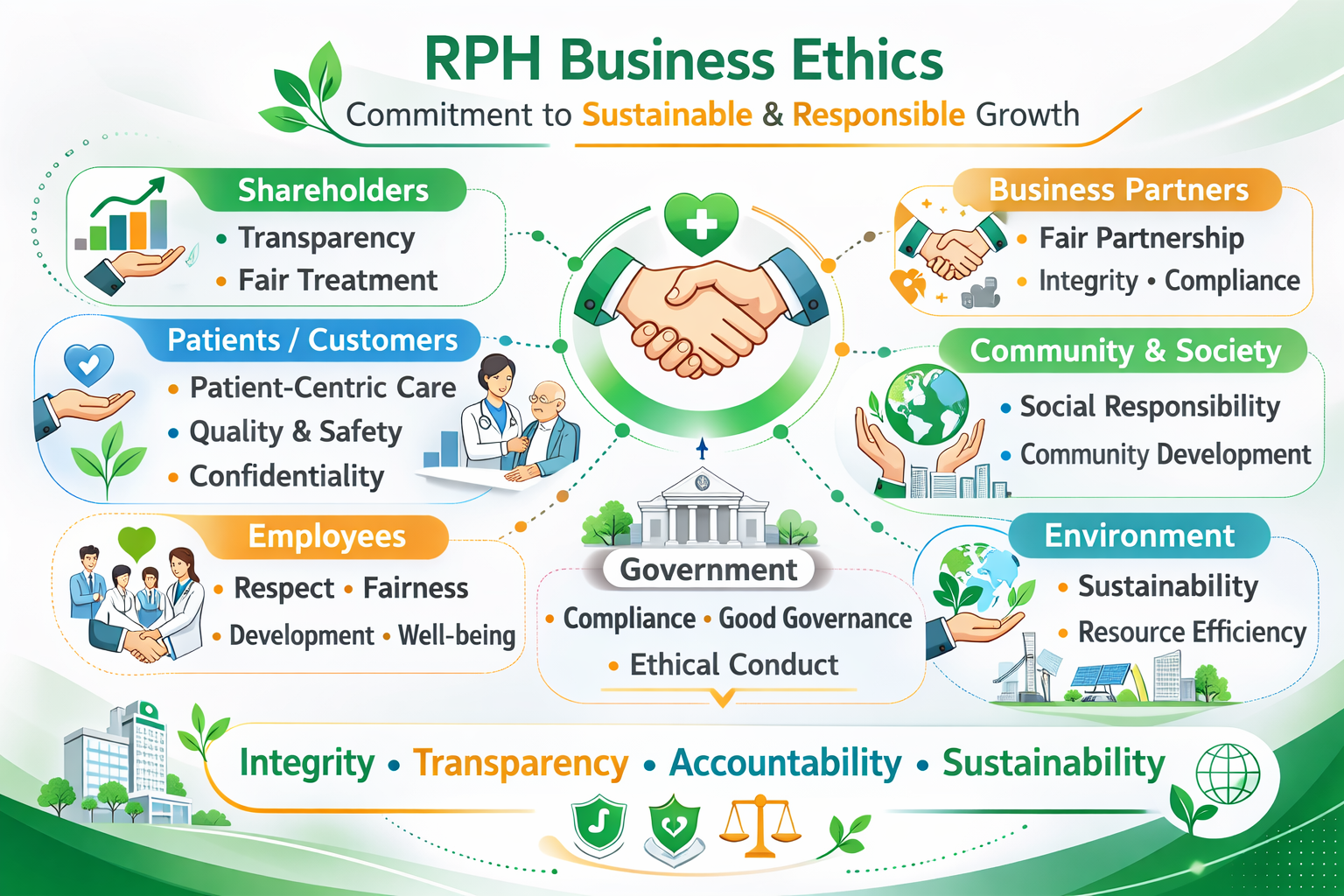
The Board of Directors places significant importance on fostering an organizational culture grounded in ethics, transparency, and accountability toward all stakeholders. Business ethics are regarded as a fundamental component of good corporate governance and an integral part of the Company’s sustainable growth strategy.
The Board has established and regularly reviewed the Code of Conduct, along with related policies such as the Anti-Corruption Policy, Conflict of Interest Policy, Insider Trading Prevention Policy, and Personal Data Protection Policy. These policies are incorporated into the Company Handbook, which serves as a practical guideline for directors, executives, medical professionals, and employees at all levels.
Ethics Implementation
The Company integrates business ethics into its operational processes and decision-making at all levels through the following key practices:
Promoting a strong “Tone from the Top”, whereby the Board of Directors and management lead by example in ethical conduct
Providing regular training on ethics, anti-corruption practices, and insider trading prevention
Integrating ethical considerations into risk management and internal control processes
Establishing clear guidelines on gift-giving, business dealings with partners, and conflict-of-interest prevention
Encouraging ethical medical practices, transparency, and patient safety as core principles of healthcare services
Whistleblowing Mechanism and Protection
The Company provides confidential and secure channels for reporting concerns or potential misconduct. Appropriate whistleblower protection measures are in place, and all reports are reviewed through a transparent process under the oversight of relevant Board committees.
Ethics Monitoring and Governance KPIs
To ensure effective implementation of ethical practices, the Company has established Governance KPIs, including:
Ethics Training Completion: 100%
Ethical Culture Score ≥ 80%
Whistleblowing Response ≥ 95%
No Insider Trading Case
These indicators reflect the Company’s commitment to maintaining a transparent and responsible ethical culture.
Ethical Culture Outcomes
In 2025, the Company communicated and provided ethics-related training through the RPH Staff system and the Company’s intranet, supported by a digital acknowledgment process. All directors, executives, employees, and medical personnel confirmed their acknowledgment and commitment to comply with the policies, achieving a 100% participation rate.
During the reporting period, the Company did not receive any regulatory warning letters and no cases of insider trading misconduct were identified, demonstrating the Company’s continued adherence to ethical business practices.
1. Responsibilities Toward Stakeholders
The Board of Directors encourages collaboration with all stakeholder groups to create shared value and sustainable growth. The Company’s stakeholders include shareholders, patients/customers, business partners, competitors, creditors, employees, communities, society, the environment, and government authorities.
The Board performs its duties with prudence, integrity, and accountability, aiming to deliver sustainable returns to shareholders through the following practices:
Respect shareholder rights and ensure equitable and fair treatment.
Operate in accordance with good corporate governance principles to build investor confidence.
Continuously develop the business to achieve sustainable growth and appropriate returns.
Disclose material information accurately, transparently, and in a timely manner.
Include the Board of Directors’ Responsibility Statement on financial reports in the annual report.
Provide minority shareholders opportunities to propose agenda items or nominate directors.
Allow shareholders to submit questions in advance of shareholders’ meetings.
Publish the notice of shareholders’ meetings on the Company’s website at least 30 days in advance in both Thai and English.
Facilitate shareholders’ participation, including proxy voting arrangements.
Manage conflicts of interest carefully with transparency and full disclosure.
Safeguard the Company’s assets with the same care as a prudent person would exercise over their own property.
1.2 Patients / Service Recipients / Customers
The Company recognizes that patient satisfaction and trust are key drivers of sustainable success and has established the following practices:
Deliver medical services with quality, safety, and professional ethics.
Continuously enhance medical capabilities, modern medical equipment, and electronic medical record systems.
Provide accurate, sufficient, and transparent treatment information to support informed decision-making.
Maintain strict confidentiality of patient information.
Prohibit solicitation or acceptance of improper benefits from patients.
Deliver patient-centric services aimed at minimizing waiting times and enhancing service quality.
Provide communication channels for complaints and feedback, ensuring fair and appropriate handling.
1.3 Business Partners
The Company treats business partners fairly and transparently while emphasizing mutual benefits through:
Compliance with contractual agreements and fostering long-term collaboration.
Establishment of a Supplier Code of Conduct and transparent procurement procedures.
Encouraging partners to operate responsibly with respect to human rights, labor practices, environmental management, and safety standards.
Applying supplier selection criteria based on quality standards, service readiness, occupational health and safety, and sustainability practices.
1.4 Competitors
The Company conducts business under fair competition principles by:
Complying with applicable competition laws and ethical business practices.
Avoiding actions that damage competitors’ reputations.
Refraining from unfair recruitment or unethical competitive behavior.
1.5 Creditors
The Company aims to maintain strong relationships with creditors through:
Fair and equitable treatment of all creditor groups.
Strict compliance with contractual terms and obligations.
Maintaining financial discipline to ensure debt repayment capability.
Providing accurate and timely financial disclosures.
Promptly notifying creditors when the Company anticipates any inability to meet contractual conditions.
1.6 Employees
The Company recognizes employees as valuable resources and key contributors to organizational success. The Company therefore:
Respects human dignity and fundamental labor rights.
Promotes equality and non-discrimination.
Supports continuous learning, career development, and knowledge sharing.
Provides fair compensation and appropriate welfare benefits.
Encourages employee participation and open communication channels.
Maintains a safe and healthy working environment to enhance quality of life.
1.7 Community and Society
The Company operates with responsibility toward society by:
Avoiding business practices that harm society or violate community rights.
Promoting social responsibility awareness among employees.
Supporting public benefit initiatives and community development programs.
Building transparent and constructive relationships with local communities.
1.8 Environment
The Company conducts its business with environmental responsibility through:
Compliance with environmental laws, regulations, and policies.
Promoting efficient and sustainable use of resources.
Developing environmental management systems and continuous monitoring practices.
Selecting supply chain partners that demonstrate environmentally responsible practices.
1.9 Government Sector
The Company conducts business with integrity and in compliance with government regulations by:
Studying and complying with all relevant laws and regulatory requirements.
Conducting transactions with government officials transparently and appropriately.
Maintaining constructive relationships with government agencies within appropriate boundaries.
Respecting applicable laws, customs, and traditions in each operating jurisdiction.
Code of Conduct Practices
| Guideline | Detail | Document Link | Page Number in Report |
|---|---|---|---|
| Prevention of Misuse of Inside Information | Conflict of Interest PolicyThe Board of Directors has established policies and guidelines for managing conflicts of interest to ensure transparency, fairness, and the best interests of the Company, as follows:
In 2025, the Company did not receive any complaints relating to conflicts of interest. | https://investor.rph.co.th/storage/document/cg/connected-transaction-policy-th.pdf | 1-12 |
| Anti-corruption | The Board of Directors places significant importance on compliance with applicable laws and good corporate governance principles. The Company has established an Anti-Corruption and Anti-Bribery Policy to serve as a framework for conducting business with transparency, fairness, and accountability. The key practices are as follows:
Implementation of the PolicyIn accordance with the above policy and practices, the Company has undertaken the following actions:
In 2025, the Company did not receive any complaints relating to fraud or corruption. | https://investor.rph.co.th/th/corporate-governance/anti-corruption-and-anti-bribery | 1-10 |
| Whistleblowing and Protection of Whistleblowers | The Company conducts its business with transparency and recognizes the importance of preventing corruption, bribery, and all forms of misconduct. The Company is committed to operating in compliance with applicable laws and in a manner that benefits society, while encouraging employees to perform their duties with integrity and to act as responsible corporate citizens. The Board of Directors provides channels for employees and stakeholders to report whistleblowing information or submit complaints in cases where suspected violations of laws, fraud, misconduct, or inappropriate behavior by employees are identified, including any actions that may cause damage to the Company. The Company also accepts complaints from employees and stakeholders who believe that their rights have been violated or that they have not received fair treatment, through the channels and procedures established by the Company. The Company treats all complaints equally, transparently, and fairly. A systematic and fair whistleblower protection mechanism is in place, and all information relating to whistleblowers is kept strictly confidential. The Company’s whistleblower protection measures include the following: 1) Whistleblowers may choose to remain anonymous if disclosure of their identity may result in safety risks or potential harm. 2) The Company maintains confidentiality of all relevant information and prioritizes the safety of whistleblowers. Employees and individuals who cooperate in fact-finding processes are protected from unfair treatment resulting from the submission of complaints, such as workplace harassment, reassignment, or termination of employment. In 2025, the Company did not receive any whistleblowing reports or complaints. The Company has disclosed its whistleblowing policy and procedures on the Company’s website under the Investor Relations section, including the reporting channels and the whistleblowing policy. Interpretation and Guidance Supervisors are responsible for providing guidance to their subordinates to ensure understanding and compliance with the Company’s Code of Conduct. In cases where the Code of Conduct does not cover specific situations, or where employees remain uncertain about how to proceed or make decisions, they are required to consult their supervisors in accordance with the established chain of command. In the event of disputes or conflicting interpretations, the decision of the Chief Executive Officer or the Board of Directors shall be deemed final. | https://investor.rph.co.th/storage/document/cg/whistle-blowing-policy-th.pdf | 1-10 |
| Preventing the Misuse of Inside Information | The Company has a policy on the management of insider information, which is outlined in the business ethics code that applies to the Company and its shareholders. This is also included in the employee code of conduct. The Company mandates that its Board of Directors, executives, and employees perform their duties with honesty, responsibility, discipline, and a sense of good public and personal conscience. They are prohibited from using their positions to gain benefits for themselves and/or others inappropriately. They must protect the interests and assets of the Company and not use the Company’s information or assets for personal benefit and/or the benefit of others. They are also prohibited from supporting others in engaging in business that competes with the Company. The Company oversees the use of insider information in line with good corporate governance principles, and this is documented and published on the Company’s Intranet system and website. This includes the business ethics code for directors, executives, and employees, as well as the manual on the roles, duties, and responsibilities of directors, executives, and employees. The Company also has a policy manual on anti-corruption measures, which is provided to directors, executives, and employees upon their hiring. The key policies are summarized as follows; (1) The Company requires that the directors, executives, and employees sign an acknowledgment of the announcements from the Securities and Exchange Commission (SEC), which stipulate that directors and executives must report changes in their securities holdings to the SEC under Section 59 of the Securities and Exchange Act, B.E. 2535, within 3 days. This must be done via the electronic information exchange system as prescribed by the SEC, in accordance with the SEC's announcement (SEC Notification No. 38/2561) on the reporting of changes in securities holdings and futures contracts by directors, executives, auditors, and plan administrators, dated July 16, 2018 ("SEC Notification No. 38/2561"). They must also notify the Company Secretary to record and summarize the changes in the securities holdings of directors and executives individually for presentation to the Board of Directors in the next meeting. Additionally, the Company has informed of penalties for any violations or non-compliance with these requirements. (2) The Company has regulations prohibiting the disclosure of financial statements or any information that may affect the Company's stock price to external parties or those not involved. Additionally, it prohibits trading in the Company’s securities within one month before the financial statements or any information that may affect the stock price is publicly released. Trading in the Company’s securities must not occur until 24 hours after such information has been fully disclosed to the public. Failure to comply with these regulations is considered a violation of the Company's discipline. Directors, executives, or employees who acquire significant insider information and violate the rules will face penalties, ranging from warnings, wage deductions, suspension without pay, to dismissal. This approach has been approved by the Board of Directors. (3) The Company has a policy that requires directors and executives to notify the Board of Directors and/or the Company Secretary at least one day in advance before making any purchases or sales of the Company’s shares. (4) The Company has implemented measures to manage conflicts of interest for its directors and executives. Directors and executives must report their personal interests and the interests of related parties that may impact the management of the Company, according to the guidelines set by the Company. (5) The Company has also developed a system to control the use of insider information by utilizing information technology systems to define access levels to insider information according to the duties and responsibilities of each employee. Each employee has a personal password to access the system. In 2025, the directors and executives of the Company strictly adhered to the policies, and there was no record of share trading during the restricted period. They did not receive any warnings or disciplinary actions related to securities trading violations from the SEC. | https://investor.rph.co.th/storage/document/cg/securities-trading-policy-of-directors-executives-and-employees-and-subsidiaries-th.pdf | 1-10 |
| Giving or receiving gifts, entertainment, or business entertainment | Ratchaphruek Hospital Public Company Limited is committed to conducting its business with integrity, transparency, fairness, and equal treatment of all stakeholders. To prevent conflicts of interest and promote ethical business practices, the Company has established guidelines regarding the giving and receiving of gifts, vouchers, benefits, and hospitality as follows: 1) Executives and employees must not solicit, accept, or agree to accept any gifts, vouchers, or other benefits from customers, business partners, or related persons with the intent to influence business decisions, induce improper actions, or omit required duties. In circumstances where refusal is impractical, personnel must strictly comply with the Company’s prescribed regulations. 2) The giving or receiving of gifts, vouchers, or any other benefits must not involve illegal items or activities that violate applicable laws or regulations. 3) Executives and employees are required to report to their respective supervisors any giving or receiving of gifts, vouchers, or benefits with a customary value exceeding Baht 3,000. Where the supervisor determines that such gifts may influence decision-making or lead to inappropriate conduct, the employee may be required to decline, return, or submit the gift to the Company as common property. 4) Any gifts, benefits, or hospitality provided to customers or related persons must be supported by proper expense documentation clearly indicating the value and purpose of such hospitality for audit and transparency purposes. In 2025, the Company did not receive any complaints relating to the solicitation, acceptance, or offering of gifts or benefits that may have influenced business decisions. | ||
| Use and maintenance of data and assets | Protection and Maintenance of Company Assets Directors, executives, and employees have a duty and responsibility to ensure the efficient use and safeguarding of the Company’s assets and those under its management. To support this, the Company has put in place clear guidelines for proper asset management. 1) Use Company assets solely for business purposes and do not exploit them for personal gain or for the benefit of external parties. 2) Protect Company assets from loss, damage, or misuse, exercising the same level of care as a prudent individual would with their own property, while preventing any improper personal gain. 3) Ensure adequate insurance coverage to protect Company assets against potential damages. 4) Do not use computers to access others’ systems or data protected by security measures, intercept computer data, damage, destroy, alter, or disrupt another person’s information in violation of computer crime laws. The Company must maintain IT security measures in accordance with international standards. 5) Use Company-provided email and internet services responsibly for business purposes, ensuring that usage does not harm the Company’s reputation. 6) Keep login credentials for accessing Company IT systems confidential and do not allow others to use them. 7) Do not reproduce, modify, or otherwise use the Company’s intellectual property for personal or third-party benefit without proper authorization. 8) Report to supervisors upon witnessing actions that violate rights, or may lead to rights violations or actions that could result in disputes related to the Company's intellectual property. 9) Ensure that important Company documents are stored and maintained for the legally required period. Once the retention period has expired, responsible employees must oversee the appropriate disposal of such documents. | ||
| Cyber security | Information Technology Security PolicyIn order to establish appropriate guidelines for the use of information and information technology systems of Ratchaphruek Hospital Public Company Limited and its subsidiaries that share common systems, ensuring security, reliability, and continuity in supporting the Company’s operations, and to ensure compliance with the Computer Crime Act and other applicable laws, as well as to prevent potential threats that may cause damage to the Company, the Company has established the Information Technology Security Policy as follows: Governance of Enterprise ITThe Company aims to ensure that information technology is effectively utilized as a strategic enabler to support business objectives, manage risks arising from the use of information technology, and enhance organizational performance. The management of IT operations, resources, and information shall be conducted efficiently to support the Company’s policies, strategies, objectives, and risk management framework. Appropriate reporting and monitoring mechanisms shall be in place to ensure that IT governance contributes to achieving business objectives, enhancing competitiveness, and creating value for the Company. At a minimum, the Company shall consider the following practices: 1. IT Risk Management PolicyThe Company shall define clear roles and responsibilities for managing risks related to information technology security and cybersecurity. The Director of Information Technology and System Development is responsible for studying, identifying, and proposing technological solutions or approaches to mitigate or manage existing risks, and presenting such measures to management for consideration in accordance with the established governance structure. The Company shall adopt a structured management approach to IT and cybersecurity risk management in alignment with the internationally recognized NIST Cybersecurity Framework, which consists of five key functions:
2. IT Security PolicyThe Company shall ensure that the Information Technology Security Policy is formally documented in writing. The policy must be effectively communicated to all relevant parties to ensure proper understanding and compliance, particularly between the Information Technology Department and other internal business units, to promote coordination and support business objectives. The Company shall review the Information Technology Security Policy at least once annually, or whenever significant changes occur that may impact the Company’s information technology security environment. | ||
| Environmental management | Environmental Responsibility PolicyThe Board of Directors recognizes the importance of conducting business with due regard to environmental responsibility and sustainable development. The Company has therefore established environmental policies and practical guidelines to ensure that its operations are carried out with accountability toward natural resources and the environment, as follows:
In accordance with these policies and practices, the Board of Directors acknowledges the value of responsible resource management and environmental stewardship. The Company has therefore established its corporate environmental policies and practices, which are publicly disclosed on the Company’s website at: | https://investor.rph.co.th/storage/document/cg/corporate-environmental-policies-and-practices-th.pdf | 1-6 |
| Human rights | Human Rights and Diversity PolicyThe Board of Directors places great importance on respect for human rights and responsible business conduct. The Company has therefore established a Human Rights Policy and implemented it across the organization, with the following key practices:
In accordance with these policies and practices, further details are outlined in the Non-Discrimination and Anti-Sexual Harassment Policy and the Human Rights Policy, which are publicly disclosed on the Company’s Investor Relations website under the Corporate Governance Policies and Guidelines section: https://investor.rph.co.th/th/corporate-governance/policies-and-guidelines Labor Practices
Diversity and Non-Discrimination
The Company’s Diversity and Inclusion Policy emphasizes the synergy created by integrating diverse backgrounds, including gender, age, ethnicity, culture, experience, perspectives, and professional approaches. This inclusive environment supports the Company’s vision of becoming “a leading private hospital.” | ||
| Occupational health and safety | Occupational Health, Safety and Working Environment PolicyThe Company places great importance on occupational health, safety, and the working environment. Practical guidelines have been established to ensure safe and sustainable business operations, as follows:
Implementation of Occupational Health and Safety PracticesThe Company has established a Safety, Occupational Health and Environmental Committee to oversee and promote workplace safety and health, with key practices as follows:
|
Promoting Compliance with the Code of Conduct
Promotes Compliance by Directors, Executives and Employees
Yes
Description
Process for Promoting Compliance with the Code of Conduct
Ratchaphruek Hospital Public Company Limited (“the Company”) is committed to conducting business in accordance with good corporate governance and ethical business practices. The Company has established its Code of Conduct as a key framework guiding the performance of the Board of Directors, executives, medical professionals, and employees at all levels. This framework aims to cultivate a strong ethical culture and enhance stakeholder confidence. The Company has implemented the following processes to promote compliance with the Code of Conduct:
1) Board Oversight and Tone at the Top
The Board of Directors oversees operations to ensure compliance with the Code of Conduct and establishes clear ethical and corporate governance practices. Senior management serves as role models, reinforcing a culture of transparency, accountability, and integrity throughout the organization.
2) Compliance Framework and Integration into Operations
The Company has formally documented its Code of Conduct and integrated it into its corporate governance policies, risk management framework, internal control system, and anti-corruption policies. These practices align with the Three Lines of Defense concept to ensure systematic and effective implementation.
3) Communication and Ethical Awareness
The Code of Conduct is communicated through internal channels such as the RPH Staff system, intranet platforms, training programs, and corporate culture initiatives to ensure that personnel at all levels understand and apply ethical principles in their daily work, particularly within a patient-centric healthcare environment.
4) Training and Capacity Building
The Company provides ongoing training programs covering business ethics, corporate governance, anti-corruption practices, personal data protection, and medical professional standards. Such training is incorporated into the annual employee development plan.
5) Whistleblowing Mechanism and Protection of Whistleblowers
The Company has established confidential and secure whistleblowing channels, along with appropriate protection measures for whistleblowers. Investigation processes are conducted transparently, fairly, and under the supervision of relevant committees.
6) Monitoring Mechanism and Continuous Improvement
Compliance with the Code of Conduct is monitored through internal controls, internal audit activities, and oversight by the Audit Committee. Policies and practices are regularly reviewed and improved to ensure alignment with legal requirements, professional standards, and CGR best practices.
These processes reflect the Company’s commitment to building an ethical, transparent, and responsible organization toward patients, shareholders, and stakeholders, forming a strong foundation for good corporate governance and sustainable growth.
Key Performance Indicators (KPI) for Ethics and Corporate Governance
To promote practical compliance with the Code of Conduct, the Company has established Ethics and Compliance KPIs aligned with its risk management and corporate governance framework, as follows:
1) Awareness and Training KPIs
100% of employees complete annual training on the Code of Conduct and anti-corruption practices.
Supervisory-level executives attend Corporate Governance and Ethics training at least once per year.
100% of new employees complete ethics orientation programs.
2) Compliance KPIs
Zero significant violations of the Code of Conduct.
Zero corruption cases affecting the organization (Zero Tolerance Policy).
Complaint resolution rate within the specified timeframe ≥ 95%.
3) Whistleblowing and Ethical Culture KPIs
100% availability of accessible and publicly disclosed whistleblowing channels.
Response to complaints within specified timelines ≥ 100%.
Ethical Culture Survey results achieving ≥ 80% confidence level.
4) Board Oversight and Governance KPIs
Ethics and Compliance status reported to the Board of Directors or Audit Committee at least once per year.
Annual review of the Code of Conduct and related policies.
5) Risk-based Compliance KPIs
100% of high-risk units undergo ethics and anti-corruption risk assessments.
Zero incidents of insider information leakage or insider trading violations.
Anti-Corruption Networks & Projects
Joined or Declared Intent to Join Anti-Corruption Networks
No
Networks & Projects Joined
| Network / Project |
|---|
| Thai Private Sector Collective Action Against Corruption: CAC |
| United Nations Global Compact (UNGC) |
| Participation of anti-Corruption networks and initiatives |
Material Changes & Developments in CG
Introduction
In 2025, Ratchaphruek Hospital Public Company Limited (“the Company”) reviewed and enhanced several corporate governance policies and practices to align with the Corporate Governance Code for Listed Companies issued by the Stock Exchange of Thailand. The Company focused on ensuring that governance mechanisms are practical, measurable, and supportive of transparent, accountable, and stakeholder-focused business operations.
The key developments during the year are summarized as follows:
Review and Enhancement of Corporate Governance Policies
The Board of Directors reviewed the Corporate Governance Policy, Board and Sub-committee Charters, as well as policies relating to business ethics and insider information. These policies were updated to ensure compliance with applicable laws, regulatory requirements, and good governance practices, and were communicated through the Company’s website and internal communication channels.Establishment of Governance KPI Monitoring
The Company introduced governance-related key performance indicators (Governance KPIs) to strengthen oversight of Board and organizational performance. These include Board meeting attendance, participation in ethics and governance training, whistleblowing response monitoring, and insider trading prevention, enabling measurable governance performance evaluation.Enhancement of Board Composition and Structure
The Board reviewed its Board Skill Matrix and composition to ensure alignment with the Company’s strategic direction. The Board currently consists of 10 directors, including 3 female directors, reflecting diversity in accordance with the Company’s Board Diversity Policy.Improvement of Shareholder Meeting Practices and Disclosure
The Company enhanced shareholder meeting processes through electronic meeting systems in accordance with applicable standards, ensuring early disclosure of meeting information and facilitating shareholder participation, including advance nomination of agenda items and director candidates. No agenda items were added outside those disclosed in the meeting invitation.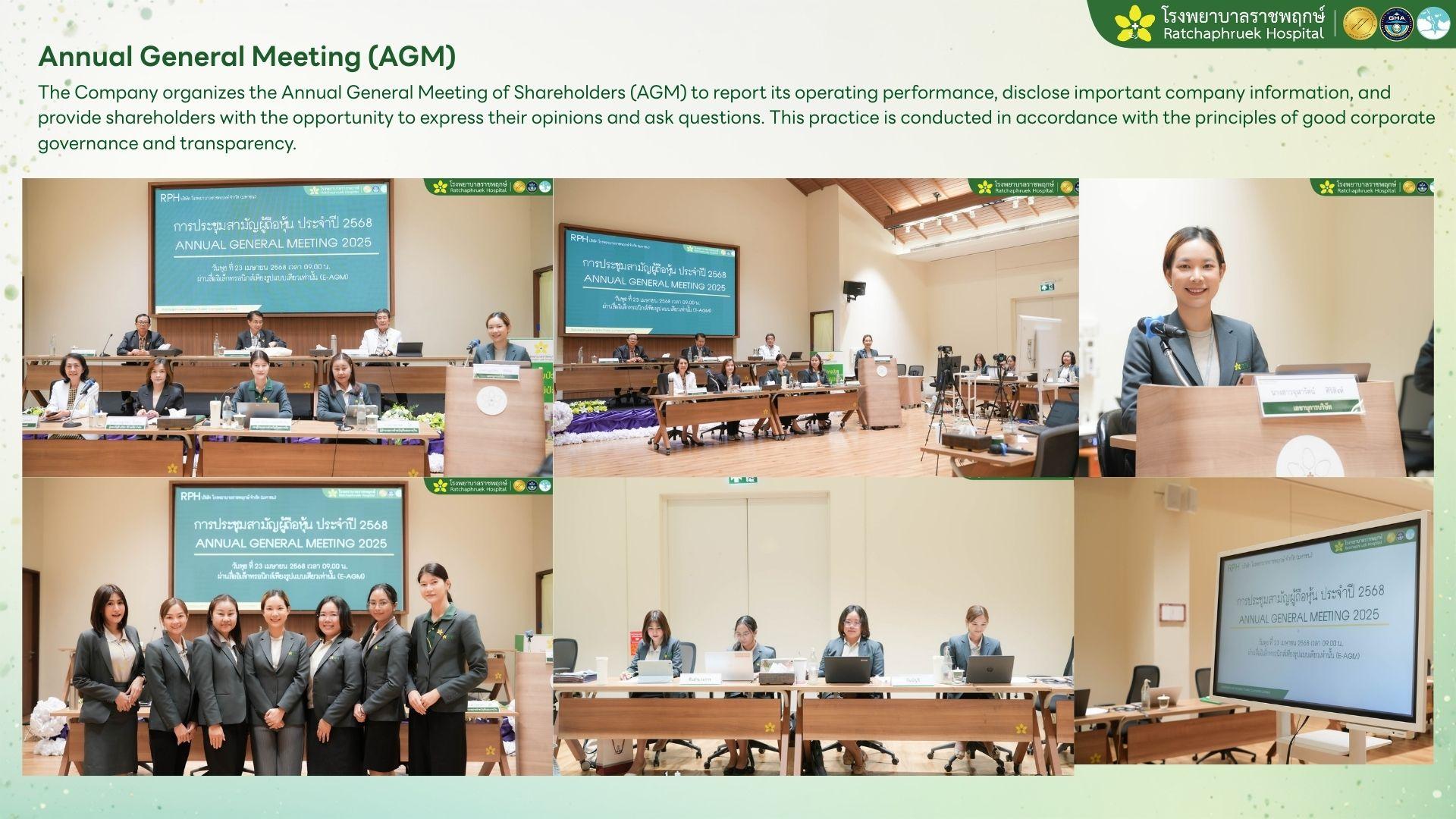
Director and Executive Development
The Company continued to support director and executive development through participation in training programs and seminars organized by external institutions such as the Thai Institute of Directors (IOD) and the Stock Exchange of Thailand, enhancing knowledge in governance, risk management, and regulatory compliance.Strengthening Ethical Communication and Compliance Monitoring
The Company improved communication of ethics policies via the Intranet and RPH Staff systems, including acknowledgement and acceptance mechanisms. As of the end of 2024, 100% of personnel acknowledged and complied with the policies, and no cases of insider trading misconduct were identified.
These initiatives represent practical and measurable improvements to governance processes and demonstrate the Company’s commitment to strengthening transparency, accountability, and sustainable corporate governance practices in alignment with CGR principles.
Reviewed the CG Policy or Board Charter in the Past Year
Yes
Material Changes or Developments in the Past Year
Yes
Policy Review — Description
Changes and Developments in Corporate Governance in 2025
In 2025, the Board of Directors of Ratchaphruek Hospital Public Company Limited (the “Company”) continued to enhance its corporate governance system, with a focus on proactive governance and measurable governance to ensure that governance practices are effective, transparent, and aligned with the Corporate Governance Report (CGR) principles of the Stock Exchange of Thailand.
1. Enhancing Board Oversight and Governance Maturity
The Board of Directors reviewed the Board Charter, the Code of Business Ethics, and the corporate governance framework in order to strengthen the clarity of roles and responsibilities, the separation of authority between the Board and management, and the systematic oversight of conflicts of interest. The Company also began adopting the concept of a Governance KPI Dashboard as a monitoring tool, with key indicators including:
Board Meeting Attendance ≥ 95%
Director Training Participation 100%
Independent Director Training Completion 100%
Ethics Training Completion 100%
Whistleblowing Response ≥ 95%
Ethical Culture Score ≥ 80%
No Insider Trading Case
These indicators enable the Board to monitor governance performance in a concrete manner and reflect the Company’s progress toward a higher level of organizational governance maturity.
2. Development of Board Structure and Board Diversity
The Board of Directors places importance on establishing an appropriate board structure that is aligned with the Company’s strategy. A Board Skill Matrix is used as a tool for annually reviewing the composition of the Board to ensure that directors collectively possess the knowledge, expertise, and experience necessary to support the Company’s business direction.
The Company promotes board diversity in terms of gender, professional experience, specialized knowledge, and governance perspectives in order to strengthen strategic decision-making and balanced oversight.
As of 2025, the Board of Directors consisted of 10 members, comprising:
7 male directors and 3 female directors, with women accounting for 30% of the total Board
All 3 female directors serving as independent directors, thereby enhancing independence and checks and balances in governance
5 independent directors and 5 non-executive/company directors, reflecting a balanced structure between independence and effective oversight of management
This structure demonstrates the Company’s commitment to raising its corporate governance standards in line with best practices for listed companies and supporting sustainable organizational development.
3. Development of the Capabilities of Directors and Executives
The Company continuously supports directors in attending training programs organized by external institutions such as the Thai Institute of Directors (IOD) and the Stock Exchange of Thailand (SET). The Company monitors training hours and participation in programs related to:
Corporate Governance
Risk Management
ESG & Sustainability
Healthcare Governance
Board Development Outcomes
In 2025, the Company’s continuous policy to strengthen the capabilities of directors and executives resulted in the Board being able to perform its oversight duties more effectively and in alignment with the principles of good corporate governance. Key outcomes included:
100% of directors participated in training programs and knowledge development activities in accordance with the annual director development plan
The Board gained deeper understanding of Corporate Governance, Risk Management, ESG, and Healthcare Governance, and was able to apply such knowledge in policy setting and strategic oversight
Board effectiveness and governance-based decision-making were strengthened through the application of newly acquired knowledge to risk management and the Company’s sustainability development
The Company’s governance structure became better prepared to meet CGR criteria and the best practice guidelines of the Stock Exchange of Thailand
4. Strengthening Ethical Culture and the Compliance System
The Company enhanced its ethics policy communication system through RPH Staff and the Intranet, with acknowledgment and acceptance functions requiring personnel to confirm and sign off on policy receipt. By year-end, personnel at all levels had acknowledged and signed acceptance of the policies at a rate of 100%.
The Company also conducted an Ethical Culture Survey to assess its organizational ethical culture. The survey showed that employee confidence in the Company’s ethical culture was at a level of not less than 80%.
5. Promoting a Risk Management Culture Across the Organization

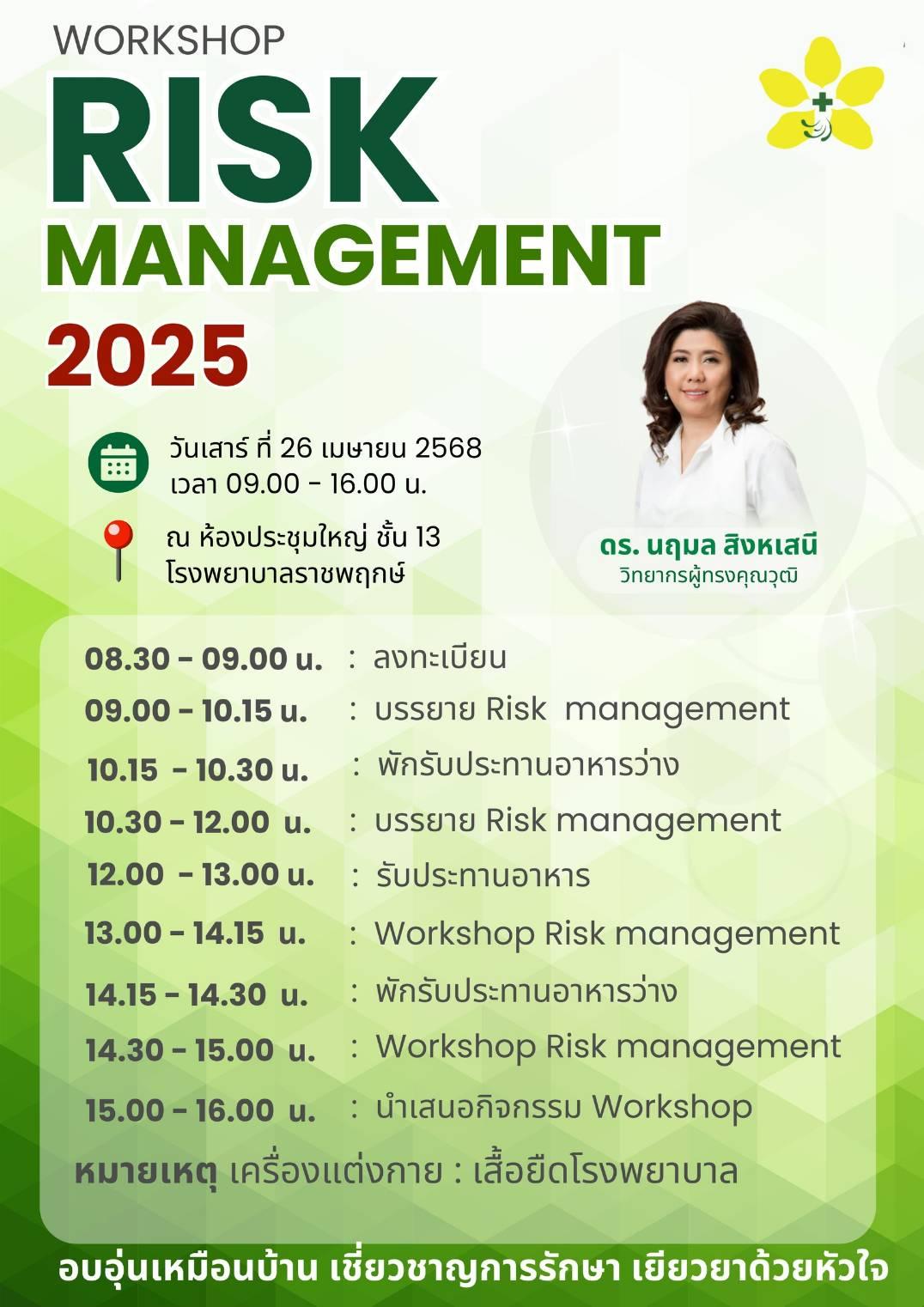
 The Company continuously organized Risk Management training activities for the Board of Directors, executives, and middle management to enhance their knowledge, understanding, and skills in identifying, assessing, monitoring, and managing risks that may affect business operations.
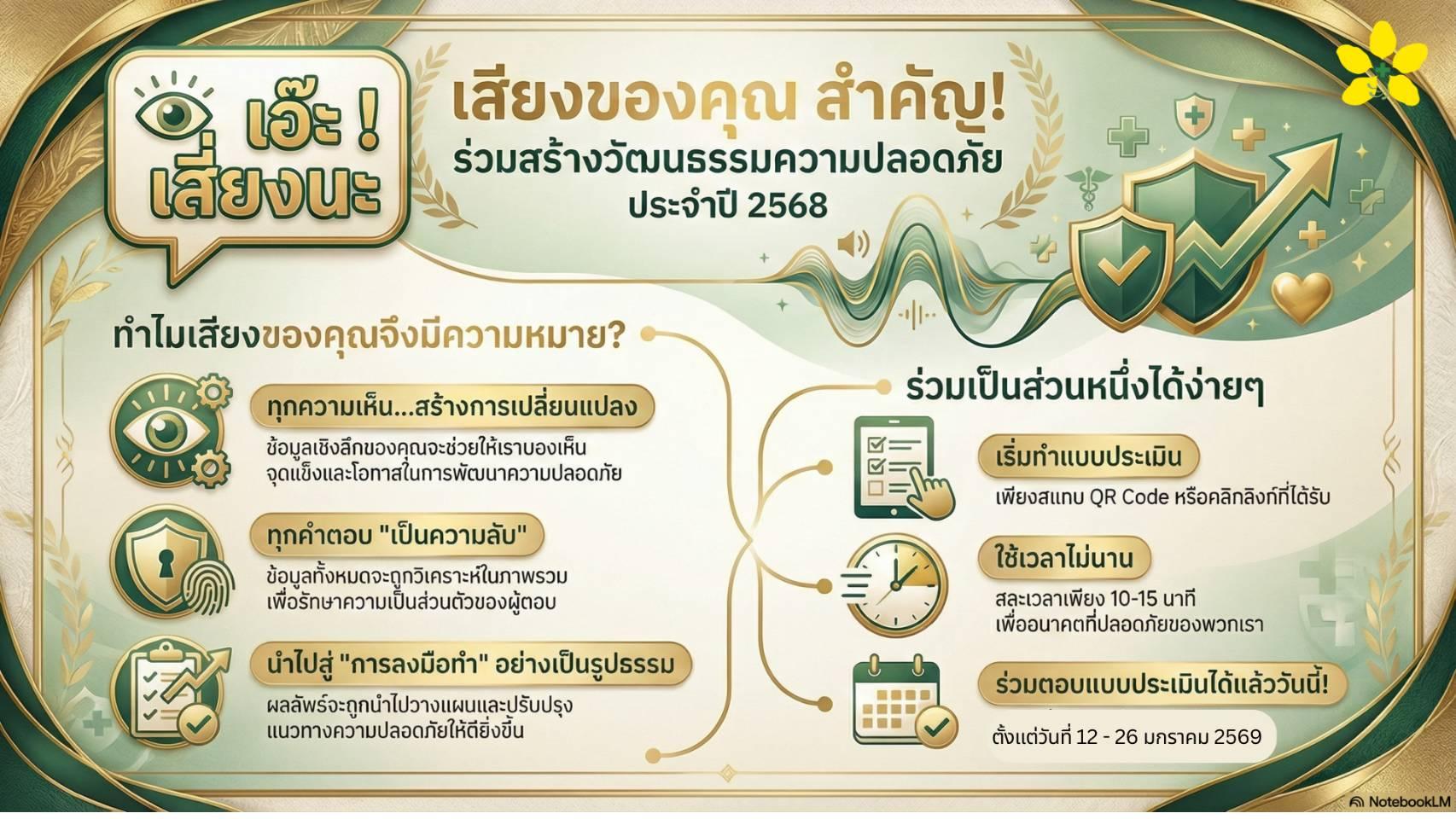
In addition, the Company initiated the internal campaign “Hmm… That’s Risky” to encourage personnel at all levels to participate in observing, reporting, and recognizing potential risks that may arise in day-to-day operations. This initiative helps cultivate a proactive risk management culture and supports preventive action before issues affect the organization.
These activities reflect the Company’s commitment to developing an effective Enterprise Risk Management (ERM) system, while also fostering an organizational culture based on prudence, transparency, and good corporate governance to support stable and sustainable growth.
6. Enhancing Disclosure and Shareholder Engagement
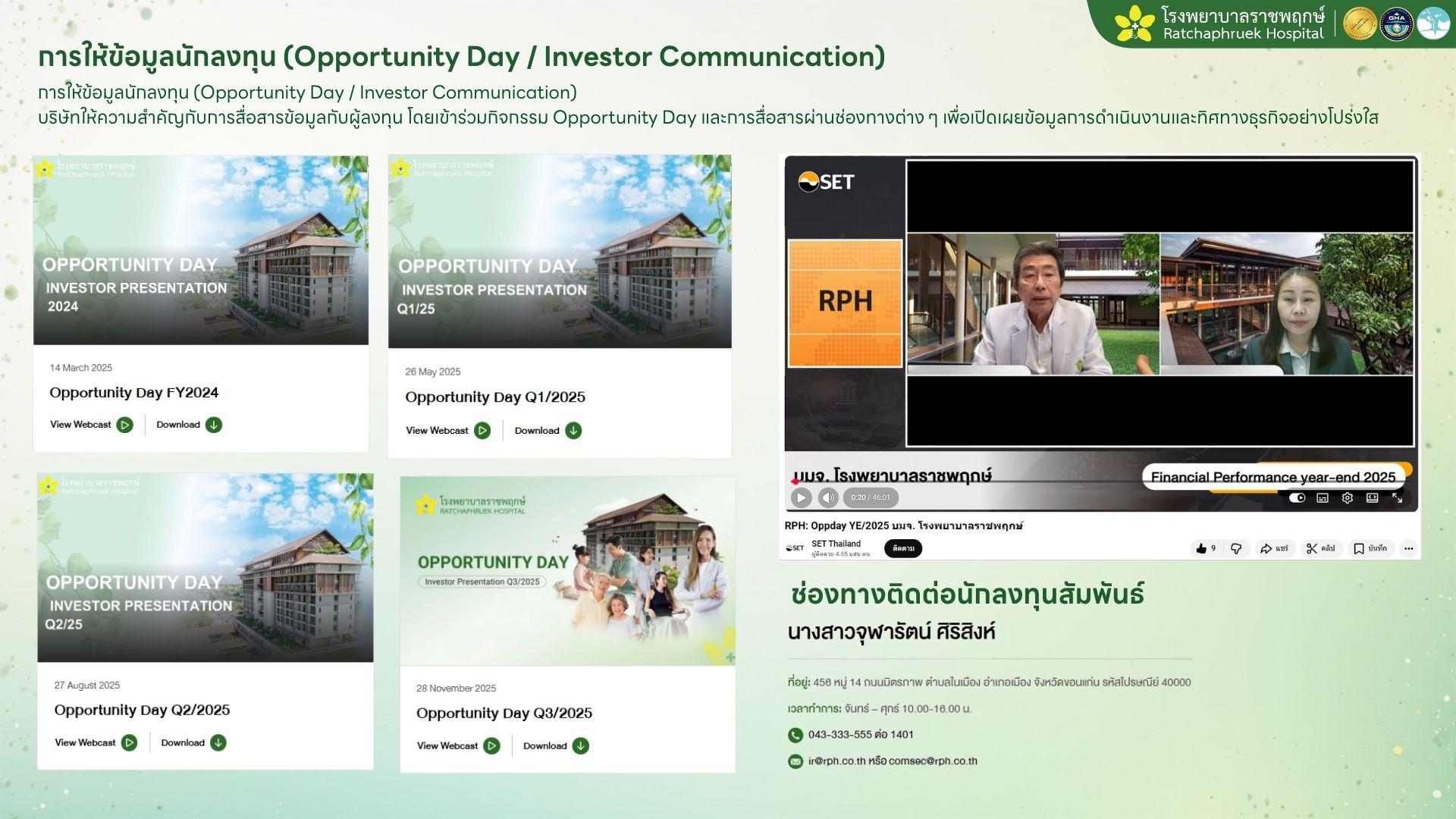
The Company improved its proactive disclosure practices through the Company website and the Stock Exchange’s disclosure system, while also upgrading its shareholder meeting process through electronic systems to promote shareholder rights on an equitable and transparent basis.
During the year, the Company disclosed the notice of the shareholders’ meeting 46 days in advance and held 4 Opportunity Day activities to communicate with investors on a continuous basis.
These developments reflect the Company’s transition from policy-based governance to performance-driven governance, under which governance can be measured systematically. The Board of Directors places importance on monitoring, evaluation, and continuous improvement in order to enhance governance standards in line with best practices for listed companies and to build long-term confidence among shareholders and stakeholders.
Enhancing Supplier Capability and Capacity
The Company places importance on managing relationships with suppliers in a fair and transparent manner, while aiming to foster sustainable mutual growth. The Company has therefore established a policy to enhance supplier capability and capacity in order to improve the quality of products and services, operational standards, safety, and the ability to respond to the Company’s needs. This approach is consistent with the nature of the hospital business, which places strong emphasis on quality of care, patient safety, infection control, data protection, and service continuity.
The Company focuses on developing key suppliers through communication of operational requirements, exchange of information and feedback, performance review meetings, and encouraging suppliers to improve their products, services, or work processes in line with hospital standards. This also includes promoting business ethics, anti-corruption practices, personal data protection, and operations in accordance with ESG principles.
Plans to Develop and Enhance Supplier Capability
In 2025, the Company established plans to continuously promote supplier capability and capacity, covering the following key approaches:
Communication of hospital requirements and operational standards
The Company communicates relevant guidelines and requirements to key suppliers, such as quality and safety standards for services provided within the hospital, infection control measures, requirements for working in hospital areas, data confidentiality, and business ethics requirements.
Performance evaluation and feedback for supplier development
The Company evaluates the performance of key suppliers based on criteria such as product and service quality, timeliness, responsiveness, compliance with requirements, and safety-related considerations. The evaluation results are used to provide feedback and support continuous improvement.
Joint improvement of products, services, and work processes
The Company supports discussions with suppliers to improve products, services, and working methods for greater efficiency. Examples include improving the delivery of medical supplies and materials, enhancing maintenance services for medical equipment, strengthening coordination in information technology systems, and improving the performance of outsourced service providers related to hospital operations.
Promotion of sustainable business practices with suppliers
The Company encourages suppliers to conduct business with due regard to laws, professional standards, safety, occupational health, environmental responsibility, and social responsibility. The Company also promotes adherence to business ethics and anti-corruption principles among its suppliers.
Performance Results in 2025
As a result of the implementation of the above policy and plans, the Company has continuously strengthened collaboration with key suppliers, with significant outcomes as follows:
The Company continuously communicated hospital requirements and operational guidelines to key suppliers, resulting in a better understanding among suppliers of the Company’s standards and requirements.
The Company monitored and evaluated the performance of key suppliers and used the results to improve the quality of products and services, as well as enhance operational efficiency in working together.
Coordination between the Company and its suppliers improved in several areas, including faster response times, improved delivery of products and services, more effective issue resolution, and stronger quality control in line with hospital standards.
Certain supplier groups worked together with the Company to improve service approaches and operational processes in support of continuity of medical services, safety of service recipients, and the efficiency of internal management.
These efforts helped strengthen positive relationships between the Company and its suppliers and supported efficient, transparent, and sustainable business collaboration.
The Company will continue to enhance its supplier development process by focusing on building long-term partnerships with qualified suppliers, in order to support stable business growth while also improving service standards and the sustainability of the overall supply chain.
Implements the CG Code for Listed Companies
No
CG Code — Description
The Board of Directors has reviewed the Company’s corporate governance policy and practices against the Corporate Governance Code for Listed Companies (CG Code) prescribed by the Securities and Exchange Commission. The Board is of the view that the Company has adopted and applied the CG principles in most material respects, taking into consideration the nature of the business, the size of the organization, and the Company’s operating environment.
In this regard, the Board has resolved to continuously review and improve the Company’s corporate governance policy to ensure alignment with relevant standards, best practices for listed companies, and the Company’s business direction as appropriate.
In 2025, the Company implemented key corporate governance principles in several important areas, including the following:
The Company has established a policy on the tenure of independent directors, providing that an independent director may serve for no longer than 9 consecutive years, in order to promote independence in the performance of duties and effective oversight.
The Company places importance on Board Diversity, with at least 2 female directors serving on the Board, in order to support diversity of perspectives in policy-making and corporate oversight.
The Company has structured the Board to maintain an appropriate balance between executive directors and non-executive directors, thereby strengthening checks and balances and enhancing oversight of management.
The Company has the number and qualifications of independent directors in compliance with the criteria prescribed by the Securities and Exchange Commission.
The Company discloses its policy on Board composition and Board diversity, as well as key information on directors, such as age, gender, educational background, experience, shareholding proportion, years of service, and directorships in other listed companies, through the Annual Report / Form 56-1 One Report and the Company’s website, to ensure that shareholders and stakeholders receive adequate and transparent information.
However, in 2025, there remained certain areas that are still under further development in order to achieve fuller alignment with the CG Code, including the following:
The Chairman of the Board is not an independent director.
The Company has not yet established all recommended sub-committees, including the Nomination Committee, Remuneration Committee, Corporate Governance Committee, and Executive Committee.
The number of Board meetings remains below 6 meetings per year, which is one of the recommended governance practices.
The Company has 5 independent directors out of a total of 10 directors, representing 50% of the total Board, which the Company considers to be an appropriate proportion for ensuring checks and balances and effective corporate governance.
Nevertheless, although the Company is still in the process of further enhancing certain practices to more fully align with all aspects of the CG Code, in the nomination and appointment process the Company carefully considers each director’s qualifications, knowledge, expertise, experience, independence, and suitability. The objective is to ensure that the Board can perform its oversight duties effectively, transparently, and fairly.
The Company believes that the current Board structure and composition remain capable of providing an appropriate balance of power among all groups of directors and support decision-making that takes into account the best interests of the Company, its shareholders, and all stakeholders. The Company will continue to progressively enhance its corporate governance practices in order to raise its governance standards in line with applicable principles and best practices for listed companies.
Other CG Performance & Outcomes
The Board of Directors places great importance on establishing a strong corporate governance system and remains committed to continuously enhancing corporate governance standards. The Company has adopted a management policy that seeks to maintain balance amid changing economic and social conditions, based on the principles of the Sufficiency Economy Philosophy and in alignment with the Corporate Governance Code for Listed Companies.
The Board of Directors, executives, and employees at all levels recognize the importance of complying with good corporate governance principles and are committed to ongoing improvement, while taking into account the interests of all stakeholders. This approach supports business growth alongside balanced social and environmental development.
As a result of such commitment, the Company has received the following AGM Checklist scores from the Thai Investors Association:
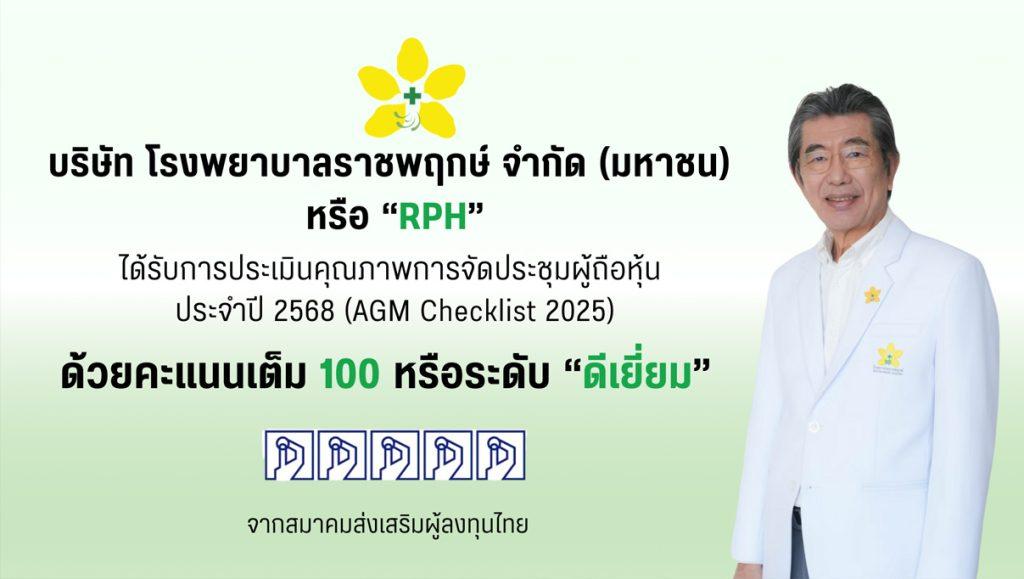
2020: 93 points
2021: 96 points
2022: 99 points
2023: 97 points
2024: 97 points
2025: 100 points